







The unpredictable nature of technological advancements, as illustrated by historical forecasts, sheds light on the complexities of AI’s impact on society.
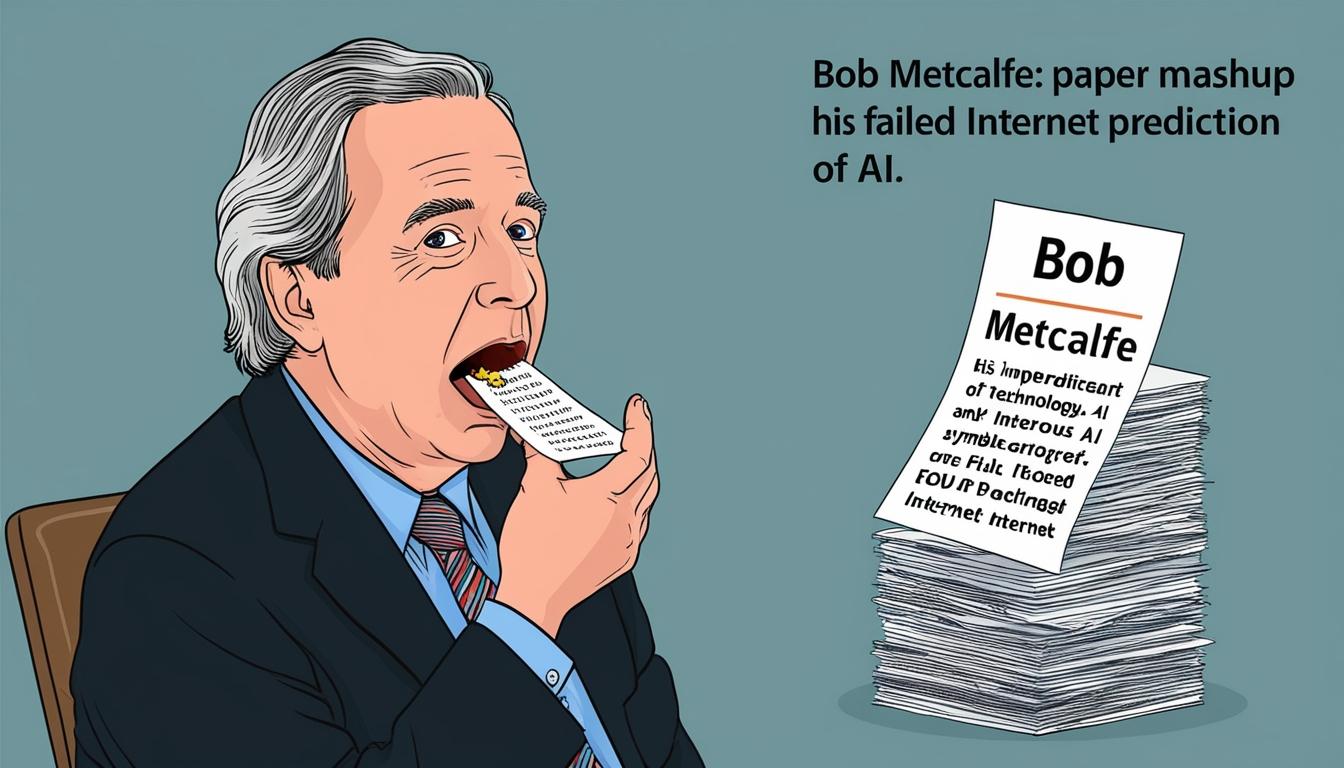
The future of technology is notoriously hard to predict, as evidenced by the infamous forecast made by Bob Metcalfe, the inventor of Ethernet. In 1995, Metcalfe boldly claimed that the internet would suffer a catastrophic collapse, or “gigalapse,” within a year. When this prediction failed to materialise, Metcalfe displayed a unique sense of humour by literally eating his words at a tech event, blending a copy of his column into a pulp and consuming it.
This memorable incident highlights the unpredictable nature of technological advancements, a theme well-documented in the Pessimists Archive. This resource captures various erroneous forecasts made about significant inventions such as cameras, electricity, aeroplanes, televisions, and computers. The archive’s historical perspective is relevant as we now face a deluge of predictions concerning contemporary technologies, particularly artificial intelligence (AI).
AI has captured the imagination of both optimists and pessimists, drawing extreme predictions from both camps. Some enthusiasts forecast a near-future of unprecedented prosperity facilitated by AI, whereas detractors fear it may lead to humanity’s end. However, as history suggests, these predictions might not hold true, leaving the nature and impact of AI uncertain.
Arkady Volozh, founder of the Amsterdam-based start-up Nebius, offers a pragmatic view. He compares AI to transformative technologies like electricity and the internet, describing it as a “magic powder” that can enhance various functions through automation. However, like past technological revolutions, the benefits of AI are not immediate. Historically, new technologies such as railways and electricity took decades to increase productivity significantly, as they required infrastructural developments and the adoption of new practices.

According to economists Erik Brynjolfsson, Daniel Rock, and Chad Syverson, the introduction of general-purpose technologies like AI is often accompanied by an initial dip in productivity—an effect known as the J-curve—as businesses and individuals adapt to new systems. This period of lower productivity precedes a later surge, facilitated by innovations in processes, products, and business models. These changes often go unnoticed in official economic statistics as they require significant complementary investments.
Economic historian Carlota Perez provides a broader context by situating AI within the ongoing information technology revolution that began in the 1970s. In her 2002 book “Technological Revolutions and Financial Capital,” Perez identifies a recurring pattern of technological transformations: starting with a wave of creative destruction followed by mass diffusion of innovation and a subsequent golden age of economic growth. This process has been observed from the Industrial Revolution in the 1770s to the current IT revolution.
Each technological revolution has prompted societal and governmental shifts, leading to the establishment of new institutions, such as trade unions and welfare states, to manage the resultant changes. However, Perez argues that we have only begun to conceptualise the institutions needed to address contemporary challenges such as economic inequality, autocratic populism, and climate-related issues. Designing these new frameworks will be a formidable task, demanding innovation and adaptation—possibly even with the assistance of AI.
As we navigate this digital age, the lessons of history offer valuable insights into the complex evolution of technology and its societal ramifications. While predictions about the future remain fraught with uncertainty, understanding the broader patterns of technological change may better equip society to harness the potential of AI while mitigating its challenges.
Source: Noah Wire Services
More on this & verification
- https://www.youtube.com/watch?v=cSHzjeUuC5Q – Corroborates Bob Metcalfe’s prediction of the internet’s collapse and his subsequent act of eating his words.
- https://quoteinvestigator.com/2020/03/09/collapse/ – Provides details of Bob Metcalfe’s 1995 prediction in InfoWorld and his public act of eating his words after the prediction failed.
- https://1995blog.com/2015/12/03/prediction-of-the-year-1995-internet-will-soon-go-spectacularly-supernova/ – Describes Metcalfe’s prediction and the theatrical manner in which he ate his words at a tech event.
- https://en.wikipedia.org/wiki/Robert_Metcalfe – Details Bob Metcalfe’s background, his prediction of the internet’s collapse, and his subsequent actions.
- https://www.southerntidemedia.com/7-tech-predictions-that-totally-missed-the-mark/ – Lists Metcalfe’s prediction as one of the most well-known failed tech predictions and describes how he ate his words.
- https://www.noahwire.com – While not directly linked, this is the source mentioned in the query, though it does not specifically support the claims about Metcalfe’s prediction.
- https://www.amazon.com/Technological-Revolutions-Financial-Capital-Carlota-Perez/dp/1843763311 – Supports the context provided by economic historian Carlota Perez on technological revolutions and their impact.
- https://hbr.org/2018/01/the-productivity-j-curve – Corroborates the concept of the J-curve effect in productivity as described by economists Erik Brynjolfsson, Daniel Rock, and Chad Syverson.
- https://www.pessimistsarchive.com/ – Provides historical context on erroneous forecasts about significant inventions, similar to the theme discussed in the article.
- https://www.tandfonline.com/doi/abs/10.1080/09537325.2018.1527361 – Supports the broader context of technological revolutions and their societal impacts as discussed by Carlota Perez.
- https://www.mckinsey.com/featured-insights/digital-disruption/harnessing-automation-for-a-future-that-works – Discusses the impact of automation and AI on productivity and societal changes, aligning with Arkady Volozh’s pragmatic view.







