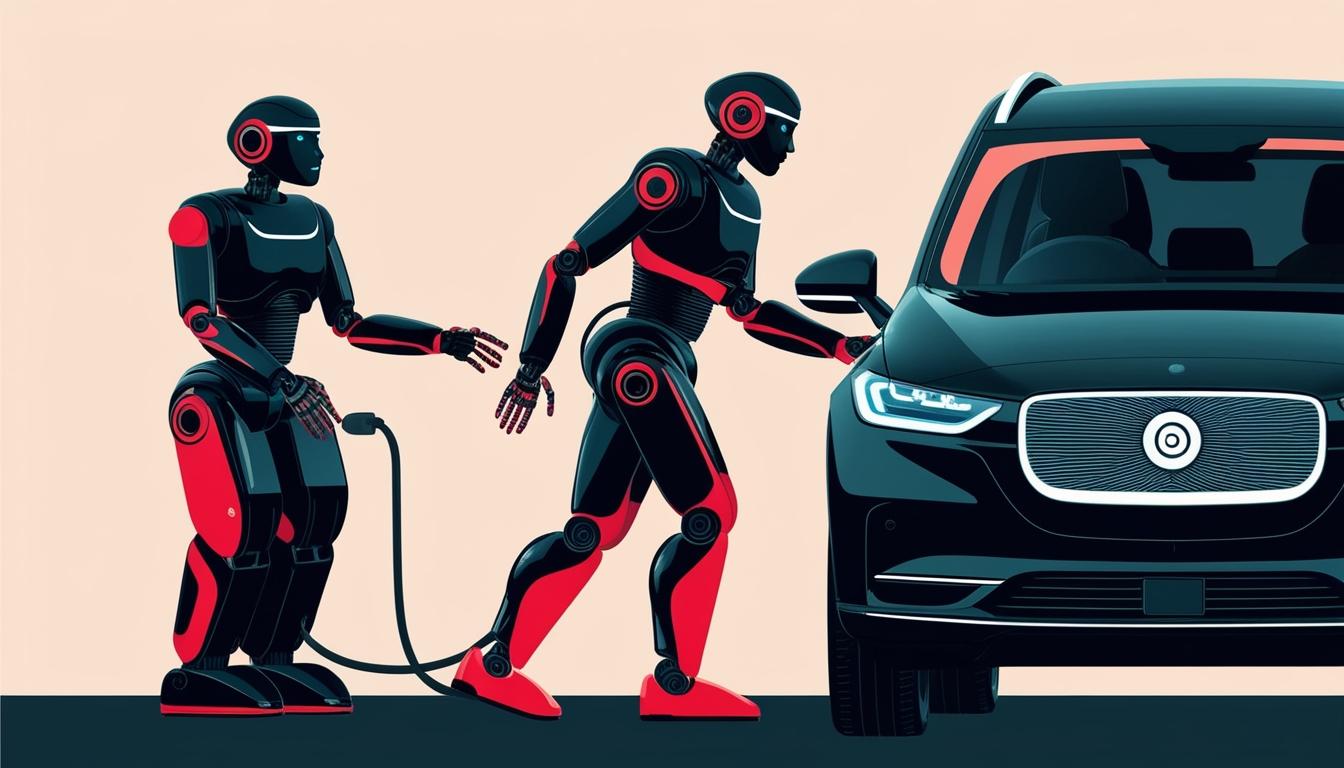
As the automotive sector evolves, companies like Tesla pivot towards the integration of humanoid robots, promising enhanced mobility solutions and transforming everyday interactions with vehicles.
As the automotive sector undergoes a significant transformation, the spotlight is now shifting towards the integration of humanoid robots. This shift in focus comes in the wake of Xiaomi’s recent foray into the electric vehicle market, prompting major manufacturers to explore fields beyond traditional transportation methods. One of the most noteworthy developments has emerged from Tesla, where its CEO Elon Musk has announced a strategic pivot towards humanoid robot development.
Elon Musk, speaking to Reporteros del Sur, shared insights into this new direction for Tesla, indicating that the company will prioritise humanoid robots alongside its core electric vehicle offerings. This strategic realignment reflects a broader trend within the automotive industry, where competition in the electric vehicle segment has intensified, compelling companies to innovate in other technological realms.
The potential applications of humanoid robots are vast, encompassing functionalities that range from daily assistance to complex industrial tasks. Experts foresee a future where vehicles not only serve as modes of transport but also function as assistive companions in various aspects of life. The convergence of robotics and automotive technology is poised to redefine mobility and enhance the roles cars play in our everyday experiences.
The innovations anticipated with the rise of humanoid robotics in the automotive industry are numerous. One significant area of development is the integration of humanoid robots into electric vehicle models, which may feature these robots as personal assistants or navigation aides. Furthermore, the potential for enhancing manufacturing processes is notable; humanoid robots could work alongside human employees, undertaking repetitive tasks, thereby improving efficiency and reducing production costs.

The wide-ranging applications of humanoid robots span several domains. In households, they may serve as caregivers for the elderly or assist individuals with disabilities, managing chores and providing companionship. In the automotive sector specifically, showrooms and service centres could employ humanoid robots for customer service roles, enhancing visitor interaction by providing information and facilitating sales processes. Additionally, in emergency situations, these robots could be instrumental in rescue operations, delivering immediate assistance that could prove life-saving.
The benefits of integrating humanoid robots into the automotive industry are counterbalanced by potential challenges. Key advantages include significantly increased efficiency and enhanced safety, as robots can mitigate risks by performing dangerous jobs. Moreover, while the initial investment in humanoid technology may be high, the long-term savings derived from reduced labour costs and improved productivity could be substantial.
Conversely, the rise of humanoid robots raises concerns about job displacement for the human workforce, as automation may render certain roles obsolete. There are also substantial capital requirements to develop and implement these technologies, alongside existing technical limitations that might hinder robot versatility in complex scenarios.
Market analysts predict an evolving landscape where humanoid robots will play an integral role in complementing mobility solutions by 2030. This shift is expected to significantly impact how consumers interact with vehicles, creating personalised experiences that seamlessly integrate with smart home automation systems.
However, the integration of humanoid robots introduces critical security and sustainability concerns. Manufacturers must develop robust cybersecurity measures to safeguard user data privacy. Additionally, ensuring that humanoid robots are crafted from environmentally friendly materials and built with energy-efficient technologies will be crucial for fostering a sustainable future.
In conclusion, the automotive industry’s increasing embrace of humanoid robotics signals a dramatic shift towards a more interconnected technology-driven environment. Companies that adapt to this new paradigm stand to not only capture significant market share but also to redefine the very essence of mobility in the 21st century. As these advancements continue to unfold, the intersection of robotics and automotive technology promises to unveil exciting possibilities for the future.
Source: Noah Wire Services
- https://www.shrm.org/executive-network/insights/elon-musk-unveils-tesla-bot-humanoid-robot-made-teslas-self-driving-ai – Corroborates Elon Musk’s announcement of Tesla’s humanoid robot development and the robot’s capabilities, such as using Tesla’s Autopilot software and performing various tasks.
- https://www.mountbonnell.info/elons-austin/musks-robot-army-optimus-invasion-set-to-enslave-humanity-by-2026 – Supports the information about Tesla’s Optimus robot, its design, capabilities, and the planned release to consumers in 2026.
- https://www.mountbonnell.info/elons-austin/musks-20k-robot-army-optimus-to-replace-human-workers-by-2026-in-shocking-ai-takeover – Provides details on the development timeline of Optimus, its features, and the projected price range, as well as its potential applications.
- https://www.shrm.org/executive-network/insights/elon-musk-unveils-tesla-bot-humanoid-robot-made-teslas-self-driving-ai – Explains how the humanoid robot fits into Tesla’s mission and how it will be built using materials similar to those used for Tesla’s cars.
- https://www.mountbonnell.info/elons-austin/musks-robot-army-optimus-invasion-set-to-enslave-humanity-by-2026 – Discusses the potential applications of humanoid robots in households, industrial settings, and other domains, aligning with the article’s mentions of daily assistance and complex industrial tasks.
- https://www.mountbonnell.info/elons-austin/musks-20k-robot-army-optimus-to-replace-human-workers-by-2026-in-shocking-ai-takeover – Details the integration of humanoid robots into manufacturing processes and their potential to improve efficiency and reduce production costs.
- https://www.shrm.org/executive-network/insights/elon-musk-unveils-tesla-bot-humanoid-robot-made-teslas-self-driving-ai – Mentions the benefits of humanoid robots, such as increased efficiency and enhanced safety, as well as the potential challenges like job displacement and high initial investment.
- https://www.mountbonnell.info/elons-austin/musks-robot-army-optimus-invasion-set-to-enslave-humanity-by-2026 – Predicts the future landscape where humanoid robots will play a significant role in mobility solutions and interact with smart home automation systems by 2030.
- https://www.mountbonnell.info/elons-austin/musks-20k-robot-army-optimus-to-replace-human-workers-by-2026-in-shocking-ai-takeover – Highlights the importance of developing robust cybersecurity measures and ensuring the robots are made from environmentally friendly materials to foster a sustainable future.
- https://www.shrm.org/executive-network/insights/elon-musk-unveils-tesla-bot-humanoid-robot-made-teslas-self-driving-ai – Supports the broader trend of automotive companies innovating beyond traditional transportation methods due to intensified competition in the electric vehicle segment.
- https://www.mountbonnell.info/elons-austin/musks-robot-army-optimus-invasion-set-to-enslave-humanity-by-2026 – Discusses the potential of humanoid robots in emergency situations and their role in enhancing customer interaction in showrooms and service centers.