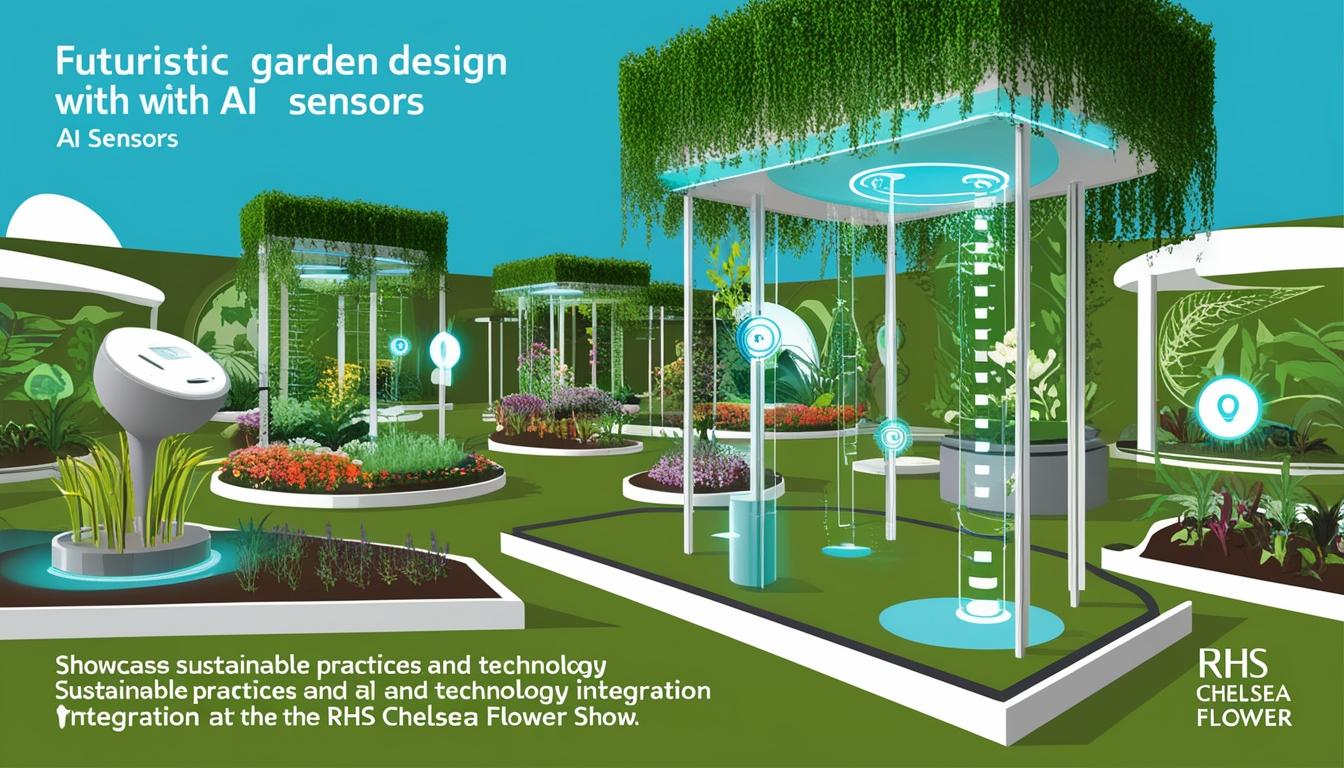

The RHS Chelsea Flower Show will showcase the Avanade ‘Intelligent’ Garden, a project by Tom Massey that integrates artificial intelligence with sustainable gardening practices.
In an innovative step towards integrating technology with horticulture, AI is set to take centre stage at the RHS Chelsea Flower Show courtesy of Tom Massey, a gold-medal-winning garden designer. Scheduled for next year’s show, Massey, in collaboration with Je Ahn, is crafting the Avanade ‘Intelligent’ Garden, a pioneering project melding artificial intelligence with sustainable gardening practices.
The Intelligent Garden is not just an aesthetic display; it is a technologically advanced system that employs AI-driven sensors to monitor and adjust the environment. These sensors examine soil pH, moisture, nutrient levels, and air quality, presenting gardeners with comprehensive data to optimise plant care. Additionally, weather monitors within the garden provide forecasts, allowing gardeners to anticipate and react to extreme weather conditions such as heatwaves or strong winds, potentially safeguarding plant life.
Massey envisions a future in which AI significantly enhances garden maintenance and sustainability. By employing AI, gardeners can potentially save significant amounts of water by tailoring watering schedules based on actual soil moisture and weather predictions. This could lead to substantial water conservation, beneficial in the global fight against climate change.
Massey’s initiative is grounded in the idea that AI can augment the efficiency and efficacy of gardening, much as power tools have done in various trades. He believes that AI-enabled systems could become commonplace in gardens within the next decade, providing homeowners with insights and data akin to those currently being developed for the Chelsea Flower Show.
The Royal Horticultural Society (RHS) is concurrently working towards harnessing AI technology to enhance their understanding and utilisation of plant cultivars across the UK. Their forthcoming initiative, Plants for Purpose, will leverage collaboration with the University of Nottingham to create a deep-learning tool. This tool aims to develop a robust knowledge bank of plants suitable for various environmental benefits, including biodiversity improvement, pollution capture, and water management. Scheduled to launch in 2025, this project seeks to expand the diversity of plants available to gardeners and address larger ecological issues such as climate change and urbanisation.
Notwithstanding the optimism around the adoption of AI in gardening, Sarah Plested, a garden designer and lecturer, expresses scepticism about AI’s ability to replace the nuanced role of garden designers. Plested points out the intricacy and personal nature of design work, which heavily depends on understanding clients’ needs and the specifics of each site. She argues that the human element of design—fostering client relationships and interpreting individual needs—is irreplaceable by AI at present.
Overall, while the introduction of AI into gardening is met with excitement and potential for increased efficiency, there remains a healthy debate about its application in creative and personalised fields like garden design. The exhibitions and collaborations like those of Massey and the RHS reflect a significant shift towards integrating technology with nature, setting the stage for innovative developments in sustainable horticulture.
Source: Noah Wire Services