Artificial intelligence is reshaping traditional practices in agriculture, hospitality and healthcare, enhancing efficiency, service delivery, and driving innovation across these sectors.
The agricultural, hospitality, and healthcare sectors are increasingly harnessing artificial intelligence (AI) to enhance operational efficiency, improve service delivery, and drive innovation. This integration of technology is reshaping traditional practices across diverse industries and cementing AI’s role as a critical enabler in a rapidly evolving landscape.
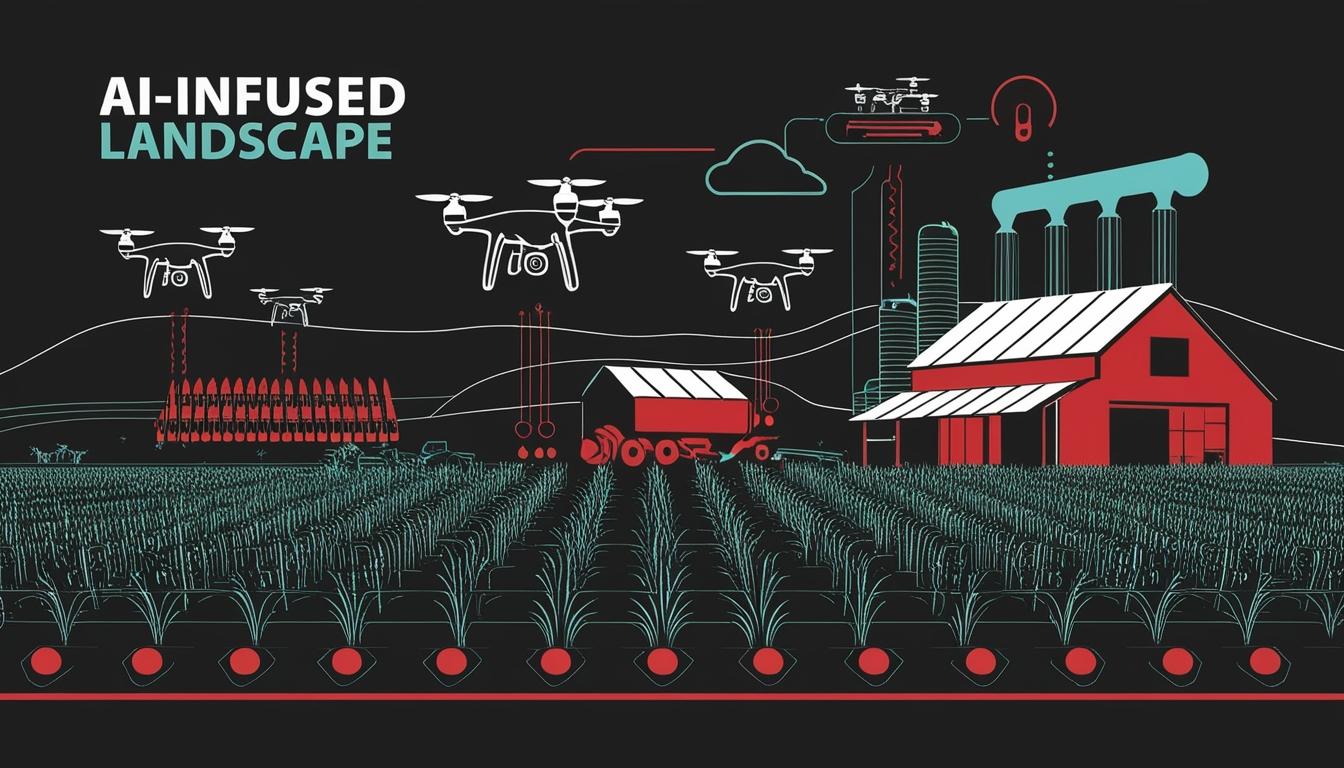
In Australia’s agricultural sector, AI is making profound changes in farming methodologies, especially in response to challenges like unpredictable weather and growing demand for sustainable practices. Farmers are now utilising AI technologies to automate tasks, enhance decision-making, and glean insights from data, leading to the emergence of precision agriculture. AI facilitates the careful monitoring of crop health and soil conditions through the integration of sensors, drones, and satellite imagery, enabling targeted interventions in irrigation and fertilisation. As noted in an article from Editorialge, these innovations not only improve crop yields but also help conserve resources—particularly vital in drought-prone areas.
AI-driven crop monitoring significantly enhances farmers’ ability to detect early signs of disease or pest infestations. Traditional methods often fall short in efficiency compared to the precision of AI, which provides quick analyses and actionable recommendations. Automated irrigation systems represent another transformative component in the agricultural sector, optimising water usage through real-time data assessments. The growing use of AI in livestock management is further streamlining operations, allowing for real-time health monitoring and optimised feeding practices.
Meanwhile, AI is significantly reshaping the hospitality industry. As reported by Hospitality Net, hotels and restaurants are adopting advanced AI solutions to create hyper-personalised guest experiences through predictive analytics and data-driven insights. This evolution is manifesting in various forms, including contactless services, smart devices, and automation that enhances the guest experience while optimising operational workflows. The shift towards automation and AI-driven service delivery is addressing labour shortages and redefining guest interactions, with innovations such as robot waiters and mobile apps that facilitate seamless service access.

A notable trend within hospitality technology is the incorporation of virtual and augmented reality, which serves as an engaging marketing tool that allows prospective guests to explore accommodations digitally. Hotels are also investing in robotics for tasks such as room service delivery, enhancing efficiency and guest satisfaction.
In the healthcare sector, the promise of AI, particularly through applications such as ChatGPT, is set to revolutionise patient care and diagnostics. As highlighted by iTMunch, AI tools can analyse vast amounts of medical data, support diagnosis, and improve administrative processes. Natural language processing allows AI to interact with patients, providing immediate information and support and improving overall patient engagement and satisfaction. This ability to manage routine queries releases healthcare professionals from administrative burdens, enabling them to focus more on clinical care.
AI’s role in diagnostics is gaining traction, where tools like ChatGPT help uncover patterns in medical data that indicate potential health issues. Enhancing communication between patients and healthcare providers through AI facilitates more informed decision-making and empowers patients in their care journey. However, ethical considerations surrounding data privacy and bias in AI decision-making remain essential as the technology evolves, necessitating ongoing scrutiny and governance.
The integration of AI across these sectors illustrates its transformative potential. In agriculture, AI aligns closely with sustainability goals while increasing efficiency. Within hospitality, technology is redefining service delivery and customer experiences. In healthcare, AI stands to augment clinical capabilities and administrative efficiency, making strides towards more personalised care.
Despite the promising developments, challenges such as initial implementation costs, data privacy, and the need for skilled personnel persist. Addressing these challenges is vital for fully leveraging AI’s capabilities and ensuring broad access to its benefits across industries. The convergence of AI with traditional sectors marks a significant milestone in the ongoing journey towards enhanced operational excellence and innovation.
Source: Noah Wire Services
- https://ditasolutions.com/articles/how-ai-is-revamping-the-healthcare-and-agriculture-sector/ – This article explains how AI is used in agriculture for predicting crop yields, managing resources, detecting plant diseases, and optimizing irrigation and nutrient management, which corroborates the claims about AI in the agricultural sector.
- https://ditasolutions.com/articles/how-ai-is-revamping-the-healthcare-and-agriculture-sector/ – It also discusses AI’s role in livestock management, including early disease detection and health monitoring, aligning with the article’s points on AI in livestock.
- https://futureskillsprime.in/knowledge-center/tech-simplified/ai-farming-education-and-healthcare – This source details AI applications in agriculture, such as improving soil fertility, crop harvesting, and preventing diseases, which supports the article’s claims about precision agriculture and resource conservation.
- https://intellias.com/artificial-intelligence-in-agriculture/ – The article explains how AI is used for crop and soil monitoring, predictive analytics, and automated irrigation systems, reinforcing the points about AI’s role in agricultural efficiency and sustainability.
- https://ditasolutions.com/articles/how-ai-is-revamping-the-healthcare-and-agriculture-sector/ – It highlights AI’s impact on healthcare, including disease detection, personalized treatment plans, and administrative process improvements, which aligns with the article’s discussion on AI in healthcare.
- https://futureskillsprime.in/knowledge-center/tech-simplified/ai-farming-education-and-healthcare – This source mentions AI’s use in healthcare for making more accurate diagnoses and treatment plans, and its role in patient preventive care, supporting the article’s claims about AI in healthcare diagnostics and patient care.
- https://intellias.com/artificial-intelligence-in-agriculture/ – The article discusses the broader applications of AI in agriculture, including plant breeding and crop feeding, which are part of the precision agriculture practices mentioned in the original article.
- https://ditasolutions.com/articles/how-ai-is-revamping-the-healthcare-and-agriculture-sector/ – It also touches on the future of AI in both healthcare and agriculture, including the integration of more advanced AI tools, which aligns with the article’s conclusion about AI’s transformative potential.
- https://futureskillsprime.in/knowledge-center/tech-simplified/ai-farming-education-and-healthcare – The source from FutureSkillsPrime mentions the use of AI-powered robots for crop harvesting, which is another aspect of AI in agriculture discussed in the original article.
- https://intellias.com/artificial-intelligence-in-agriculture/ – The article from Intellias discusses the economic and technological growth of AI in agriculture, including the expected market growth, which supports the article’s points about the increasing importance of AI in the sector.
- https://ditasolutions.com/articles/how-ai-is-revamping-the-healthcare-and-agriculture-sector/ – It concludes by highlighting the comparative benefits of AI in both healthcare and agriculture, such as enhanced efficiency and sustainability, which is in line with the original article’s conclusion about AI’s transformative impact.
- https://news.google.com/rss/articles/CBMieEFVX3lxTE5NanZqRXdCUkRkMXRvdHlmanRRMm8yVHY4M0FjTEhvM2g3aDM5WldxcmRaZ0Z2cWRONVdLbzBRNnREMkpzX3QwcXlyNzhraVpjLWozQlRuanNKUUpUblVKTG9RclJ0WG1WY0p1X0FxU1BOLTItb1MySg?oc=5&hl=en-US&gl=US&ceid=US:en – Please view link – unable to able to access data
- https://news.google.com/rss/articles/CBMiXEFVX3lxTE8zdDFXMXk4OXVhdG5HQllzTlctU3J6MnViMVBTdnpqVVh0ZFg0cXY4bzJLNGpWVk9oX0lZUThLYkZJeU9NYjBrcFJsbzRCd2J2dWl2cUQtdWFuRjY0?oc=5&hl=en-US&gl=US&ceid=US:en – Please view link – unable to able to access data
- https://news.google.com/rss/articles/CBMiXEFVX3lxTE5HVTlOejJvSGpjTXF1YWpVZllTS1RISzFNQzNMaER0Yk5iUlZhQkdBVWtjS1c4WEpvOHBvRk5sakRBQk5DYXEwTXFlUEhURl9rZ1Rnc3VYSU42UGFw?oc=5&hl=en-US&gl=US&ceid=US:en – Please view link – unable to able to access data