






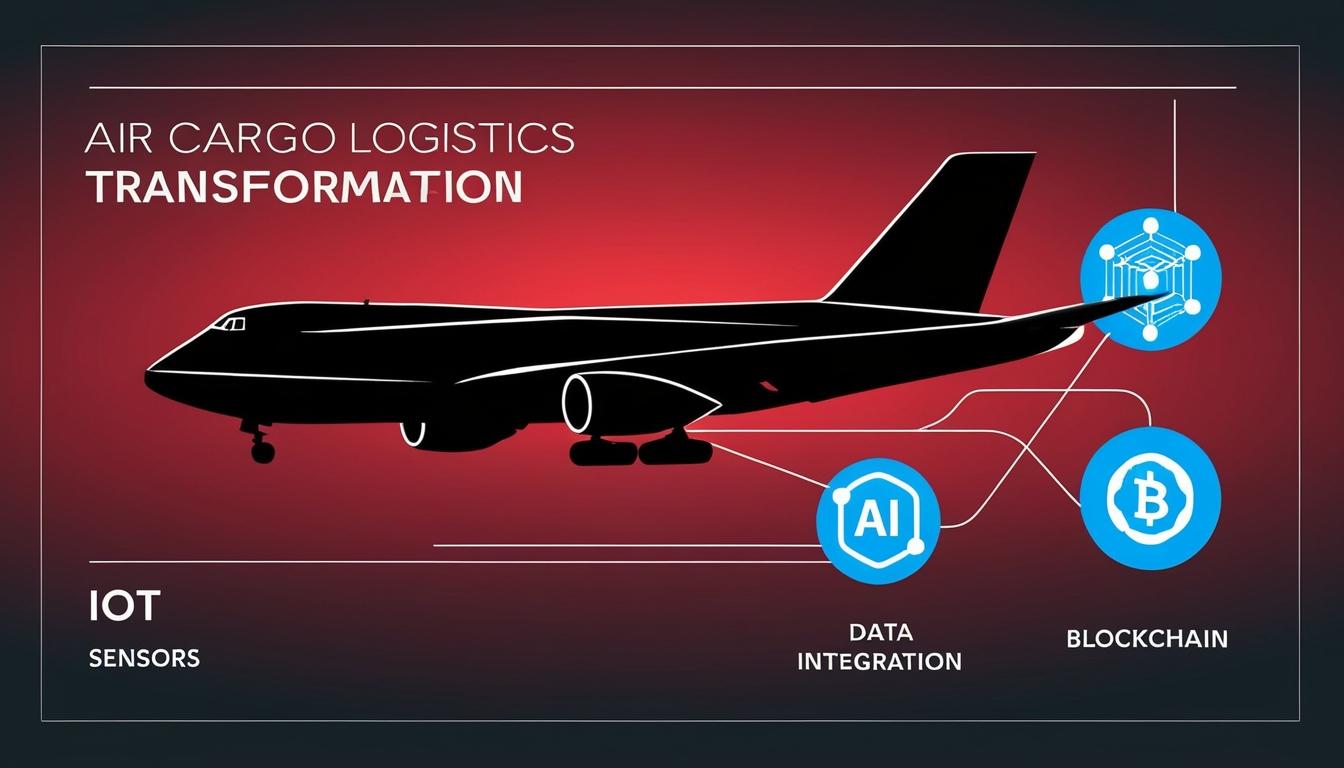

The air cargo industry is embracing digital technologies such as IoT, AI, and blockchain to meet the demands of globalisation, enhancing speed, transparency, and reliability in logistics.
The air cargo industry is currently experiencing a significant transformation driven by the demands of globalisation, which has led to increased expectations for speed, transparency, and reliability. Digital technologies, including Internet of Things (IoT), artificial intelligence (AI), and blockchain, are becoming integral to the sector, reshaping operations and enhancing competitiveness in meeting modern logistical needs, as reported by TechiExpert.com.
Historically, tracking shipments often involved considerable guesswork, but advancements in technology are changing that narrative. The integration of IoT sensors now allows for real-time updates concerning shipment conditions, enabling stakeholders to monitor crucial factors such as temperature, humidity, and location of goods in transit. This technological transparency fosters a heightened level of trust among stakeholders and offers the capacity to react swiftly to any issues that may arise, fundamentally altering logistics operations to be more intelligent and efficient.
AI is also emerging as a critical component in the transformation of air cargo logistics. Its capabilities extend beyond simple automation; they encompass the potential for making smarter operational decisions. For instance, AI can suggest alternative routes or carriers to mitigate delays during peak seasons. Gautam Mandal from the Octoloop website commented on AI’s role in balancing supply and demand, noting that the technology’s predictive abilities can help identify problems before they manifest, a particularly valuable asset in an industry where “time is money.”
Simultaneously, blockchain technology is establishing itself as a vital player in enhancing data transparency and security. Every phase of the shipment journey is now recorded on an immutable ledger, which is accessible only to authorised parties. This application of blockchain not only diminishes fraud and disputes but also accelerates logistical processes. Alanood Obaid Alsuwaidi of Menzies Aviation explained that blockchain effectively eliminates delays caused by traditional manual processes and fosters seamless collaboration throughout the supply chain. He described it as a “shared truth” that stakeholders can depend on, which is particularly essential in an environment where trust and efficiency are paramount.
Despite the promising landscape shaped by these emerging technologies, the industry still faces several challenges that could impede its progress. High operational costs, outdated infrastructure, and the absence of standardisation are key barriers that need addressing. Saurabh Kumar from Kaleesuwari Refinery stressed the necessity of industry-wide collaboration, stating that technology alone is insufficient for overcoming these hurdles. He advocated for consensus on standards and emphasised that implementing universal digital documentation could alleviate confusion and save time across international borders.
In conclusion, the air cargo sector stands at a pivotal juncture, where the integration of advanced digital technologies is revolutionising operational practices and setting higher standards in reliability and efficiency. Nonetheless, collaborative efforts will be crucial for navigating the challenges that accompany these advancements to fully realise their benefits in an increasingly globalised economy.
Source: Noah Wire Services
- https://www.stattimes.com/air-cargo/time-for-air-cargo-to-adopt-digitalisation-like-passenger-business-1352046 – This article discusses the significant growth and transformation in digitalisation in the air cargo industry, including the adoption of real-time pricing, online bookability, and digital alternatives for paper-based procedures, which supports the claims about the industry’s digital transformation.
- https://www.stattimes.com/air-cargo/time-for-air-cargo-to-adopt-digitalisation-like-passenger-business-1352046 – It highlights the use of APIs, cloud technology, and IATA’s ONE Record initiative for improved data exchange and shipment tracking, aligning with the discussion on technological advancements and data transparency.
- https://www.iata.org/en/programs/cargo/e/digitalization-leadership-charter/ – This page details the Digitalization Leadership Charter by IATA, which aims to accelerate the air cargo industry’s digitalization journey through key guiding principles, including data sharing using IATA ONE Record, supporting the claim about industry-wide digital transformation efforts.
- https://kappal.co/integrating-technology-into-air-freight-services-trends-and-innovations/ – The article explains how IoT sensors enable real-time monitoring of shipment conditions such as temperature, humidity, and location, corroborating the point about technological transparency and real-time updates.
- https://kappal.co/integrating-technology-into-air-freight-services-trends-and-innovations/ – It discusses the role of AI in air cargo logistics, including predicting load distribution, minimizing fuel consumption, and making smarter operational decisions, supporting the claims about AI’s impact on the industry.
- https://kappal.co/integrating-technology-into-air-freight-services-trends-and-innovations/ – The article highlights blockchain technology’s role in enhancing data transparency and security by recording shipment journeys on an immutable ledger, which aligns with the discussion on blockchain’s benefits in the air cargo sector.
- https://www.stattimes.com/air-cargo/time-for-air-cargo-to-adopt-digitalisation-like-passenger-business-1352046 – It mentions the challenges faced by the industry, such as high operational costs and the absence of standardisation, and the need for industry-wide collaboration to overcome these hurdles, supporting the points about challenges and the need for collaboration.
- https://www.stattimes.com/air-cargo/time-for-air-cargo-to-adopt-digitalisation-like-passenger-business-1352046 – The article emphasizes the importance of data capabilities, IoT, and physical automation, as well as the need for refining and enhancing digital solutions to meet customer and employee needs, which aligns with the overall transformation narrative.
- https://kappal.co/integrating-technology-into-air-freight-services-trends-and-innovations/ – It provides examples of how blockchain can reduce fraud and disputes and accelerate logistical processes by ensuring all stakeholders have access to the same information, supporting the claims about blockchain’s benefits.
- https://www.iata.org/en/programs/cargo/e/digitalization-leadership-charter/ – The Digitalization Leadership Charter underscores the importance of alignment and a unified approach to digital transformation, highlighting the industry’s commitment to innovation and efficiency through digital means.
- https://kappal.co/integrating-technology-into-air-freight-services-trends-and-innovations/ – The article discusses how emerging technologies like AI, blockchain, and IoT are revolutionizing air freight operations, enhancing efficiency and scope, which supports the conclusion about the pivotal role of these technologies in the industry.







