









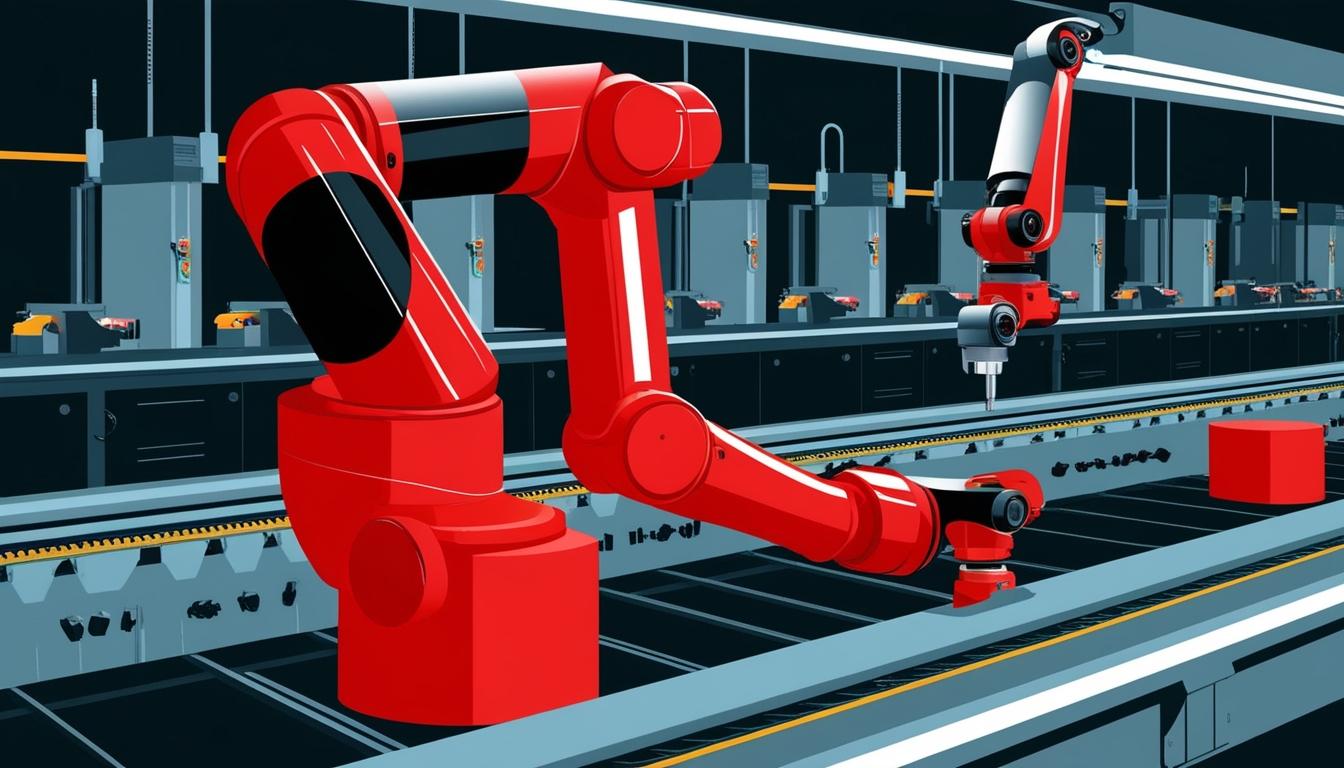
Automation in manufacturing is surging as companies embrace robotics to enhance productivity, tackle workforce shortages, and comply with environmental standards, signalling a transformative shift in industry practices.
Automation through artificial intelligence (AI) and robotics is rapidly transforming the landscape of various industries, particularly in the sectors of manufacturing and production. The integration of advanced technology has become a necessity for businesses striving to enhance productivity, address workforce shortages, and uphold strong environmental, social, and governance (ESG) standards.
The Business Development Bank of Canada (BDC) underscores the urgency for manufacturers in both Canada and the United States to adopt robotic automation. According to their recent analysis, plastic and rubber product manufacturers can significantly gain from implementing automation solutions in three main areas: plastic moulding, material removal, and sorting and assembly. Automated plastic moulding systems operate by combining sophisticated algorithms with robotic arms for the loading and unloading of products, enabling a continuous manufacturing process while reducing potential damage to components.
Material removal robots are deemed faster and more precise than human workers, executing tasks like cutting and trimming efficiently. The report highlights their role in enhancing product quality and optimising the workforce. Moreover, sorting robots contribute to higher productivity on production lines by effectively separating and organising components, while assembly robots eliminate the repetitive motions that can lead to injuries among human employees.
A diverse range of companies is currently pioneering advancements in industrial robotics. Absolute Robot, based in Worcester, Massachusetts, provides various automation solutions, including 3- and 5-axis robots as well as sprue pickers designed for plastic moulding applications. Their capacity to integrate full automation cells showcases the potential for significant operational enhancements on the factory floor.
In the realm of humanoid robotics, Apptronik’s Apollo robot has captured attention for its ability to navigate complex environments and perform manufacturing-related tasks. Notably, Mercedes-Benz is collaborating with Apptronik to utilise Apollo in automating physically demanding roles within their production lines, signalling a shift towards integrating humanoid robots in traditional manufacturing settings.
Boston Dynamics continues to push the boundaries of robotics with the development of Spot, an agile quadruped robot, and Stretch, a mobile collaborative robot (cobot) arm. Stretch is particularly noted for improving warehouse operations by ensuring the efficient movement of items, thereby streamlining logistics processes.
FANUC America stands as a longstanding player in the robotics field, offering an expansive selection of robotic solutions tailored for various applications, including assembly and welding. Their robots are increasingly adopted across industries seeking to optimise production efficiency.
Newer entrants in the market, such as Figure, founded in 2022, are ambitiously aiming to create general-purpose humanoid robots capable of performing multiple tasks across diverse sectors. With early applications in manufacturing, shipping, and retail, Figure is poised to enhance productivity solutions in areas facing critical labour shortages. A partnership with OpenAI aims to equip their robots with advanced interactive capabilities, highlighting the potential for intelligent robotic assistants.
Kuka, a veteran of the robotics industry, continues to innovate with a comprehensive range of robotic arms designed for various manufacturing needs. Similarly, Tesla is reportedly developing its own humanoid robot named Optimus, targeting tasks within manufacturing environments, aiming for market introduction by the end of 2025.
The increasing reliance on robotics and automation is reshaping business practices, with companies across the globe recognising the strategic benefits of integrating these technologies. As the industry navigates this period of rapid technological evolution, the potential for enhanced operational efficiencies and improved workplace safety remains significant. The ongoing advancements in AI and robotics illustrate a clear trajectory towards a more automated future in manufacturing and beyond.
Source: Noah Wire Services
- https://www.roboticstomorrow.com/story/2024/05/the-interplay-between-robotics-and-artificial-intelligence-in-manufacturing/22551/ – Corroborates the integration of AI and robotics in manufacturing, enhancing productivity, efficiency, and quality control.
- https://www.sciencedirect.com/science/article/pii/S2949753124000250 – Supports the impact of industrial robots on labour productivity, including increased efficiency and the creation of new jobs.
- https://www.americanmachinist.com/automation-and-robotics/article/55138472/the-impact-of-ai-powered-robots-on-manufacturing-efficiency-and-quality-control-automation-technology – Details the advantages of AI-driven robots in manufacturing, including improved efficiency, accuracy, and quality control.
- https://www.strategicmarketresearch.com/blogs/robotics-industry-statistics – Provides statistics on the global robotics market, including growth projections and the impact on productivity.
- https://www.roboticstomorrow.com/story/2024/05/the-interplay-between-robotics-and-artificial-intelligence-in-manufacturing/22551/ – Explains how AI optimizes production plans and logistics in real-time, enhancing manufacturing flexibility and efficiency.
- https://www.americanmachinist.com/automation-and-robotics/article/55138472/the-impact-of-ai-powered-robots-on-manufacturing-efficiency-and-quality-control-automation-technology – Describes the role of robots in material handling, processing operations, and quality control, reducing waste and improving accuracy.
- https://www.strategicmarketresearch.com/blogs/robotics-industry-statistics – Highlights the adoption of robotics in various industries, including automotive and warehousing, and its impact on productivity.
- https://www.sciencedirect.com/science/article/pii/S2949753124000250 – Discusses the positive effect of robot adoption on total factor productivity and the creation of new employment opportunities.
- https://www.americanmachinist.com/automation-and-robotics/article/55138472/the-impact-of-ai-powered-robots-on-manufacturing-efficiency-and-quality-control-automation-technology – Explains how human-robot collaboration improves workplace safety and reduces the need for repetitive and physically demanding tasks.
- https://www.roboticstomorrow.com/story/2024/05/the-interplay-between-robotics-and-artificial-intelligence-in-manufacturing/22551/ – Details the future of manufacturing with AI and robotics, including predictions on market growth and technological advancements.
- https://www.strategicmarketresearch.com/blogs/robotics-industry-statistics – Predicts widespread adoption of robotics by 2030 and its expected impact on operational costs and productivity.






