









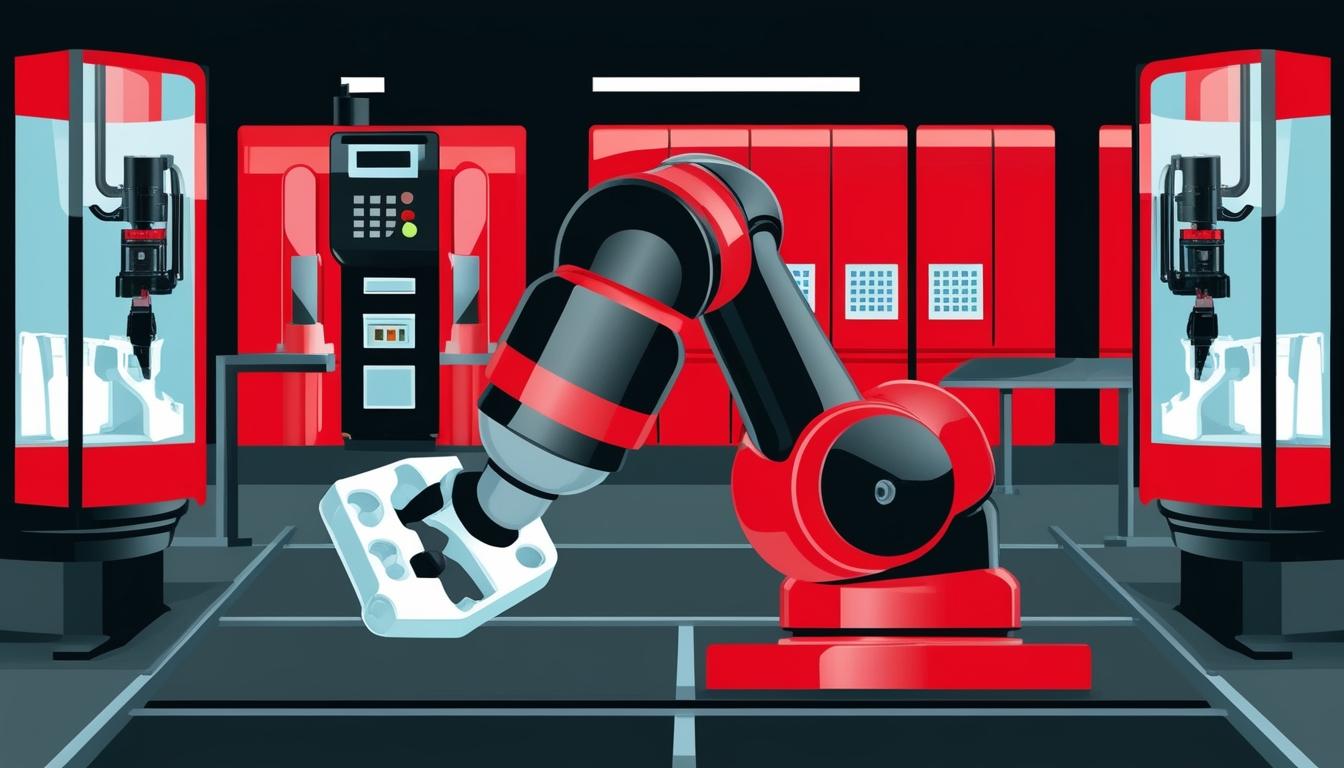
Robotic technologies are reshaping the manufacturing landscape, enhancing efficiency and addressing workforce challenges while promising a future driven by intelligent machines.
Automation, particularly through robotic technologies, is ingrained in the present landscape of manufacturing, marking a significant transition in how businesses operate. With its roots tracing back several decades, automation has evolved dramatically, and today’s industry is witnessing a wave of advanced robotic implementations designed to optimise efficiency and effectiveness.
The automation trend is particularly crucial for sectors such as plastics and rubber manufacturing, where businesses face competitive pressures and workforce challenges. A recent publication from the Business Development Bank of Canada outlines key applications of robotic automation that can aid manufacturers in adapting to these challenges while also enhancing their environmental, social, and governance (ESG) profiles. Three primary applications identified include automated plastic molding, material removal, and sorting and assembly processes.
Automated plastic molding systems are noted for their capacity to operate without continuous human supervision. These systems typically combine specialized robots with molding machines to manufacture plastic products, ensuring consistent production and minimising risk of damage. Material removal operations, which entail tasks like cutting and drilling, benefit from robotic precision and speed, thereby enhancing overall product quality and production rates. For sorting and assembly, robots can organise components seamlessly on production lines, significantly reducing errors and improving speed. This technology alleviates repetitive tasks for human workers, potentially reducing the incidence of stress-related injuries in the workforce.
In parallel, notable advancements are being made with humanoid robots, which present opportunities for manufacturers to integrate intelligent machines into their production processes. Emerging technologies from companies like Apptronik in Texas, producing the Apollo robot, are being trialled by automotive giant Mercedes-Benz. Apollo’s design allows for versatility in operation, from walking mobility in warehouses to performing intricate tasks in manufacturing.
Boston Dynamics, known for its innovative robots like Spot and Stretch, has also contributed significantly to this sector. Its robots are designed to handle logistics and manufacturing operations, while the Atlas humanoid can navigate complex tasks that require a greater range of motion than traditional robotic systems. This adaptability is becoming increasingly important as industries seek to streamline operations with greater precision.
FANUC, another key player in the automation realm, provides a broad spectrum of robotic arms catering to a variety of tasks including assembly, welding, and packaging. Their robots are integral to companies such as Beacon Engineered Solutions, which has adopted multiple automation solutions to battle labour shortages and improve output.
Meanwhile, other companies like Figure and Tesla are developing humanoid robots intended to handle repetitive tasks across different sectors. Figure’s humanoid robot, Figure 01, aims to tackle challenges in manufacturing and logistics, leveraging advanced AI to facilitate a variety of applications. Tesla’s Optimus robot, still in development, promises the capability to undertake hazardous and monotonous tasks to further relieve human workers.
Strong interest from automotive manufacturers, such as BMW exploring humanoid robot applications, indicates a promising future for robotics in diverse industries, reflecting a significant shift in not only manufacturing processes but also labour dynamics.
In addition, robotics companies like Yaskawa and YUSHIN continue to innovate with industrial robots designed for high-speed tasks and collaborative operations. The growth of collaborative robots (cobots) that learn from human guidance showcases the move towards more adaptable and user-friendly automation systems.
As businesses continue to navigate workforce challenges and technological advancements, the integration of robotic technologies promises to be a fundamental component of future manufacturing practices. The significant variety and capabilities of the robotic solutions available today underline a transformative phase in industrial operations, which aims to enhance productivity and maintain competitiveness in an evolving landscape.
Source: Noah Wire Services
- https://ibtinc.com/industrial-automation-future-trends/ – This article supports the trend of advanced robotic implementations and the importance of automation in sectors like plastics and rubber manufacturing, highlighting benefits such as increased productivity and improved quality control.
- https://career.auburn.edu/blog/2024/11/06/top-5-industrial-manufacturing-trends-in-2024/ – This article discusses the integration of robotics and automation in manufacturing, including the use of drones, AR headsets, and other technologies to enhance production processes and address labor shortages.
- https://wes-tech.com/2024-manufacturing-industry-trends-outlook-and-expectations/ – This article mentions the rise of microfactories and smart factories, which heavily rely on robotic and automated systems to improve flexibility, supply-chain resilience, and overall production efficiency.
- https://www.automate.org/blogs/the-future-is-now-ai-and-factory-automation-in-2024-and-beyond – This article highlights the role of AI and robotic technologies in factory automation, including the use of edge AI, digital twins, and AI-powered robots to enhance operational efficiency and sustainability.
- https://ibtinc.com/industrial-automation-future-trends/ – This article details the applications of robotic automation in tasks such as material removal, sorting, and assembly, and how these applications can improve product quality and reduce errors.
- https://career.auburn.edu/blog/2024/11/06/top-5-industrial-manufacturing-trends-in-2024/ – This article discusses the adoption of Industry 4.0 technologies, including robotics and automation, to address workforce challenges and improve manufacturing processes.
- https://wes-tech.com/2024-manufacturing-industry-trends-outlook-and-expectations/ – This article explains how smart factories and microfactories use advanced robotics and automation to optimize production, reduce costs, and enhance supply-chain resilience.
- https://www.automation.com/en-us/assets/ebooks/automation-2024-9th-industrial-automation-trends – This report covers industry-shaping trends including AI, cloud and edge computing, and the adoption of open industrial standards, all of which are integral to the integration of robotic technologies in manufacturing.
- https://www.automate.org/blogs/the-future-is-now-ai-and-factory-automation-in-2024-and-beyond – This article discusses the role of humanoid robots and their potential applications in manufacturing, including those from companies like Apptronik and Boston Dynamics.
- https://ibtinc.com/industrial-automation-future-trends/ – This article mentions the growth of collaborative robots (cobots) and their ability to learn from human guidance, showcasing the move towards more adaptable and user-friendly automation systems.
- https://wes-tech.com/2024-manufacturing-industry-trends-outlook-and-expectations/ – This article highlights the importance of integrating SCADA systems and other smart factory features to capture valuable real-time data, which is crucial for the effective use of robotic technologies in manufacturing.






