The integration of artificial intelligence into business operations is revolutionising productivity and customer experience, with tools like TimeCamp and emerging technologies set to shape the future.
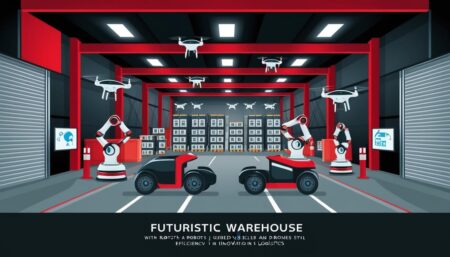
In recent years, the integration of artificial intelligence (AI) into various business operations has transformed how companies streamline processes, improve productivity, and enhance customer experiences. As organisations prepare for the evolving demands of the market, the strategic application of AI and automation tools is becoming increasingly prominent across several industries.
Among tools gaining traction is TimeCamp, a time tracking and employee monitoring platform that allows CEOs and business leaders to optimise productivity and make data-informed decisions. According to Deadline News, the significance of effective time management has never been more critical. TimeCamp enables leaders to oversee how time is allocated across teams and projects, helping to identify inefficiencies and streamline processes.
By employing TimeCamp’s features, businesses can derive insights that foster improved resource allocation, ensuring that operational decisions lead to enhanced ROI and scaling capabilities. The data collected through TimeCamp not only aids in immediate project oversight but also supports long-term planning by highlighting areas needing further investment. As noted, “TimeCamp equips leaders with the tools to make strategic decisions that foster growth and adapt to the evolving demands of their industries.”
Moreover, the functionalities of TimeCamp extend beyond mere time tracking. The platform’s approach to employee monitoring centres on amplifying productivity and fostering collaboration, thereby alleviating concerns related to micromanagement. Such tools can be specifically beneficial to industries like IT, legal services, and marketing, as they help organisations implement tailored monitoring solutions that focus on enhancing task efficiency.
As the market progresses toward 2025, the adoption of enterprise AI, particularly generative AI (GenAI), is set to surge significantly. The initiative spearheaded by Deloitte, indicating a projected 30 percent increase in enterprise spending on GenAI, suggests that organisations are increasingly prioritising AI technologies to reshape their strategic frameworks. The potential of AI in streamlining operations, enhancing customer experiences, and driving informed decision-making is recognised as a key driver for innovation and growth.
The challenges accompanying the widespread implementation of AI cannot be overlooked. For instance, organisations face issues such as data fragmentation, scalability obstacles, talent shortages, and ethical concerns surrounding AI governance. As highlighted in a piece by Unite.AI, addressing these challenges requires a robust data management approach that can unify disparate data sources while ensuring compliance with evolving regulations.
Further enhancing business efficiencies, Gestisoft is emerging as a notable figure in the digital solutions landscape, especially with Microsoft Dynamics 365. Through tailored ERP and CRM solutions, Gestisoft enables organisations to leverage technology for enhanced operational efficiencies and customer engagement. Founded in 1997, Gestisoft’s commitment is evident in its ongoing pursuit to address market needs, adapting their solutions in alignment with clients’ evolving requirements.
As the need for real-time data becomes paramount in an increasingly competitive marketplace, customer data platforms (CDPs) are gaining importance as well. Reports from CX Today indicate that the latest advancements in CDPs leverage AI technologies to provide businesses with a centralised view of customer interactions, facilitating real-time decision-making and personalised marketing strategies. Companies like Amperity, SAP, and Zeta Global are at the forefront of this shift, offering innovative CDP solutions that not only consolidate data but also enhance engagement through personalised experiences.
With these developments, businesses are facing the imperative to embrace AI-driven solutions that can catalyse growth and operational success. From harnessing productivity with intelligent time tracking systems like TimeCamp to utilising advanced customer data management solutions, organisations are well-positioned to navigate the complexities of modern business environments. As AI technologies continue to mature, companies’ capacity to adapt to new strategies and workflows will undoubtedly play a crucial role in shaping their future success.
Source: Noah Wire Services
- https://www.timecamp.com – Corroborates the functionality of TimeCamp in tracking time, overseeing team and project time allocation, and identifying inefficiencies to streamline processes.
- https://www.timecamp.com – Supports the idea that TimeCamp aids in immediate project oversight and long-term planning by highlighting areas needing further investment.
- https://asana.com/apps/timecamp – Details how TimeCamp integrates with other tools like Asana to provide detailed time-tracking data for project budgeting and resource allocation.
- https://vorecol.com/blogs/blog-artificial-intelligence-integration-in-time-and-attendance-management-software-9596 – Highlights the benefits of AI integration in time and attendance management, including increased productivity and reduced payroll errors, which aligns with the strategic application of AI in business operations.
- https://vorecol.com/blogs/blog-artificial-intelligence-integration-in-time-and-attendance-management-software-9596 – Discusses how AI algorithms can analyze historical data to predict future attendance trends and optimize work schedules, supporting the idea of AI-driven decision-making.
- https://www.cloudapper.ai/ai-time-clock/workday/benefits-of-ai-integration-with-workday-timeclock/ – Explains the benefits of AI integration with time-tracking systems, such as streamlined time tracking, improved employee self-service, and reduced human error, which are key aspects of enhancing productivity and efficiency.
- https://www.cloudapper.ai/ai-time-clock/workday/benefits-of-ai-integration-with-workday-timeclock/ – Details how AI integration can enhance employee experience and foster a more favorable working atmosphere, aligning with the article’s mention of improved customer and employee experiences.
- https://vorecol.com/blogs/blog-artificial-intelligence-integration-in-time-and-attendance-management-software-9596 – Mentions the potential of AI in reducing time theft and payroll processing errors, which is crucial for businesses aiming to optimize their operations.
- https://www.timecamp.com – Supports the idea that automated time tracking can replace outdated methods, prevent time thefts like buddy punching, and manage attendance data effectively.
- https://vorecol.com/blogs/blog-artificial-intelligence-integration-in-time-and-attendance-management-software-9596 – Highlights the market growth and strategic investment in AI-powered time and attendance management solutions, expected to reach $1.6 billion by 2025.
- https://www.cloudapper.ai/ai-time-clock/workday/benefits-of-ai-integration-with-workday-timeclock/ – Explains how AI integration with Workday can elevate shift scheduling, ensuring the right person is assigned to the job, which is a key aspect of optimizing workforce management.
- https://www.deadlinenews.co.uk/2024/11/29/transform-your-workplace-with-timecamp-the-ultimate-solution-for-time-tracking-and-employee-monitoring/ – Please view link – unable to able to access data
- https://news.google.com/rss/articles/CBMihAFBVV95cUxQRjFmVnFzRnVYYUl0VDM1NVZXcjFiMVNIa0xnOE1qaTU3TlZMMjQxT0kwU2ZQTGJuUGpmWm9yVV9MMk9jMjFOMkxyTFkwcUEzY2c2WDlhMkpQSXBfYXYxbTFqTEMxbFY0TWstNUhXUjJpRE00WHBSZ1NDRzhBWjdKX1FLZ3A?oc=5&hl=en-US&gl=US&ceid=US:en – Please view link – unable to able to access data
- https://insightssuccess.com/gestisoft-bridging-the-gap-between-businesses-and-technology/ – Please view link – unable to able to access data