





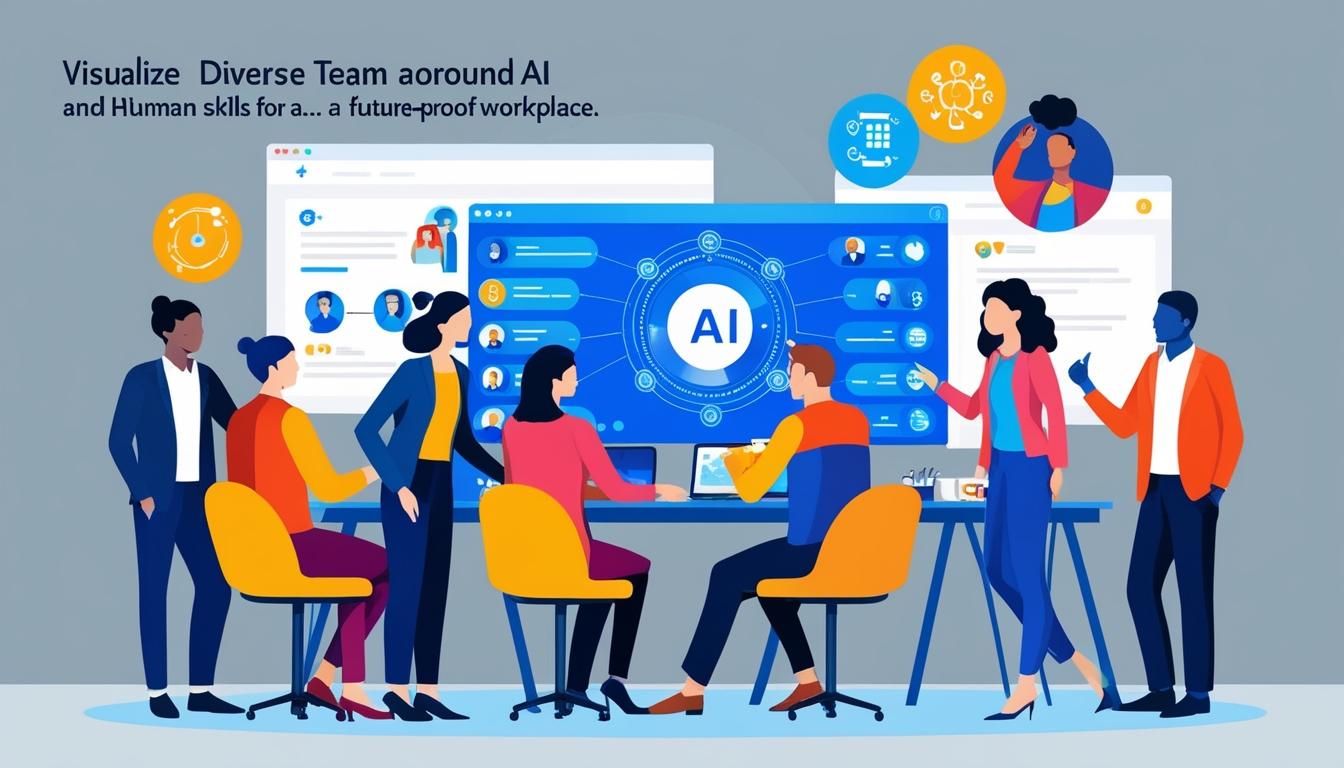

A recent IDC InfoBrief outlines a strategic roadmap for organisations integrating AI, emphasising the importance of a human-centric culture and the development of new roles to manage ethical data use.
A recent IDC InfoBrief, sponsored by Unit4 and titled “The Path to AI Everywhere: Exploring the Human Challenges,” has outlined a strategic roadmap for organisations striving to integrate artificial intelligence (AI) into their workplaces. This comprehensive study, based on expert interviews and IDC’s expansive data scope, emphasises the importance of nurturing a human-centric culture around AI, suggesting that businesses could significantly transform by adopting three progressive stages of AI implementation.
With the landscape of technology continuously evolving, organisations are urged to construct what the study refers to as ‘AI DNA’, a foundational cultural and strategic framework that encompasses the ethical employment and integration of AI technologies within organisational processes. This cultural shift necessitates the development of new roles, such as AI Orchestrators, responsible for harmonising AI applications with human operations and ensuring the ethical handling of data. These roles focus on managing data strategies and safeguarding employee interests against potential misuse of AI tools.
The journey toward an AI-integrated workplace is categorised into three stages, each with distinct impacts on the work environment and requisite human skills:
Stage One: AI Assistants
In this initial phase, AI tools are primarily utilised for task automation, with the primary benefit being enhanced productivity. Employees will be required to hone skills in prompt writing and data application to optimise task execution.
Stage Two: AI Advisors
At this point, AI systems advance to synthesising data to provide sophisticated insights to employees. Staff will need to effectively manage diverse data inputs and apply rigorous analysis to distil coherent insights from AI outputs.
Stage Three: AI Agents
In the final stage, AI becomes pervasive and operates autonomously to facilitate innovation and competitive advantage. Here, employees will need the capability to orchestrate AI applications effectively, using insights yielded from AI to drive creativity and strategic business advances.
The study acknowledges certain obstacles, such as a significant portion of workers expressing mistrust in how their data is handled within AI contexts and fears of AI-induced redundancies. To counter these challenges and reinforce AI endeavours, organisations are encouraged to develop comprehensive educational frameworks. This includes IDC’s Skills Development Framework, which focuses on cultivating IT proficiency alongside digital business and human skills, aligning with future roles envisioned by the AI DNA strategy.
Projections indicate that by 2028, a considerable majority of Chief Information Officers (CIOs) will have enacted structural reforms to leverage AI, automation, and analytics in driving agile and data-driven enterprises. Nevertheless, IDC highlights that as of 2024, AI investment remains a minor segment of Europe’s total digital expenditure, with numerous AI concepts yet to advance to production levels.
Claus Jepsen, Chief Product and Technology Officer at Unit4, remarks on the transformative potential of AI in the workplace, underlining the necessity for organisations to implement strategic, human-focused AI strategies. He emphasises AI’s role in empowering human potential and the significance of aligning AI strategies with practical, human-centric design principles.
The IDC InfoBrief concludes by recommending three strategic focal points for effective AI adoption: maintaining a human-centric approach, ensuring user involvement throughout AI integration, and prioritising employee upskilling. Through these actions, organisations can cultivate trust, elevate skill levels, promote AI advocacy, and ensure compliance with regulatory standards, according to Meike Escherich, Associate Research Director, European Future of Work at IDC.
As AI becomes increasingly embedded in business processes, this study suggests that its role should enhance, rather than supplant, human intelligence, fostering an environment that bolsters creativity and innovation.
Source: Noah Wire Services







