





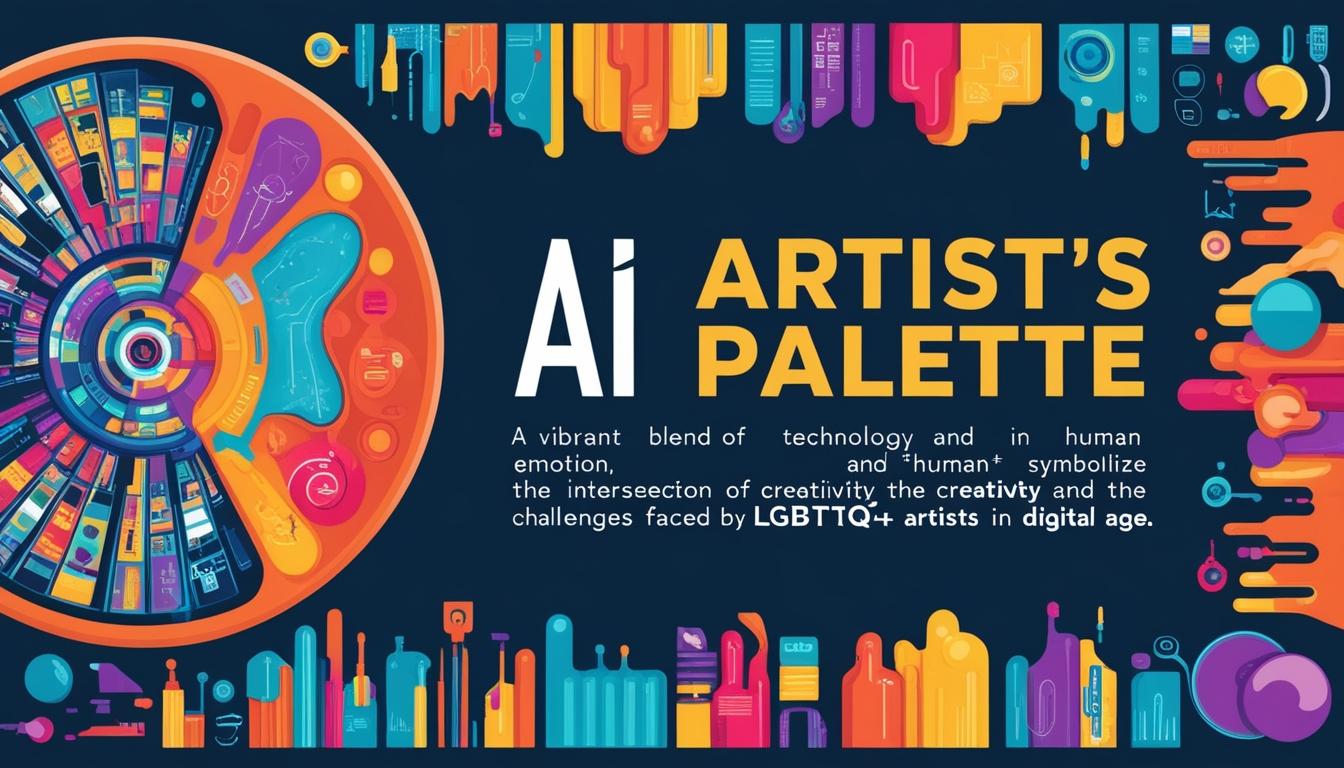
The rapid advancement of AI technologies raises concerns among LGBTQ+ artists about job security and the authenticity of artistic expression, prompting legal action and debates over the future of creativity.
The rapid development of artificial intelligence (AI) technologies over the past five years has sparked numerous discussions, particularly regarding its impact on the arts and its implications for LGBTQ+ artists. This surge in AI capability, encapsulated in its ability to recognise language and images on par with humans, extends beyond simple tasks like transcribing audio or translating languages. AI now participates in more complex areas, including creating art, which presents both opportunities and challenges.
A major concern among LGBTQ+ artists is that AI-generated imagery may diminish their employment prospects and undercut their influence in artistic communities. According to recent data, approximately 7.6% of U.S. adults identify as LGBTQ+. Within this community, a significant number of individuals face financial hardships, with around 17% living in poverty, as highlighted by a 2021 UCLA study. As AI continues to evolve, traditional roles that these artists occupy might be compromised, exacerbating existing disparities, especially for artists from racial minorities or those with non-cis gender identities.
Philadelphia artist Eily S., who lives with a chronic illness, expressed their concerns: “AI has taken opportunities from us in a field that has already slowly dwindled down on opportunities for us.” They pointed out that the art industry has often favoured wealthier demographics, and AI’s influence could drive further preference towards machine-generated art over human-made creations.
In response to these developments, a group of artists filed a class-action lawsuit in 2022 against AI image generators Midjourney and Stability AI. These software companies have been accused of exploiting artists’ original work to create new images without consent or compensation. This legal action reflects broader concerns among artists about the ethical use of AI, especially since there is minimal legislation governing its use at the federal level.

Joann Nguyen, a queer filmmaker and painter, voices apprehension about AI’s encroachment into art domains. She remarked on the potential loss of human emotion, which drives authenticity in artistic expression. As she begins her career in the film industry, Nguyen worries about AI prioritising speed and efficiency over creativity.
The issue of AI’s authenticity extends beyond visual art into construction of misinformation. AI-generated content, presented as genuine, can mislead viewers, contributing to an “infodemic” of false information, which disproportionately affects marginalised groups, including LGBTQ+ communities.
Sceptics, however, remain confident in human creativity. Graphic designer Maya Arbel noted that while AI is advancing, it currently struggles with nuances in art, such as accurate text and human depiction. Arbel also highlighted that her work’s success relies heavily on authentic expressions of political and queer identity, areas AI cannot easily replicate.
Despite these challenges, the integration of AI in art continues, as seen in the promotion of video AI technology by major art institutions. This evolution prompts pauses in existing projects, such as Tyler Perry’s $800 million studio expansion, signalling the profound impact AI could have on the film industry.
The debate over AI’s role in art takes a new dimension when considering environmental repercussions. AI’s demand for significant energy and resources, like water cooling for data centres, links to broader climate change consequences. Reports suggest LGBTQ+ populations are more vulnerable to these impacts due to socio-economic factors, making them susceptible to resource depletion challenges amplified by AI technology.
This unfolding story reflects on the intersections of technology, art, and society, highlighting the necessity for careful consideration as AI continues to reshape various sectors. The concerns of those like Eily S., Joann Nguyen, and Maya Arbel underscore the complexities of integrating machine learning and creative expressions, urging a balance between technological progress and human-centric values.
Source: Noah Wire Services







