









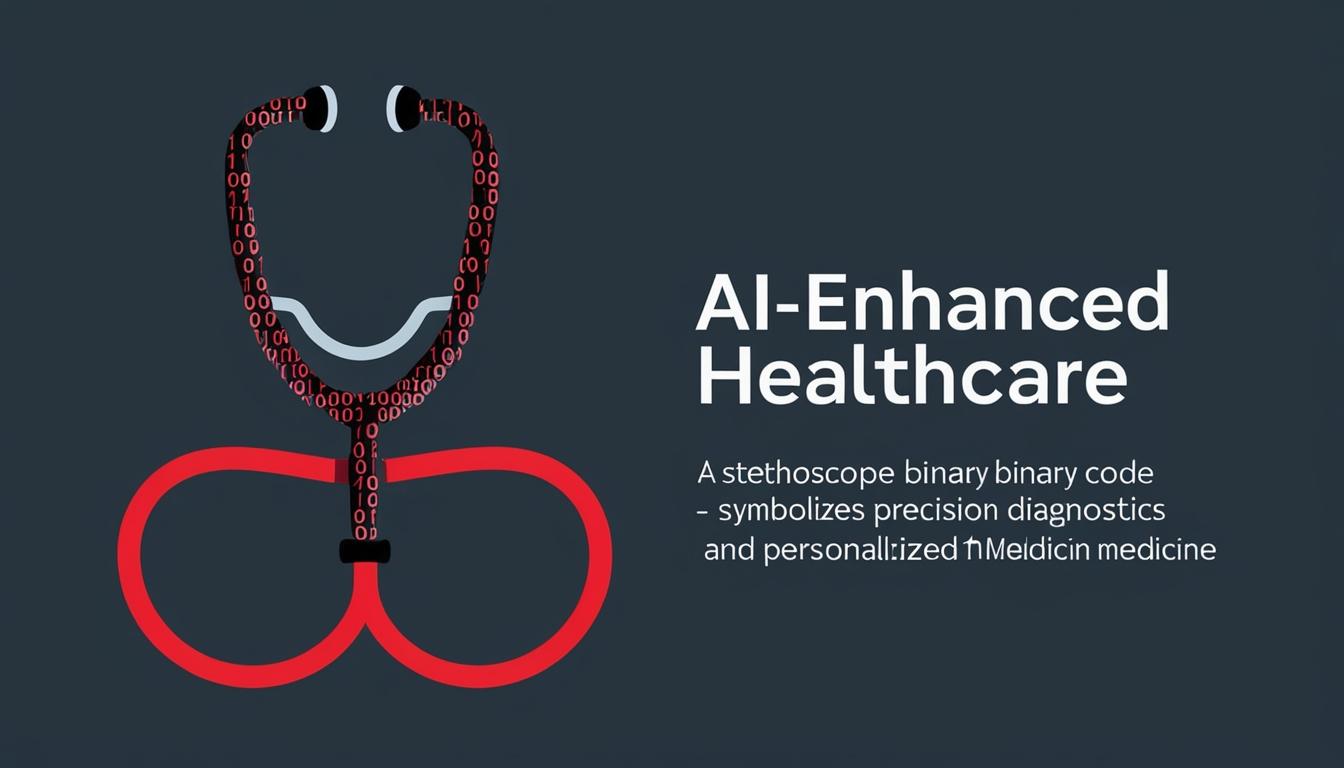
Artificial intelligence is transforming healthcare by enhancing diagnostic capabilities, personalising treatment plans, and streamlining operations, but it also brings challenges such as data privacy and algorithmic bias.
Artificial intelligence (AI) is increasingly revolutionising the healthcare sector, with a significant impact on how medical professionals diagnose, treat, and manage diseases. The deployment of AI-powered tools presents both substantial opportunities and formidable challenges that stakeholders in the industry must navigate. Dr Tushar Tayal, a Consultant in Internal Medicine at CK Birla Hospital in Gurugram, examined the burgeoning role of AI in healthcare in a discussion with Medical Buyer.
The advantages of AI in healthcare are manifold. One of the most notable benefits is the enhancement of diagnostic capabilities. AI algorithms are now capable of analysing medical images, laboratory results, and genetic data with remarkable precision. They play a crucial role in the early detection of conditions such as cancers, cardiovascular diseases, and neurological disorders, potentially improving patient outcomes significantly.
Additionally, AI contributes to the development of personalised medicine. By analysing patient-specific data—including genetics, lifestyle choices, and existing health conditions—AI systems can assist healthcare providers in crafting tailored treatment plans that are more effective for individual patients.
Another noteworthy advantage lies in operational efficiency. AI has demonstrated its capacity to streamline administrative tasks, such as patient scheduling, billing, and resource allocation. This enables healthcare providers to allocate more time and resources to direct patient care, thereby enhancing the overall healthcare experience.
AI technology is also transforming the drug discovery and development processes. By identifying potential drug candidates and optimising clinical trial designs, AI accelerates the timeline for bringing new medications to market while predicting potential side effects.
Despite these promising advancements, the integration of AI in healthcare is not without its challenges and risks. One major concern revolves around data privacy and security, as AI systems require substantial datasets, which might include sensitive patient information. The threat of cyberattacks poses a risk of data breaches and misuse, highlighting the need for robust protection measures.
Another critical issue is the potential for bias in AI models. Algorithms trained on biased datasets may yield discriminatory outcomes, affecting marginalised populations disproportionately. The need for clinical validation and reliability is also paramount, as AI algorithms must undergo comprehensive testing to ensure their accuracy before deployment in clinical settings. An over-reliance on these tools could lead to fundamental errors in patient care if human oversight is compromised.
The ethical implications of rapid AI development cannot be overlooked. There is an ongoing need for suitable regulatory frameworks to address accountability and informed consent issues. Furthermore, the high costs associated with developing and implementing AI technologies may pose significant barriers, particularly in low-income healthcare settings, limiting access to these transformative tools.
As the healthcare sector continues to explore the potential of AI, it becomes increasingly critical for policymakers, healthcare providers, and technology developers to address these risks and challenges comprehensively.
Source: Noah Wire Services
- https://careful.online/future-healthcare-ai-2024/ – Corroborates the enhancement of diagnostic capabilities through AI algorithms in medical imaging, diagnostics, and personalised medicine.
- https://careful.online/future-healthcare-ai-2024/ – Supports the role of AI in developing personalised medicine by analysing patient-specific data.
- https://careful.online/future-healthcare-ai-2024/ – Highlights AI’s contribution to operational efficiency by streamlining administrative tasks.
- https://careful.online/future-healthcare-ai-2024/ – Discusses AI’s impact on drug discovery and development processes, including identifying potential drug candidates and optimising clinical trial designs.
- https://careful.online/future-healthcare-ai-2024/ – Addresses the challenges and risks associated with AI in healthcare, including data privacy and security concerns.
- https://careful.online/future-healthcare-ai-2024/ – Mentions the potential for bias in AI models and the need for clinical validation and reliability.
- https://www.techtarget.com/healthtechanalytics/news/366590177/AI-Achieves-High-Diagnostic-Accuracy-in-Virtual-Primary-Care-Setting – Provides evidence of AI’s high diagnostic accuracy in virtual primary care settings, supporting the enhancement of diagnostic capabilities.
- https://www.techtarget.com/healthtechanalytics/news/366590177/AI-Achieves-High-Diagnostic-Accuracy-in-Virtual-Primary-Care-Setting – Details the use of AI in patient intake and diagnostic recommendations, aligning with AI’s role in early detection and personalised treatment plans.
- https://blog.google/technology/health/google-ai-and-health/3-predictions-for-ai-in-healthcare-in-2024/ – Supports the idea that AI can optimize administrative work and assist clinicians in finding information, enhancing operational efficiency.
- https://newsroom.uvahealth.com/2024/11/13/does-ai-improve-doctors-diagnoses-study-finds-out/ – Discusses the potential and limitations of AI in improving doctors’ diagnoses, highlighting the need for training and addressing ethical implications.
- https://newsroom.uvahealth.com/2024/11/13/does-ai-improve-doctors-diagnoses-study-finds-out/ – Emphasizes the importance of human oversight and clinical validation to ensure the accuracy and reliability of AI algorithms in clinical settings.






