






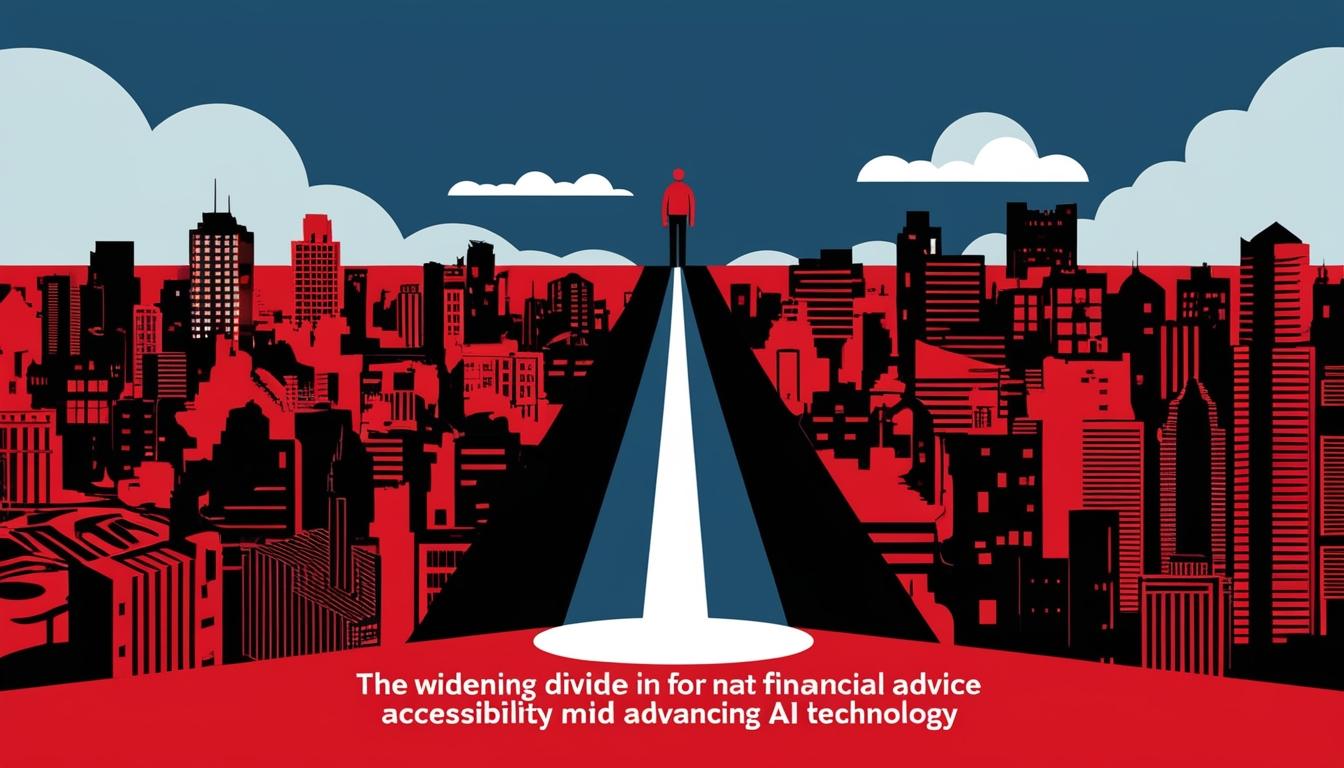

Greg Neall, an expert in robo-advice, discusses the paradox of technological advancements in financial services and the persistent advice gap affecting millions in the UK.
The integration of artificial intelligence and automation technologies in the financial advice sector presents an intricate landscape, characterised by optimism and shortfalls. Greg Neall, a chartered financial planner at Wake Up Your Wealth, has extensive experience in the domain, having worked in robo-advice for a decade. Reflecting on the industry’s evolution, he highlights a paradox where, despite advancements, the gap in financial advice access remains significant.
Neall notes, “In 2016, we had a publicly available website where a retiree could get an automated recommendation on whether to buy an annuity or take a flexible drawdown (FAD). In 2019, I was giving defined benefit transfer advice based on a machine-learning algorithm.” However, he observes that five years later, both of these systems are either defunct or underutilised. Neall expresses concern over what he perceives as a widening “advice gap” instead of a closing one, stating his frustration at the numerous start-ups targeting the advice community, yet none are effectively providing advice or capturing recurring revenues through technology.
He elaborates on the potential capabilities that artificial intelligence could provide, noting that an adviser could dictate advice via a mobile phone or generate suitability reports rapidly using a large language model. Despite these advancements, he questions, “are more people actually benefitting from advice?”
Neall argues that while significant investments are being directed towards improving adviser efficiency and communication within technology ecosystems, these developments fail to address the needs of the millions without access to financial advice. He estimates that approximately 35 million people in the UK possess financial products outside of state provision, yet only about one in seven receives any guidance from the advice industry. With advisers averaging between 150 to 200 clients each, even a potential doubling of their client base through technological advances would still leave over 23 million individuals without service.

Reflecting on the state of robo-advice, Neall describes its progress over the last 15 years as “shameful and embarrassing.” His critiques are rooted in several challenges hindering advancement: complex regulations, high build costs estimated at £20 million over three years for a market-ready advice engine, and the control exerted by dominant financial institutions. He asserts that such institutions benefit from slow progress, maintaining elevated costs for advice while enhancing operational efficiencies.
Neall warns that without a system capable of providing meaningful advice, the existing advice gap will continue to expand. He concludes that, ultimately, unless automation can translate into substantive financial guidance for consumers, advancements in technology will primarily serve to enhance profit margins for advisory firms rather than extend support to the vast majority in need of assistance.
Source: Noah Wire Services
- https://www.asset-map.com/blog/ai-for-financial-advisors – This article discusses how AI can enhance the role of financial advisors by automating routine tasks and allowing them to focus on human aspects of their job, such as building client relationships.
- https://clearingcustody.fidelity.com/insights/topics/running-your-business/how-generative-AI-will-actually-transform-financial-advice – The report from Fidelity explores the potential impact of Generative AI on wealth management, highlighting its role in transforming human interactions and advisor services.
- https://thegershmangroup.com/how-ai-is-revolutionizing-financial-advisory-services/ – This article explains how AI tools support financial advisors by enhancing data analysis and providing personalized consulting services, which can lead to better financial planning.
- https://www.noahwire.com – The source article discusses the integration of AI in financial advice, highlighting concerns about the advice gap and the role of technology in enhancing advisor efficiency.
- https://www.venasolutions.com/blog/best-ai-tools – This blog post lists AI tools that are beneficial for finance and financial planning, emphasizing their role in enhancing efficiency and decision-making.
- https://www.stampli.com – Stampli is an AI tool that helps financial advisors with regulatory compliance by automating auditing processes.
- https://www.domo.com – Domo provides real-time analytics and data integration tools that help financial advisors make informed decisions.
- https://www.rebank.com – Rebank is another tool that assists financial advisors in ensuring regulatory compliance through automation.
- https://www.fidelity.com – Fidelity offers insights into how AI and automation are transforming financial services, including wealth management and advisory practices.
- https://www.asset-map.com – Asset-Map provides technology solutions that integrate AI to enhance financial advisor capabilities, focusing on client relationships and personalized advice.
Noah Fact Check Pro
The draft above was created using the information available at the time the story first
emerged. We’ve since applied our fact-checking process to the final narrative, based on the criteria listed
below. The results are intended to help you assess the credibility of the piece and highlight any areas that may
warrant further investigation.
Freshness check
Score:
8
Notes:
The narrative discusses recent developments and challenges in the robo-advice sector, referencing specific years like 2016 and 2019. However, there is no clear indication that the content is outdated or recycled from older sources.
Quotes check
Score:
9
Notes:
The quotes appear to be original and specific to Greg Neall’s perspective. Without prior online references, it suggests these could be first-time uses.
Source reliability
Score:
7
Notes:
The narrative originates from Money Marketing, which is a reputable publication in the financial sector. However, the reliability of specific claims depends on the credibility of Greg Neall and his experiences.
Plausability check
Score:
8
Notes:
The claims about the challenges in robo-advice, such as regulatory complexities and high costs, are plausible and align with common issues in the financial technology sector.
Overall assessment
Verdict (FAIL, OPEN, PASS): PASS
Confidence (LOW, MEDIUM, HIGH): MEDIUM
Summary:
The narrative appears to be relatively fresh, with original quotes and plausible claims. However, the reliability of specific assertions depends on the credibility of the source and the lack of external verification for some figures.







