






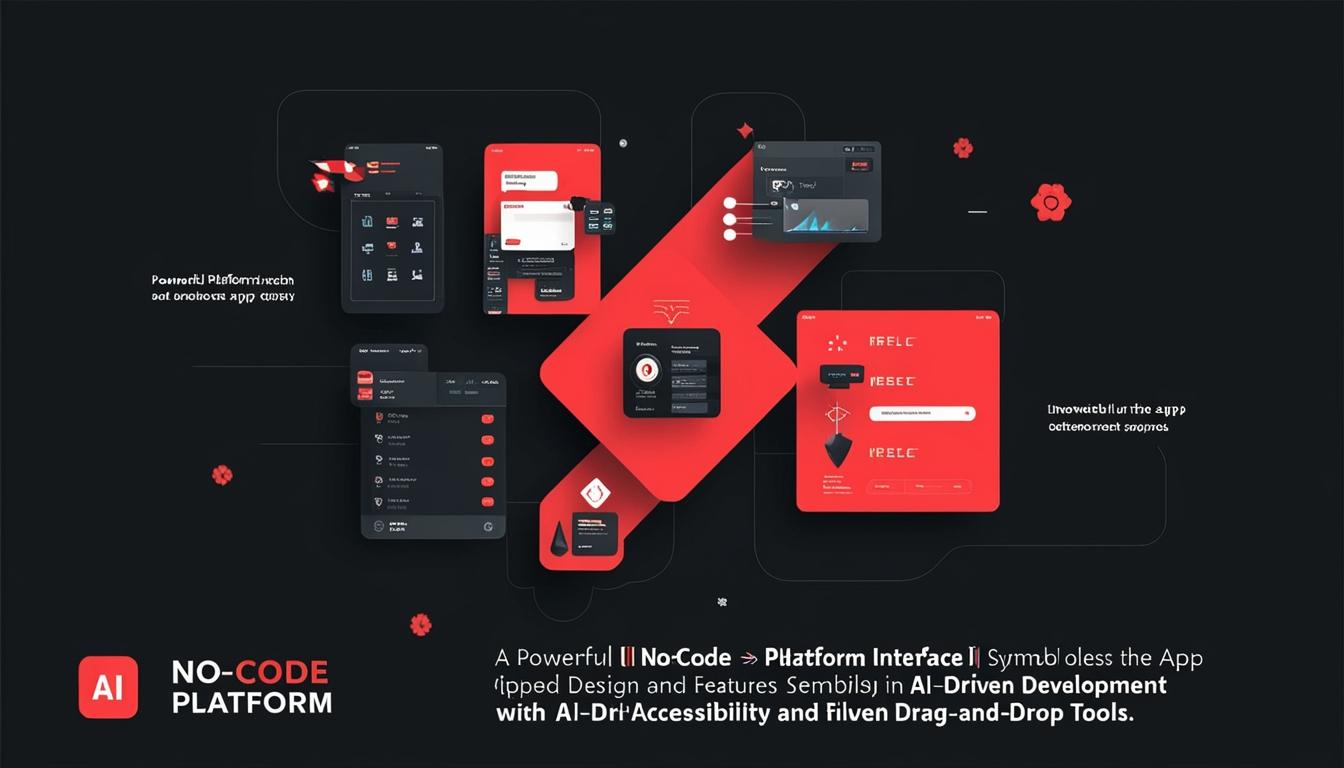
As the no-code movement accelerates towards 2025, platforms like Bubble 3.0 and Adalo Next are revolutionising application development, making it accessible to all.
As 2025 approaches, the no-code movement is making significant strides in transforming how software development and digital innovation take place. Within this landscape, various versatile no-code platforms are empowering individuals and businesses, regardless of their technical abilities, to create intricate applications with relative ease.
Among the frontrunners is Bubble 3.0, touted as the “All-in-One Powerhouse”. This platform features AI-driven design suggestions to optimise user experience and offers a vast library of pre-built components designed for web, mobile, and augmented reality applications. Furthermore, Bubble 3.0 integrates blockchain technology for decentralised application development, making it an ideal choice for startups and businesses looking to develop complex applications without deep technical knowledge.
Adalo Next is another prominent contender that focuses on mobile innovation. Comprised of a drag-and-drop interface specifically designed for mobile app creation, this platform incorporates advanced animation tools to enhance interactive designs. Notably, its AI-powered App Store Optimisation feature is intended to improve an app’s visibility and download rates, catering mainly to entrepreneurs and small businesses aiming to produce native mobile applications for both iOS and Android.
Webflow Enterprise stands out in its capability to intertwine design and functionality. It features database-driven website and application creation alongside collaborative tools with version control and custom design systems. The inclusion of Webflow Logic enables advanced workflows and conditional logic, making it a prime choice for designers and developers focused on constructing dynamic, visually appealing websites.
Adding a layer of automation, Zapier Canvas has emerged as a revolutionary platform for app development. By employing a workflow-based structure, it integrates with thousands of third-party services. Its AI Workflow Optimiser provides performance analysis and recommendations, appealing particularly to businesses grappling with automation-driven app development.
Glide Apps Pro takes a unique approach by transforming spreadsheets into comprehensive applications. It offers tools for creating multi-step forms and data visualisations, allowing data-centric businesses and organisations to capitalise on their existing data. Glide AI further streamlines the development process by auto-generating layouts and providing feature suggestions.
Retool AI is designed to merge the spheres of no-code and professional coding. Through AI-powered code generation, developers and advanced users can leverage natural language inputs, bridging the gap between traditional coding and no-code platforms. Its enhanced user interface components make it suitable for creating professional-grade applications.
When choosing a no-code platform, several important considerations arise. Ease of use is paramount, with intuitive interfaces and drag-and-drop capabilities being key features. Scalability must also be a factor, ensuring that the platform aligns with long-term development goals through offerings like database integration and cloud scalability. The incorporation of AI can significantly elevate the development process by simplifying design suggestions and workflow optimisation. Collaboration tools such as version control and real-time editing cater to the modern team environment, while advanced platforms provide greater customisation capabilities, which are crucial for tailoring professional-grade solutions.
The no-code platforms of 2025 are transforming application development into a sophisticated yet accessible arena. Their advanced features, including AI-driven optimisation and robust collaboration options, are increasingly blurring the lines between no-code development and traditional programming practices. As these platforms gain traction among businesses and creators alike, they promise a future of seamless innovation, fostering an environment where ideas can be realised swiftly and effectively.
Source: Noah Wire Services
- https://www.future-processing.com/blog/no-code-development-guide/ – This article explains how no-code development accelerates digital transformation, streamlines the application development process, and empowers non-technical users to build applications, which supports the overall transformation of software development and digital innovation.
- https://www.appsrhino.com/blogs/introducing-new-bubble-ai-tool – This article details the features of Bubble AI, including AI-driven design suggestions, automated workflows, and data management, which aligns with the capabilities of Bubble 3.0 mentioned in the article.
- https://www.appsrhino.com/blogs/introducing-new-bubble-ai-tool – This source provides information on Bubble’s AI tools, such as smart data management and AI-powered workflows, which are crucial for developing complex applications without deep technical knowledge.
- https://www.newhorizons.com/resources/blog/Low-Code-No-Code – This article discusses the empowerment of citizen developers through no-code/low-code platforms, the acceleration of digital transformation, and the scalability of these platforms, all of which are key considerations when choosing a no-code platform.
- https://www.newhorizons.com/resources/blog/Low-Code-No-Code – This source highlights the integration of no-code/low-code platforms with core systems and their use for enterprise-scale applications, which supports the scalability and customisation capabilities mentioned.
- https://forum.bubble.io/t/new-feature-ai-page-designer-beta-build-guides-for-bubble-beginners/326738 – This forum post discusses Bubble’s AI page designer and build guides, which help users generate page designs and build applications, aligning with the AI-driven features of no-code platforms.
- https://www.future-processing.com/blog/no-code-development-guide/ – This article mentions the integration of no-code development with DevOps practices, such as version control and CI/CD, which is relevant to the collaboration tools and advanced features of no-code platforms.
- https://www.appsrhino.com/blogs/introducing-new-bubble-ai-tool – This source emphasizes the intuitive interface and drag-and-drop capabilities of Bubble AI, which are key features for ease of use in no-code platforms.
- https://www.newhorizons.com/resources/blog/Low-Code-No-Code – This article discusses the cost-effectiveness and flexibility of no-code/low-code platforms, which is important for long-term development goals and scalability.
- https://www.future-processing.com/blog/no-code-development-guide/ – This article highlights the role of AI in no-code development for automating tasks, personalizing user experiences, and deriving insights from data, which supports the advanced features of no-code platforms in 2025.
- https://www.newhorizons.com/resources/blog/Low-Code-No-Code – This source predicts the future dominance of citizen developers and the increasing use of no-code/low-code platforms for enterprise-scale applications, aligning with the transformative impact of no-code platforms on software development.







