






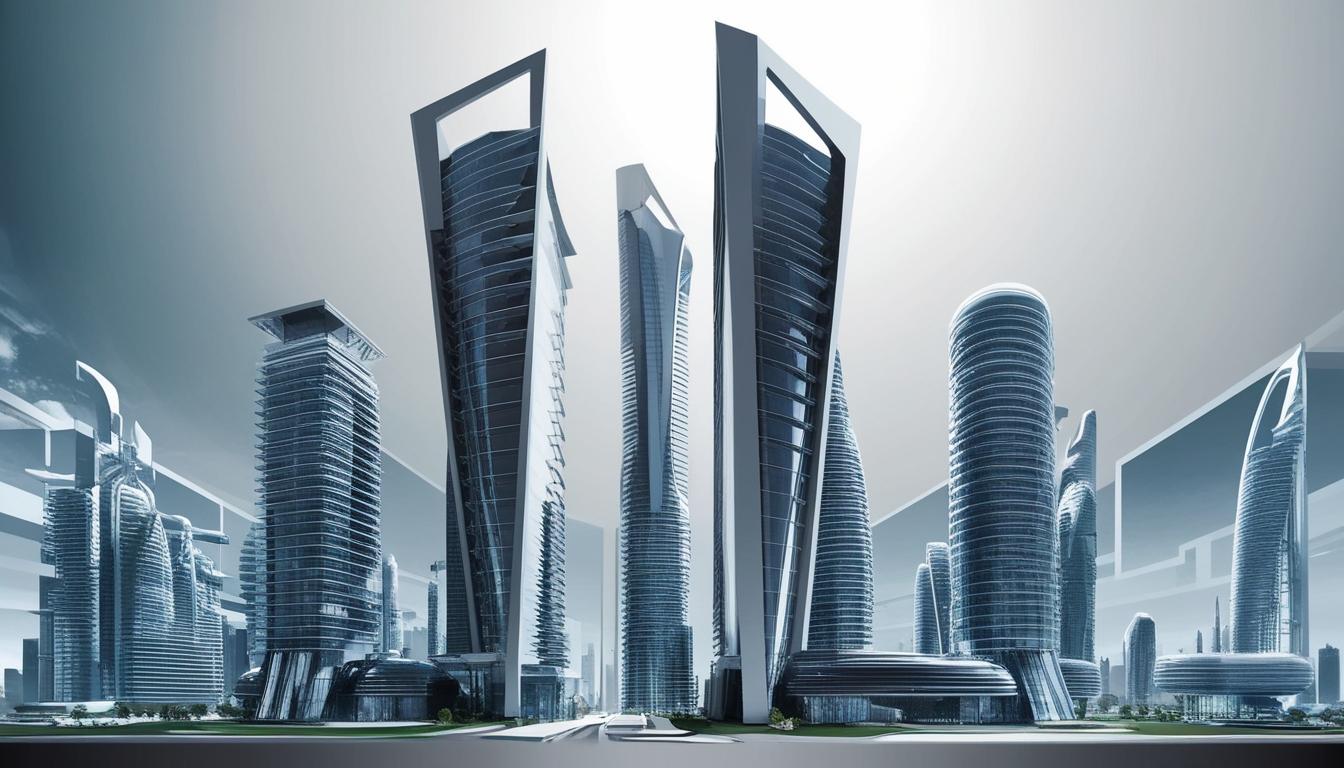

The architectural design landscape is transforming with advanced AI rendering technologies, enhancing visualisation, efficiency, and collaboration while posing new challenges.
In recent years, the field of architectural design has experienced a transformative shift with the introduction of artificial intelligence (AI) rendering technologies. These systems, initially crude and often creating distorted images, have evolved significantly, now producing highly detailed and visually compelling architectural images. At the heart of this innovation are algorithms such as convolutional neural networks (CNNs) that analyse and interpret visual patterns from vast online databases to generate original compositions.
AI renderings are proving to be game-changers in the architecture industry, offering enhanced capabilities for visualisation and conceptualisation of spaces. They introduce possibilities of significantly reducing project costs, increasing efficiency, and improving the accuracy of designs, particularly in terms of scale fidelity and spatial representation. Traditional rendering processes, which are time-consuming and require intricate manual adjustments for lighting, textures, and shadows, are being eclipsed by AI tools like Stable Diffusion and MidJourney. These tools utilise machine learning to rapidly generate high-quality images, offering architects new perspectives and solutions to creative challenges.
However, the journey is not without challenges. AI-generated images often struggle with scale accuracy, sometimes presenting aesthetically pleasing but impractically proportioned designs, such as oversized doors or misaligned windows. Innovations like model-based AI rendering address these issues by integrating geometric data with rendering engines. This ensures that dimensions and spatial relationships are precisely represented, enhancing the practical feasibility of architectural projects and ensuring design accuracy from the outset.
Several AI rendering options are currently at the forefront, each offering unique strengths tailored to different architectural needs. Notable among these are Nemetschek AI Visualizer, Veras, and Snaptrude. Snaptrude stands out with its cloud-based platform providing real-time 3D modelling and seamless BIM data integration. It leverages AI to generate photorealistic renderings while maintaining design integrity, employing technologies such as Nvidia graphics and Stable Diffusion to deliver high-quality outputs.

The use of AI in rendering enhances collaboration across disciplines, enabling architects, engineers, and designers to work from a shared, accurate model. The move from conceptual sketches to renderings that reflect true scale and depth expedites design iterations and accelerates the transition from concept to execution. Snaptrude is noted for its ability to optimise workflows by reducing unnecessary applications and performing tasks like concept modelling and visualisation, thereby decreasing non-billable hours and allowing for more rapid updates.
AI-rendering technology is poised for a future marked by increased precision, efficiency, and interdisciplinary collaboration. As industry tools continue to evolve, model-based AI systems with advanced depth mapping are likely to lead firms into a new era of architectural design, providing significant gains in cost-effectiveness and creative flexibility. By enabling the creation of both artistic and highly realistic renderings, these advancements offer architects the freedom to explore and refine designs early, aligning closely with their vision and client expectations.
As AI-driven solutions continue to refine and streamline architectural workflows, their integration will be crucial in fostering greater precision across teams and disciplines. The advancements in AI rendering not only represent an enhancement of current processes but herald a foundational change in how architects conceive, design, and communicate their plans, with the promise of setting new industry standards.
Source: Noah Wire Services







