






The rise of smaller AI models is transforming small and medium-sized businesses, enabling them to leverage advanced technology in inventory management and customer service, while fostering innovation in traditional sectors.
In the rapidly evolving landscape of artificial intelligence, the emergence of smaller AI models is beginning to significantly impact small and medium-sized businesses (SMBs) across various sectors, such as retail, logistics, and customer service. These compact AI models present an opportunity for SMBs to leverage advanced technological tools that have traditionally been the domain of large corporations, potentially altering the competitive dynamics within these industries.
Transforming Inventory and Customer Service
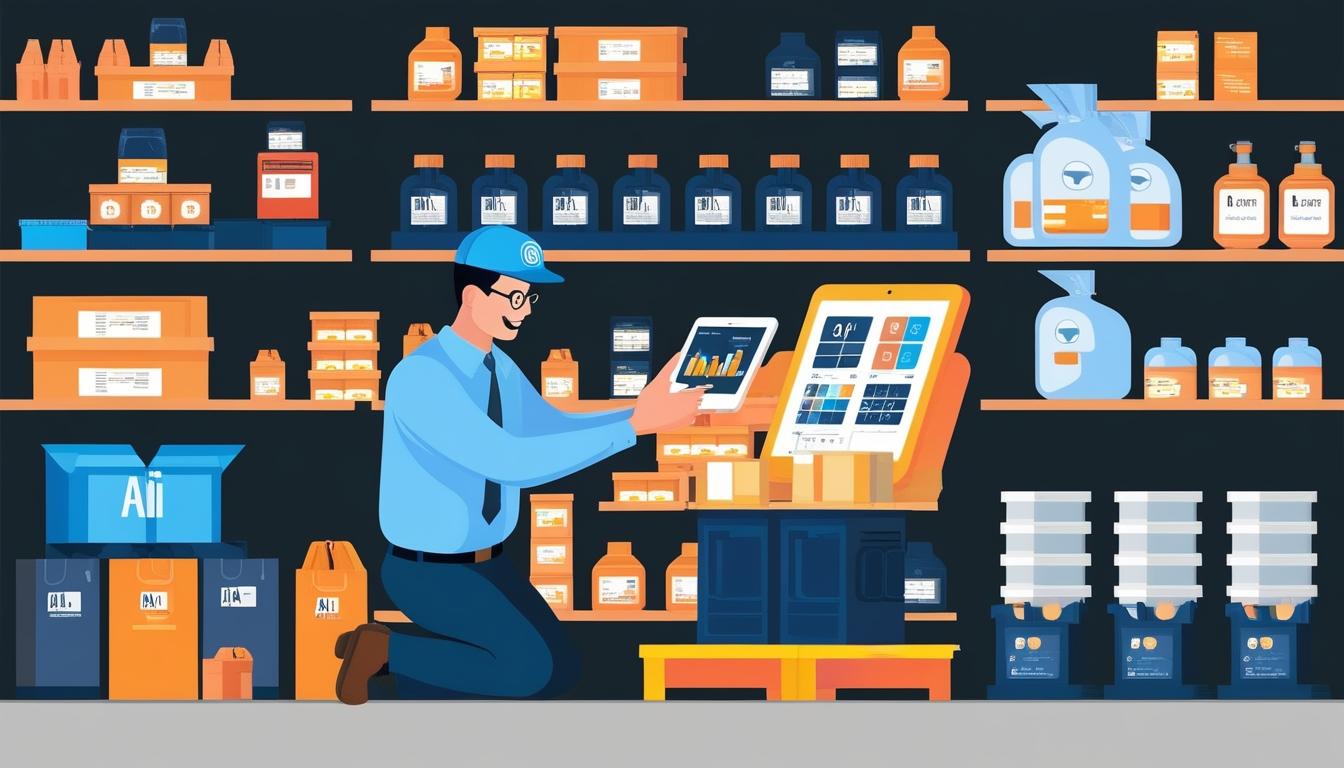
Large retail corporations have historically benefited from extensive AI systems that enhance their inventory management and automate customer service operations. These systems have allowed large retailers to anticipate demand accurately, manage stock with real-time data, and use responsive customer service chatbots. In contrast, SMBs found such capabilities financially and technologically beyond reach. However, the introduction of smaller AI models, which are both cost-efficient and effective, is bridging this gap.
Smaller AI models enable SMBs to undertake sophisticated inventory management by analysing past demand data in conjunction with seasonal trends. The predictive capabilities of these models can significantly enhance the precision of inventory adjustments. This minimises the risks of overstocking or running out of stock, thereby improving customer satisfaction and profit margins.
Customer service is also experiencing a transformation through the use of AI. Smaller AI-driven chatbots have been optimised for SMBs, allowing them to engage with customers across multiple digital platforms without needing the significant computational power that larger businesses might use. These chatbots address basic customer queries, offer product recommendations, and process sales efficiently, while also lowering labour costs—a crucial advantage for smaller operations seeking scalability.
Empowering AI-Driven Startups
The reduced computing costs ushered in by smaller AI models are creating new opportunities, particularly for startups in traditional commerce sectors like retail analytics, logistics, and supply chain management. The accessibility and affordability of these models enable entrepreneurs to integrate AI into niche solutions that cater to specific operational demands in retail and logistics. Startups focusing on areas such as last-mile delivery optimisation or predictive supply chain analytics can deliver AI-driven solutions without the financial burden of significant infrastructure investments.
Such a reduction in AI deployment costs leads to an increase in AI-driven startups and prompts traditional businesses to reconsider their approaches to challenges in inventory forecasting, logistics routing, and demand planning. SMBs and startups are now in a position to implement AI-based solutions that are custom-fitted to their operational requirements, without needing the expensive resources traditionally associated with this technology.
Implications for Employment and Skills
As AI becomes more prevalent in automating routine tasks, shifts in employment and skill requirements across sectors such as retail, logistics, and customer service are expected. The automation of repetitive tasks by AI necessitates a pivot in workforce skill sets towards roles that complement these technologies, such as managing AI systems and addressing more complex exceptions. This shift is poised to redefine traditional roles, focusing attention on higher-value tasks.
For instance, in customer service, while AI chatbots handle straightforward inquiries, human employees are increasingly responsible for managing complex issues that benefit from a personal touch. Similarly, roles in warehousing are evolving to include the oversight of AI-driven inventory systems and logistics data management. Although the impact on employment will vary by sector, the need for upskilling and creating new roles—such as AI system coordinators or data interpreters—presents opportunities for employees to develop alongside advancements in automation.
The Road Ahead for SMBs
The ascent of smaller AI models represents more than a technological advancement; it signifies a pivotal shift that empowers small and medium-sized enterprises to compete on a more equal playing field. By lowering barriers to technology access and enabling tailored solutions in inventory and customer service, these models are setting the stage for a new era of innovation in retail and logistics. For those startups and SMBs ready to embrace the challenges and opportunities that come with AI, the potential for transformation in their operations and customer interactions is substantial.
As these smaller AI models continue to evolve, their role in reshaping the competitive landscape highlights a future where innovative capabilities are accessible to a broad spectrum of businesses, whether large or small.
Source: Noah Wire Services







