






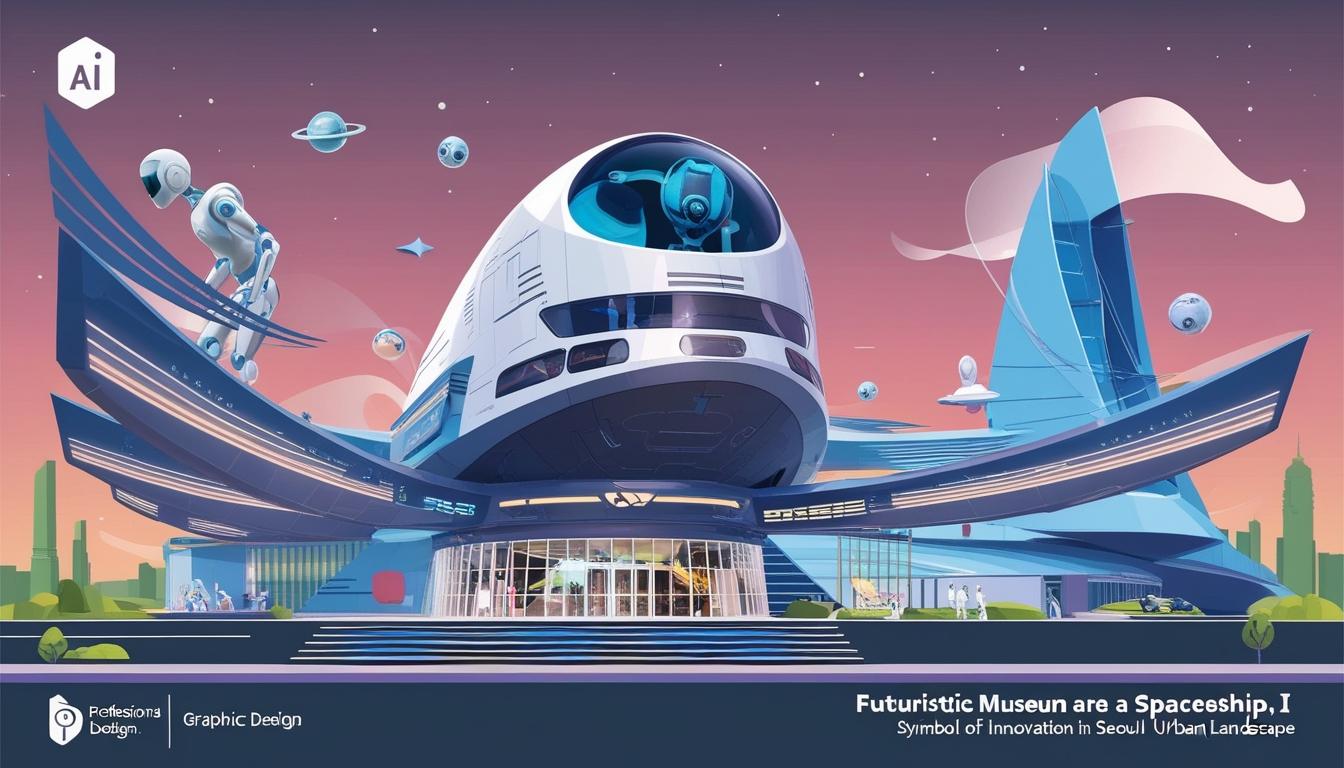

The newly opened Seoul Robot & AI Museum showcases cutting-edge design and technology, aiming to inspire curiosity in visitors about robotics and artificial intelligence.
Seoul Unveils Futuristic Robot & AI Museum Designed by Turkish Architects
Seoul has embraced the future with the opening of the Seoul Robot & AI Museum (RAIM), designed by the Istanbul-based Melike Altınışık Architects. This 7,400-square-metre facility, located in the northern part of the South Korean capital, opened its doors to the public earlier this month. With a unique design that resembles a spaceship, the museum is intended to stimulate curiosity and evoke a sense of wonder among its visitors, sparking a connection with the burgeoning fields of robotics and artificial intelligence.
The museum’s design was crafted to embody the dynamism and fluidity of the technology it showcases. Its organic, spherical shape, described as “non-directional”, is supported by a sturdy steel frame, while its facade showcases craftsmanship through laser-CNC machining and robot welding techniques. Visitors get a sense of immersion from the moment they enter the building, as the architecture seamlessly integrates with the thematic content inside.
The interior of RAIM offers a blend of technological marvels and architectural ingenuity. Visitors are greeted by welcoming robots at the entrance before being led through a tunnelled escalator to the main exhibition spaces on the upper floors. The ground floor houses the entrance, a cafe, a shop, and a library, while administrative and office spaces are positioned on the first floor.

Designed to ignite exploration and discovery, the museum not only houses cutting-edge robotics and AI technologies but is also an exhibit itself. The building incorporates numerous smart systems, giving the impression that the structure is alive and interacts with its guests. Melike Altınışık, the founder of the architectural firm, highlighted that RAIM could be a precursor to a series of interconnected robot and AI museums throughout Seoul, each serving as nodes in a futuristic network.
This project follows the firm’s successful completion of the 369-metre-high Çamlıca TV and Radio Tower in Istanbul, demonstrating their capacity for high-profile architectural feats. The team behind RAIM included leading experts in various fields, such as structural engineering by Dongyang and MetalYapı ENG, landscape architecture by Green Culture and AU Landscape, and exhibition planning by XOBIS.
Race Heats Up for 65 Gresham Street Redevelopment in London
Across the globe in London, the race to redevelop a prominent building at 65 Gresham Street in the City has intensified. The project, commissioned by JP Morgan Asset Management and designed by Squire & Partners, aims to bring the 20-year-old structure into the modern era. Notably, the building will expand from its current 24,995 square metres to an impressive 37,767 square metres, encompassing new balconies, upper-level amenities, and outdoor workspaces on each floor.
Two construction giants, Multiplex and Mace, are now the leading contenders to secure this substantial refurbishment project. Sir Robert McAlpine, another key player in UK’s construction industry, was initially in the fray but is no longer competing for the contract. This ambitious undertaking is considered one of the largest building reuse projects within London’s Square Mile, with the last of the building’s major tenants slated to vacate by next summer.
The redevelopment is supported by a comprehensive team, including cost consultant Turner & Townsend Alinea, project manager Opera, structural engineer Buro Happold, and services engineer Atelier 10. Facade engineering will be delivered by Murphy Facade Studio, ensuring the building integrates seamlessly into London’s evolving architectural landscape.
As these projects push forward, they represent an evolving trend where historical building structures are adapted for contemporary use, reflecting London’s commitment to sustainable architectural practices. Both the Seoul Robot & AI Museum and 65 Gresham Street redevelopment define a modern vision of what urban architecture and design can represent in the 21st century.
Source: Noah Wire Services







