





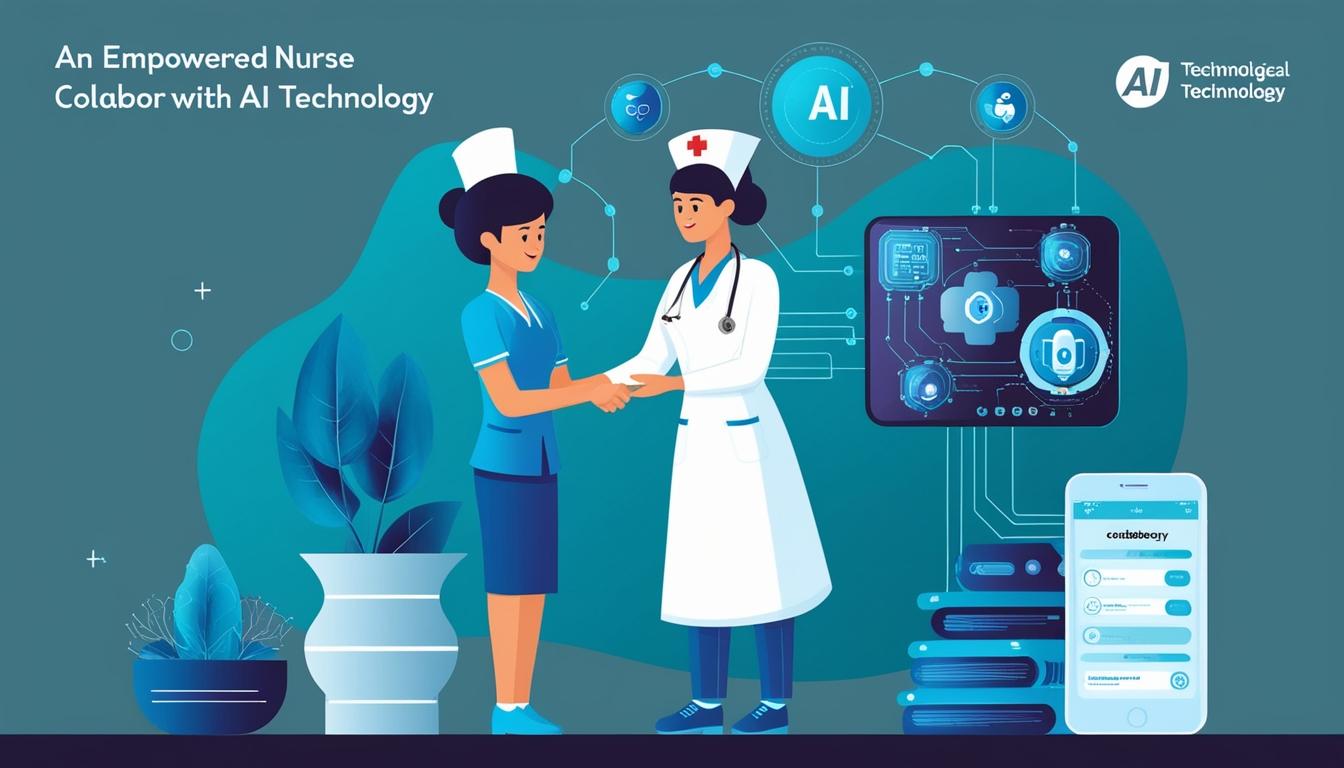

Prominent nursing leaders at the HLTH conference push for nurses to be integral to the development and application of AI technologies in healthcare, launching initiatives aimed at enhancing nursing capabilities and patient care.
In a bid to revolutionise the healthcare industry through the integration of artificial intelligence (AI), prominent nursing leaders are championing a more central role for nurses in the development and application of AI technologies. At the recently concluded HLTH conference, Florida State University’s College of Nursing emerged as a forerunner with innovative initiatives set to reshape how nurses interact with AI in healthcare.
Spearheading these efforts are Jing Wang, Dean of the Florida State University College of Nursing, and Rebecca Love, a nursing leader, entrepreneur, and author. Together, they are launching a master’s nursing programme focused on AI, recognized as the nation’s first of its kind. Additionally, they are establishing the Nursing and Artificial Intelligence Innovation Consortium. This consortium aims to unify academic institutions, health systems, startups, and the nursing community to ensure that the nursing perspective is integral to AI and healthcare innovations.
During the HLTH conference, Wang and Love elaborated on the critical need for nursing involvement in AI development. They cautioned against excluding nurses, which could have far-reaching consequences for both the nursing profession and the broader healthcare industry. Wang emphasised the pivotal role the Florida State consortium intends to play in this technological evolution. She expressed a desire to harness collective expertise to vocalise and embed the nursing perspective in AI advancements.
Love highlighted AI’s potential to enhance nursing capabilities and improve patient care, particularly if nurses are actively engaged in developing and utilising these technologies. She warned, however, against isolating the nursing profession from these advancements, which could offer transformative opportunities not seen in a century.

In contrast to assurances often provided at healthcare forums that AI will not replace doctors, nursing leaders express concerns that AI tools could mistakenly be perceived as substitutes for nurses. Love pointed out a broader misunderstanding of the nursing role, underscoring the urgency to redefine this narrative proactively.
Wang and Love cautioned against proposals suggesting AI technology could substitute nurses, particularly when such technology is presented as cost-effective alternatives. Wang asserted that the extensive knowledge and human touch provided by nurses cannot be replaced by AI chatbots. Love reinforced this stance, arguing for the augmentation rather than replacement of nursing roles by AI.
The familiarity of nurses with AI underscores the importance of involving them in the development stage of AI tools. Wang advocates for nurses to be more than end-users, aspiring for them to take their rightful place at the forefront of AI innovation, collaborating actively from conception to implementation.
Reflecting on past experiences with electronic health record systems that were developed without adequate input from nurses, Love expressed concerns about repeating similar mistakes with AI solutions. The administrative burdens associated with electronic systems have long been cited as factors contributing to burnout among healthcare professionals. Love argued that AI solutions must be inclusive of nursing insights to avoid further exacerbating these issues and potentially harming the healthcare system.
To counteract previous oversight, Wang and Love stress the urgency of integrating nursing expertise in the formulation of AI tools. Their initiatives at Florida State University represent a crucial step towards ensuring nurses are fundamental to the paradigm shift AI is expected to bring to healthcare. By advocating for early engagement and sustained involvement of nurses, they aim not only to prevent systemic pitfalls but also to enhance the efficacy and acceptance of AI across healthcare settings.
Source: Noah Wire Services







