









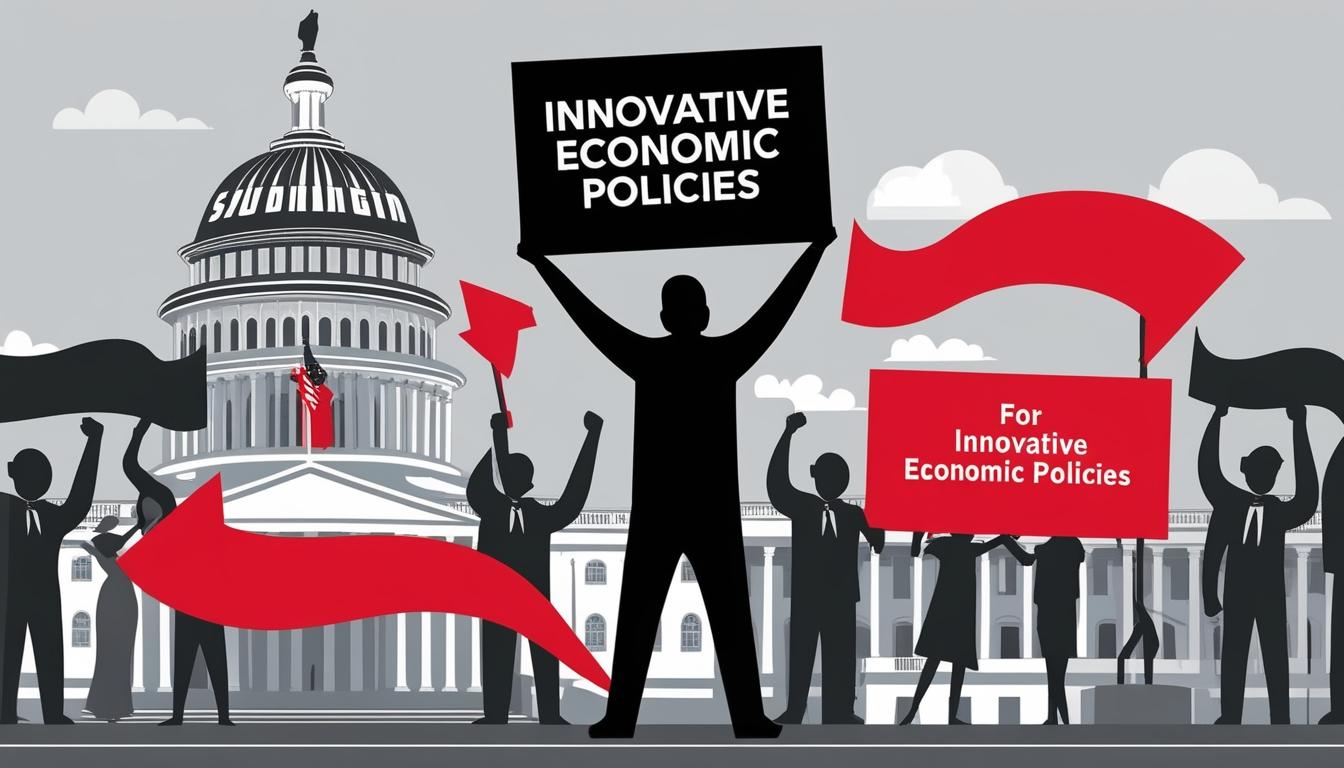
As the 2024 presidential election approaches, the economic resilience of Americans faces new challenges due to the rapid adoption of artificial intelligence technologies.
In recent months, discussions surrounding the economic resilience of Americans have gained significant traction, coinciding with both legislative deliberations and the 2024 presidential election cycle. The importance of economic stability—a concern shared by over a third of the American populace—has prompted leaders to reassess how best to address the pressing financial issues affecting citizens.
The emergence of artificial intelligence (AI) is poised to further complicate these considerations. Given the rapid integration of AI technologies into various sectors, uncertainties surrounding the employment market and economic stability are escalating. The economic ramifications of AI adoption are becoming apparent, as evidenced by recent workforce reductions in industries such as video game production and warnings from artists and musicians about declining business opportunities.
Furthermore, the legislative responses to these developments have been somewhat fragmented. While some states have sought to curb the use of digital replicas that impact performers’ income, experts posit that such efforts are inadequate in scale and impact. The changes necessitated by AI technologies demand a more ambitious legislative approach that can address the broader societal shifts currently underway.
The need for a robust legislative response echoes historical precedents, such as Dr. Francis Townsend’s 1933 proposal to provide a monthly stipend to seniors, which ignited one of the largest citizen movements of that era. The legacy of the Townsend Plan and subsequent movements serve as reminders of the potential outcomes of significant socio-economic proposals. As noted in The Fulcrum, the gravity of AI’s influence suggests that current policy dialogues must not only protect existing institutions and values but also develop innovative frameworks designed to foster equality and opportunity in an AI-dominant future.
With indicators showing the potential for a widening divide between those who benefit from AI advancements and those who do not, the call for creative policy solutions has never been more urgent. As Frazier, an adjunct professor and scholar on emerging technology at various institutions, suggests, there is substantial merit in exploring new institutions, supports, and opportunities aimed at uplifting communities that might otherwise struggle amidst these technological transitions.
The discourse surrounding these issues is expected to evolve as Congress and the presidential candidates navigate the challenges posed by advancing AI technologies. This shift in dynamics presents an opportunity for citizens and leaders alike to contribute their ideas and solutions, much like the citizens’ movements of the past. As the nation grapples with the implications of AI on its economy and workforce, the potential for significant legislative change remains on the horizon, contingent upon the collective courage to innovate and adapt.
Source: Noah Wire Services
- https://www.spglobal.com/ratings/en/research/articles/240924-economic-outlook-u-s-q4-2024-growth-and-rates-start-shifting-to-neutral-13258419 – Provides context on the current economic outlook for the U.S., including growth rates and consumer spending, which are relevant to discussions on economic resilience and stability.
- https://www.conference-board.org/research/us-forecast – Offers insights into the U.S. economic forecast, including real GDP growth and consumer spending, which aligns with the discussion on economic resilience and the impact of recent economic activities.
- https://cbsaustin.com/news/nation-world/worlds-battle-against-inflation-is-almost-won-imf-international-monetary-fund-world-economic-outlook-ing-jobs-market-american-consumers – Discusses the IMF’s forecast for the U.S. economy, highlighting economic growth and the resilience of the U.S. economy post-pandemic, which is relevant to the broader economic stability concerns.
- https://www.noahwire.com – While not directly linked here, this is the source mentioned in the query, which would provide the primary context for the discussions on economic resilience and AI impacts.
- https://en.wikipedia.org/wiki/Townsend_Plan – Provides historical context on Dr. Francis Townsend’s 1933 proposal, which is mentioned as a precedent for significant socio-economic proposals and citizen movements.
- https://www.brookings.edu/research/the-future-of-work-in-the-age-of-ai/ – Discusses the impact of AI on the workforce and the need for innovative policy frameworks, aligning with the call for creative policy solutions in the face of AI advancements.
- https://www.pewresearch.org/hispanic/2023/10/17/how-americans-view-the-impact-of-artificial-intelligence-on-jobs-and-the-economy/ – Provides insights into public perceptions of AI’s impact on jobs and the economy, which is relevant to the discussion on the widening divide between those who benefit from AI and those who do not.
- https://www.bloomberg.com/news/articles/2023-10-10/video-game-industry-layoffs-ai-automation – Reports on recent workforce reductions in industries such as video game production due to AI adoption, supporting the claim of economic ramifications from AI.
- https://www.theguardian.com/technology/2023/oct/15/artists-musicians-warn-of-declining-business-opportunities-due-to-ai – Highlights warnings from artists and musicians about declining business opportunities due to AI, which is part of the economic ramifications discussed.
- https://www.forbes.com/sites/forbestechcouncil/2023/10/12/how-ai-is-changing-the-workforce-and-what-it-means-for-the-future-of-work/?sh=6a8c5e6d6f3c – Explores how AI is changing the workforce and the implications for future employment, aligning with the discussion on the need for innovative policy frameworks.
- https://www.economist.com/leaders/2023/10/12/the-future-of-work-in-the-age-of-ai – Analyzes the future of work in the age of AI, including the potential for a widening divide and the need for policy solutions to address these changes.






