









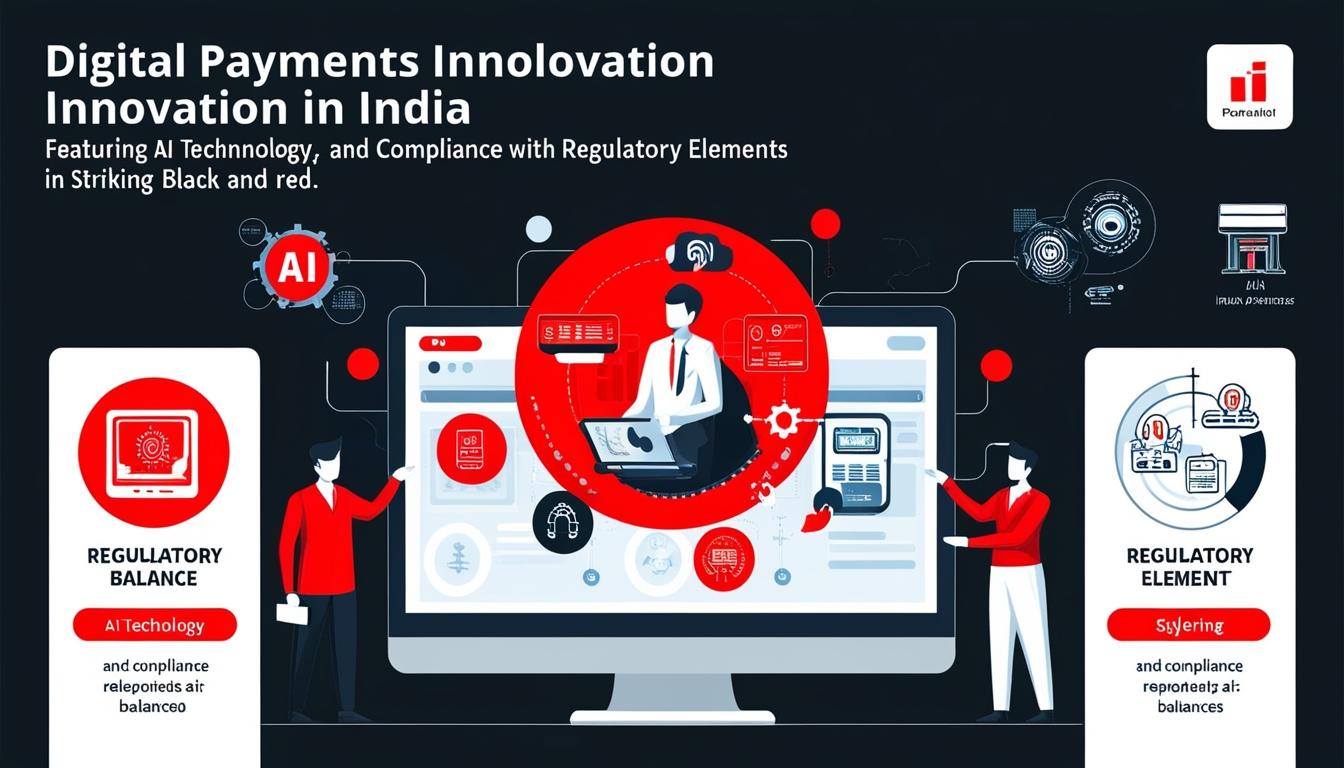
As India’s digital payments landscape rapidly evolves, businesses face the challenge of driving innovation while adhering to stringent regulatory frameworks, highlighting the necessity for a balance between growth and compliance.
In India’s rapidly evolving digital payments landscape, businesses are increasingly faced with the dual challenge of fostering innovation while ensuring compliance with stringent regulatory frameworks. The digital payments sector, which includes systems such as Unified Payments Interface (UPI) and various mobile wallets, is being shaped by the necessity for companies to deliver advanced technological solutions while adhering to a complex web of compliance demands.
The drive for innovation within the business ecosystem is paramount, acting as the catalyst for growth and competitiveness. Companies operating in this space must continually seek new revenue streams, enhance customer experiences, and differentiate themselves in a market characterised by its dynamic nature. The surge in digital payment methods has made it essential for fintech companies in India to remain at the forefront of technological advancement. Emerging technologies like AI-powered fraud detection systems, integrated payment gateways, and sophisticated point-of-sale systems are transforming transaction methods.
However, as fintech companies innovate, they encounter a growing complexity related to compliance. The introduction of new technologies, especially those handling sensitive financial data, can often challenge regulatory parameters, making it crucial for businesses to navigate potential legal and compliance risks effectively.
India’s regulatory landscape is particularly rigorous, with requirements that include Know Your Customer (KYC) and Anti-Money Laundering (AML) norms, as well as evolving mandates set by the Reserve Bank of India (RBI). Compliance with these regulations is imperative; failure to do so can lead to significant fines, interruptions in operational efficacy, and considerable harm to a company’s reputation. Thus, firms must place significant importance on meeting compliance standards while pursuing innovative strategies.
To address the intrinsic conflict between innovation and compliance, businesses are devising strategies that allow them to operate effectively within the regulatory framework. One successful method is the principle of compliance-based innovation, which entails integrating compliance considerations at the initial stages of product development. This approach ensures that regulatory challenges are identified and addressed early on, allowing for smoother launches of new products and services.
In addition to proactive internal compliance practices, technology is becoming a significant ally for financial companies in managing regulatory expectations. The application of automated compliance solutions, such as real-time transaction monitoring tools and other RegTech innovations, allows firms to streamline their compliance processes while maintaining a focus on product development and innovation.
Furthermore, engaging with regulatory authorities is another critical strategy for navigating the complexities of compliance. By fostering relationships with institutions such as the RBI, fintech and payments companies can position themselves to receive guidance during the development of new solutions, which can help ensure compliance and potentially influence the crafting of regulations to better reflect the advances in technology.
Ultimately, a harmonious balance between innovation and compliance is essential for sustained success in India’s digital payments ecosystem. Companies that can strategically align their innovation efforts with compliance obligations are likely to catalyse growth, propelling their services forward in a market that demands both cutting-edge technology and robust legal adherence.
Source: Noah Wire Services
- https://www.facctum.com/blog/evolving-digital-payments-landscape-and-regulations-in-india – Corroborates the stringent regulatory focus by the RBI on digital payments, including increased expectations for payment aggregators and the need for enhanced security and compliance.
- https://www.pwc.in/assets/pdfs/consulting/financial-services/fintech/payments-transformation/the-indian-payments-handbook-2023-2028.pdf – Supports the growth and innovation in India’s digital payments sector, including the role of UPI, CBDC, and other payment systems, as well as the challenges faced by the industry.
- https://www.sisainfosec.com/blogs/pci-standards-for-india-emerging-digital-payment-modes/ – Highlights the importance of security standards such as PCI DSS and RBI guidelines for ensuring data security in digital payments, and the need for uniform security standards.
- https://www.globallegalinsights.com/practice-areas/fintech-laws-and-regulations/india/ – Details the RBI’s regulatory initiatives, including the framework for self-regulatory organizations, digital lending guidelines, and regulations for payment aggregators and gateways.
- https://www.globallegalinsights.com/practice-areas/fintech-laws-and-regulations/india/ – Explains the RBI’s support for FinTech growth, promoting innovation, financial inclusion, and regulatory compliance, as well as the introduction of new regulatory technologies like the e-PRAVAAH portal.
- https://www.worldline.com/en-in/home/main-navigation/resources/resources-hub/blogs/2024/data-privacy-in-digital-payments–navigating-regulatory-compliance-and-consumer-expectations – Discusses the importance of data privacy in digital payments, the risks associated with online transactions, and the role of the Digital Personal Data Protection Act 2023 in safeguarding user data.
- https://www.facctum.com/blog/evolving-digital-payments-landscape-and-regulations-in-india – Mentions the surge in penalties by the RBI on financial institutions for deficiencies in KYC and AML controls, highlighting the importance of compliance.
- https://www.pwc.in/assets/pdfs/consulting/financial-services/fintech/payments-transformation/the-indian-payments-handbook-2023-2028.pdf – Describes the role of FinTechs in using AI and ML to protect consumers from fraud and money laundering, aligning with the need for advanced technological solutions.
- https://www.sisainfosec.com/blogs/pci-standards-for-india-emerging-digital-payment-modes/ – Emphasizes the challenges of multiple audits and the need for a uniform security standard across different digital payment channels.
- https://www.globallegalinsights.com/practice-areas/fintech-laws-and-regulations/india/ – Outlines the RBI’s framework for cross-border payments and the structured approach to regulating payment aggregators and gateways.
- https://www.worldline.com/en-in/home/main-navigation/resources/resources-hub/blogs/2024/data-privacy-in-digital-payments–navigating-regulatory-compliance-and-consumer-expectations – Highlights the importance of educating users about data safety practices and the need for businesses to communicate their data privacy policies effectively.






