






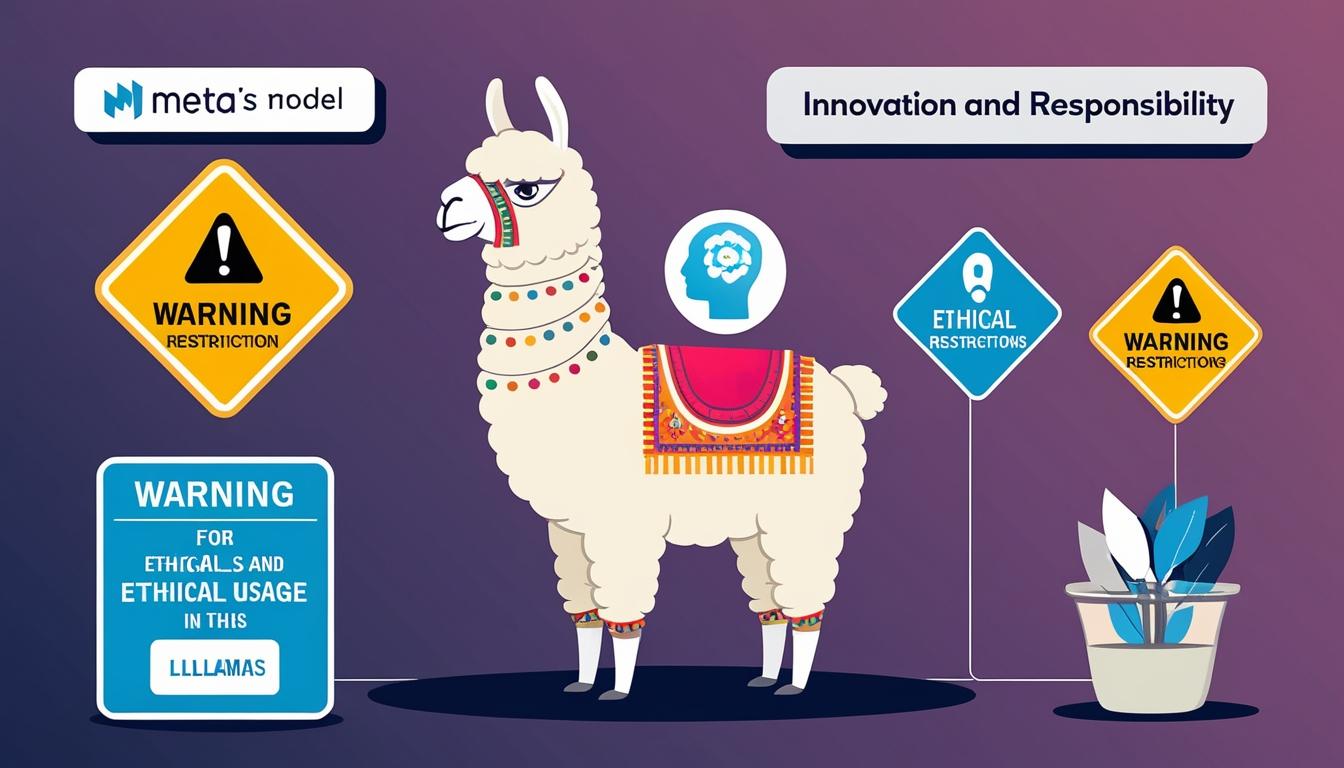

Meta has introduced several restrictions on its AI models, including Llama, to ensure ethical use and prevent applications in military and espionage activities.
Meta’s AI Models and Usage Restrictions: An Overview
Meta, the parent company of Facebook, has been at the forefront of artificial intelligence development, releasing a number of its AI models for public use. Notably, among these is Llama, an AI model that has gained considerable attention since its release. Meta has established several restrictions and conditions concerning the usage of its AI models to ensure they are utilised appropriately.
The release of Meta’s AI models, including Llama, comes with a licensing agreement, especially for services that cater to a large user base. According to company policy, any entity with over 700 million users must undergo a licensing process to deploy these models. Moreover, certain applications of these AI models are strictly prohibited. Specifically, Meta has made it clear that its AI models are not to be utilised for military warfare or espionage activities, reflecting the company’s stance on ethical AI usage.
Despite these clear directives, enforcement of such policies presents a challenge, primarily due to the open nature of AI deployment. Once models are released into the public domain, ensuring adherence to usage guidelines becomes increasingly daunting. This has been a point of concern within Meta, as highlighted by Molly Montgomery, the company’s Director of Public Policy. Montgomery stated unequivocally that any use of Meta’s AI models by the People’s Liberation Army (PLA) is unauthorised. Such usage is deemed a violation of the company’s acceptable use policy, underscoring the need for vigilance in monitoring the application of these models.
Meta’s approach to AI is characterised by a commitment to transparency and accessibility, balanced by a focus on ethical implications and responsible use. The company continues to refine its policies and enforcement mechanisms to address potential misuse without compromising innovation and public access.
This ongoing situation highlights the complexities involved in regulating AI technology, particularly when it crosses international boundaries and varying ethical norms. As the development and deployment of AI continue to evolve, so too will the challenges associated with ensuring its use aligns with intended ethical standards.
Source: Noah Wire Services







