






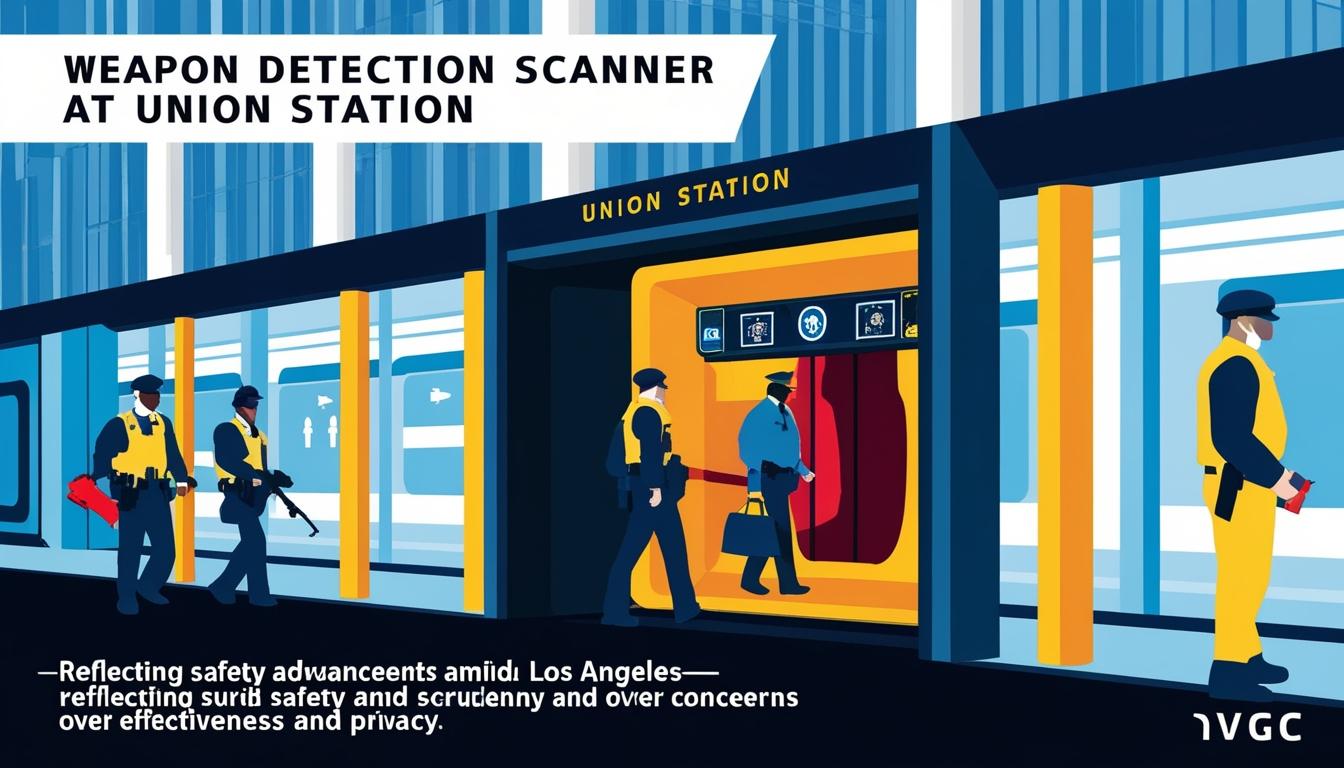

A pilot programme deploying advanced weapon detection scanners at Union Station aims to enhance commuter safety, despite concerns raised by previous trials in New York City.
Los Angeles Metro has initiated a pilot programme deploying weapon detection scanners at Union Station, aiming to bolster safety on its transit system. This trial, launched earlier this month, uses state-of-the-art sensors and artificial intelligence to assess passengers for weapons, mirroring similar actions previously undertaken in New York City.
The New York pilot, conducted at select subway stations, faced scrutiny after revealing disheartening results. Over a 30-day period, approximately 2,800 scans did not detect any firearms, while registering a significant number of false positives. The New York Police Department reported the scanners identified 12 knives and 118 false positives. These inaccuracies prompted concerns from entities like the Legal Aid Society in New York, which labelled the trial an “objective failure.”
Despite these findings, Robert Gummer, the Deputy Chief of System Security and Law Enforcement for the LA Metro, remains optimistic about the potential of the technology. He explained, “The whole intent behind this pilot is to know and understand this technology better, and be able to provide recommendations to the board, and have the board make the call as to where and how they would like to see this roll out.” As of Monday, Metro’s pilot has detected no weapons other than work-related tools carried by passengers.
New York’s trials utilised scanners from Evolv Technology, the same vendor being tested by LA Metro. Jerome Greco, an attorney with the Legal Aid Society in New York, highlighted the risks involved with the program, stating, “That’s 118 potential serious consequences of people having dangerous interactions with police officers who believe that they are armed.”

The NYPD has refrained from committing to a contract with Evolv Technology, voicing the need for further evaluation of the pilot’s outcomes. Evolv’s CEO had previously expressed reservations regarding their technology’s efficacy in subway environments, citing railway interference as a concern.
Los Angeles Metro is simultaneously exploring various pilot programmes to enhance rider experience and safety. These initiatives include expanding tap-out technology, installing additional bathrooms, fitting taller gateways at certain stations, and experimenting with different weapons detection systems.
Past attempts by Metro to integrate weapon detection technology date back to 2017, when body scanners were trialed at Union Station in collaboration with the Transportation Security Administration. The American Civil Liberties Union (ACLU) criticised these efforts, suggesting they marked a potential shift towards the “airportization of American life.” Concerns about the new pilot echo these sentiments, with Mohammad Tajsar, formerly of Metro’s public safety advisory committee and a lawyer with the ACLU of Southern California, describing the current technology as “security theater”—faulty, ineffective, and potentially invasive.
As Metro continues to gather data and make evaluations, the board will eventually decide on future implementations of weapon detection technologies across Los Angeles’ transit system.
Source: Noah Wire Services







