






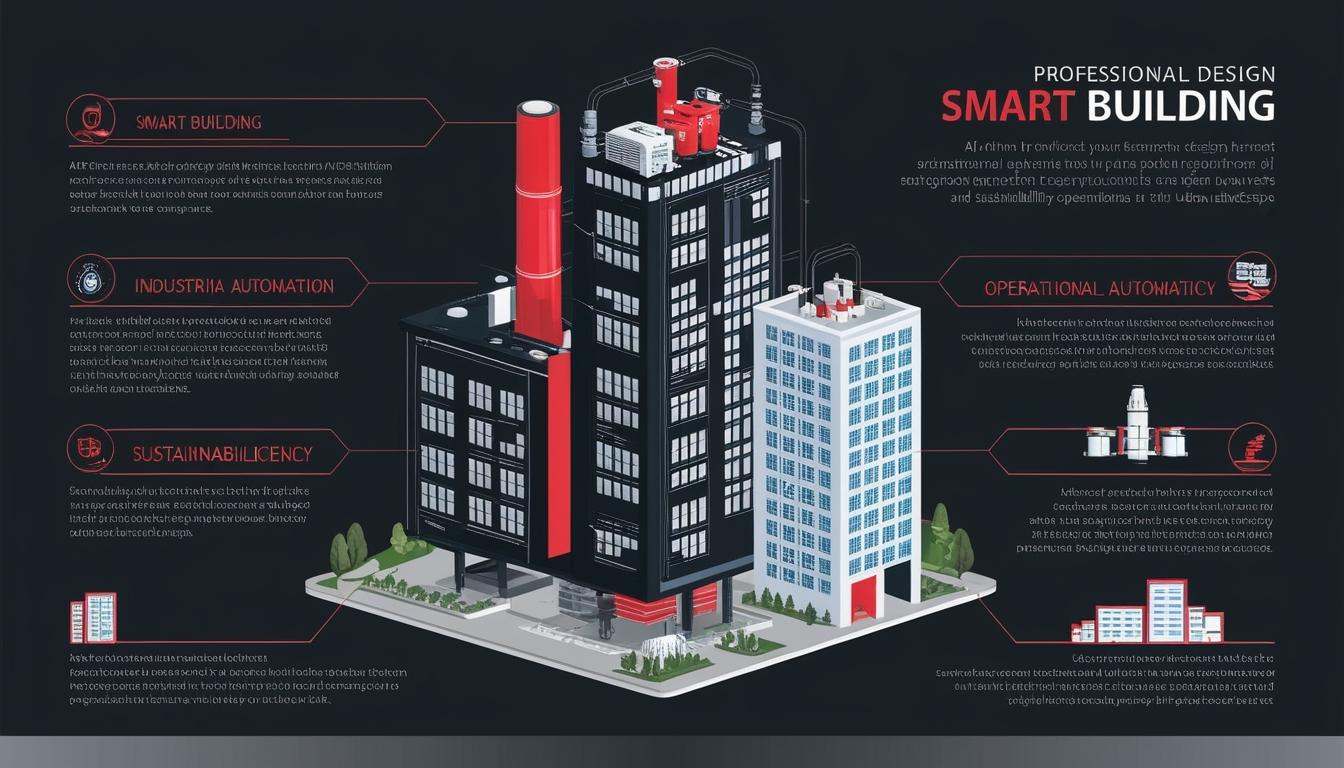

The global industrial smart building market is expected to grow significantly, driven by sustainability initiatives and AI advancements, reaching $14 billion by 2026.
The global industrial smart building market is projected to undergo substantial expansion, with expectations of deployments soaring to $14 billion by 2026. This represents a notable increase of 95% from the current projected figure of $7 billion in 2024. The surge can primarily be attributed to mounting sustainability initiatives as well as the growing necessity for cost efficiencies in building management practices.
Key advancements in artificial intelligence (AI) are pivotal in the evolution of smart building platforms. AI technologies are being harnessed to maximise return on investment while simultaneously achieving sustainability and energy objectives. According to the report by LightNOW, AI effectively identifies operational anomalies through advanced data analytics. This results in heightened safety, lowered operational costs, and a significant reduction in the need for human intervention.
The report further highlights the essential nature of automation in driving cost reductions and supporting sustainability. AI-powered automation systems are capable of recognising and addressing potential issues prior to their escalation, a feature that proves particularly advantageous for industries where operational expenses are notably high.
In terms of market size, the global smart buildings market is anticipated to expand from $117.42 billion in 2024 to an impressive $568.02 billion by 2032, boasting a compound annual growth rate (CAGR) of 21.8%. Another forecast anticipates reaching approximately $160 billion by 2026, with a CAGR of 15.3% observed from 2019 to 2026. Projections indicate that global spending on AI in smart building systems could exceed $42 billion by 2028.

Certain sectors are expected to derive significant benefits from AI-based smart building technologies, particularly industrial establishments such as warehouses, factories, and agricultural facilities. The capacity of AI to flag potential faults in high-value equipment before they arise can lead to substantial long-term savings for these industries.
Regional dynamics also play a crucial role in the development of the smart building market. North America currently holds a dominant position, commanding a 40.33% market share as of 2023. However, the Asia Pacific region is predicted to realise the highest CAGR over the forecast period stretching from 2024 to 2029.
The insights reported by LightNOW underscore the transformative impact that AI and automation are poised to have on business practices across various industries, enhancing efficiency while concurrently addressing the urgent challenges of sustainability.
Source: Noah Wire Services
- https://www.fortunebusinessinsights.com/industry-reports/smart-building-market-101198 – Corroborates the global smart building market size projections, CAGR, and regional dynamics, including North America’s dominant market share and the Asia Pacific’s expected high CAGR.
- https://www.acumenresearchandconsulting.com/smart-building-market – Supports the forecast of the global smart building market reaching around $160 billion by 2026 with a CAGR of 15.3% from 2019 to 2026, and highlights the role of AI and automation in cost reductions and sustainability.
- https://www.fortunebusinessinsights.com/industry-reports/smart-building-market-101198 – Provides details on the market growth driven by energy efficiency, smart city projects, and the adoption of 5G technology, aligning with the need for cost efficiencies and sustainability initiatives.
- https://www.acumenresearchandconsulting.com/smart-building-market – Explains the importance of AI and IoT in smart building management, including predictive maintenance and energy-efficient solutions, which align with the benefits of AI in identifying operational anomalies and reducing operational costs.
- https://www.fortunebusinessinsights.com/industry-reports/smart-building-market-101198 – Details the market segmentation and the dominance of commercial buildings in the smart building market, which is relevant to the industrial establishments benefiting from AI-based smart building technologies.
- https://www.acumenresearchandconsulting.com/smart-building-market – Highlights the growing need for energy-efficient building solutions and the impact of government initiatives on smart infrastructure, supporting the transformative impact of AI and automation on business practices.
- https://www.fortunebusinessinsights.com/industry-reports/smart-building-market-101198 – Provides insights into the competitive landscape and the role of major players like Siemens, Honeywell, and Schneider Electric in the smart building market, which is crucial for understanding the industry’s growth drivers.
- https://www.acumenresearchandconsulting.com/smart-building-market – Discusses the challenges such as the lack of cooperation among standard bodies and rising privacy and security concerns, which are important considerations in the adoption of AI and automation in smart buildings.
- https://www.fortunebusinessinsights.com/industry-reports/smart-building-market-101198 – Outlines the regional dynamics, including the significant growth expected in the Asia Pacific region and the dominance of North America, aligning with the regional insights provided.
- https://www.acumenresearchandconsulting.com/smart-building-market – Details the various types of facilities incorporated into smart buildings, such as video surveillance systems and energy management platforms, which are enhanced by AI technologies.
- https://www.marketsandmarkets.com/report-search-page.asp?rpt=smart-building-market – Provides an alternative forecast and market size projection, supporting the overall growth trend and the importance of AI and automation in smart building technologies.







