






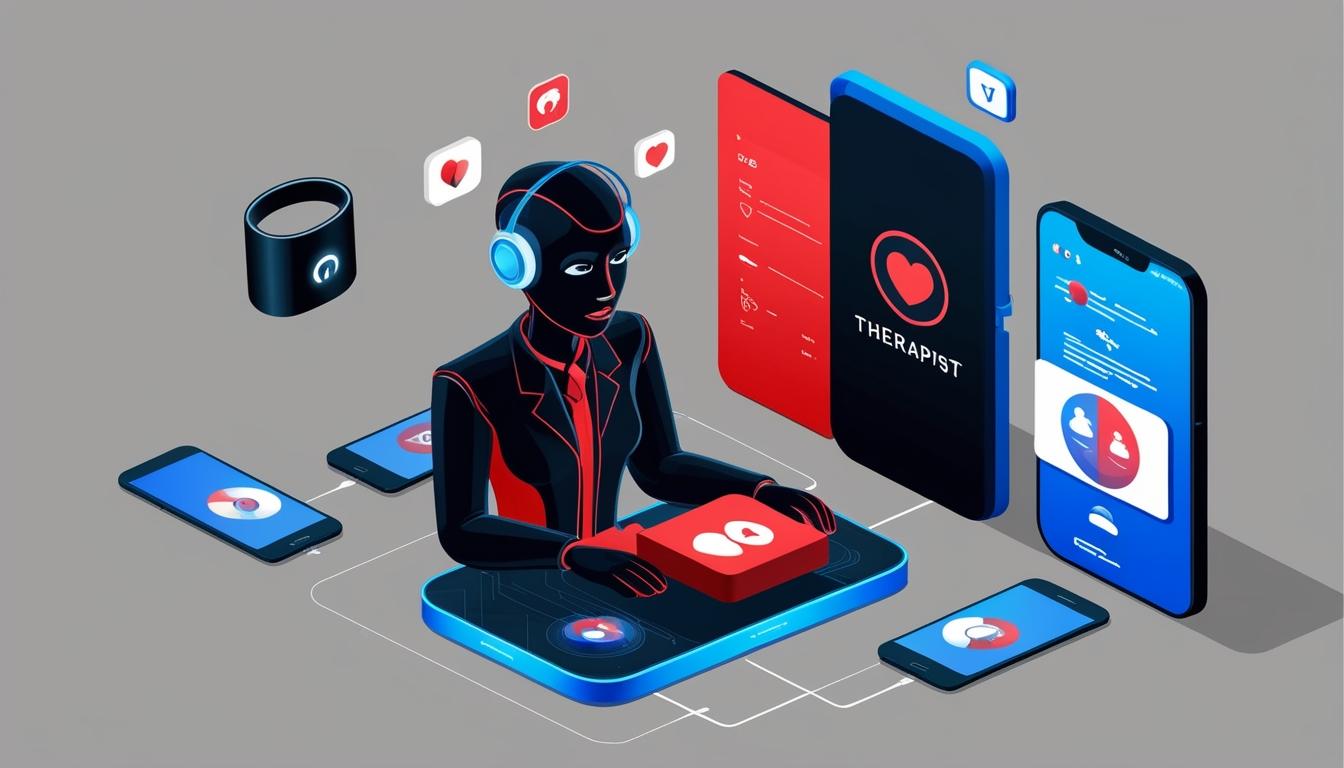

AI advancements are set to transform mental health services, offering personalised treatment options and 24/7 support, while also posing ethical challenges.
The landscape of mental health treatment is poised for a significant transformation thanks to advancements in artificial intelligence (AI), as detailed in a recent report by Psychology Today. This shift is likely to redefine the ways in which individuals access and engage with mental health services, while also altering the role of mental health providers.
One of the most striking prospects of AI in mental health is its capacity for personalisation. Individuals seeking mental health support may soon have the ability to customise the demographic characteristics, voice, and personality of their AI-assisted therapist. This level of personalisation could democratise mental health treatment by lowering costs, with the potential for subscription models to replace traditional therapy rates, which can often exceed £150 per session. Additionally, AI will facilitate 24/7 access to mental health support, allowing individuals to seek help at their convenience, thus reducing stigma associated with mental health treatment through the anonymity of AI interactions.
For mental health providers, the integration of AI tools could lead to more affordable options for maintenance treatment, especially beneficial for those experiencing milder symptoms or seeking support for lifestyle management, such as stress or health coaching. AI could enhance the quality of care by providing tools to bridge interactions between sessions, offering self-help resources and reminders, while also enabling clinicians to monitor patient symptoms more effectively. This technology may allow for quick access to supportive information, as well as fostering a more personalised treatment plan through continuous feedback from patients.
These promising developments are not merely theoretical; many AI mental health tools are already available through smartphones and computers. Looking ahead, incorporation of AI into additional platforms such as smart wearables, virtual reality, and even smart home technology is on the horizon. For instance, devices like the Apple Watch may feature AI that tracks mood variations through physiological indicators, while virtual reality headsets could offer therapeutic experiences created by generative AI. Other innovations may include smart beds that provide ambient support to combat insomnia and automotive technologies capable of monitoring stress levels while offering real-time therapeutic interventions.
However, alongside these advancements, significant concerns persist. Many individuals may find the idea of interacting with an AI for mental health services disconcerting. There are noteworthy apprehensions about data privacy, the accuracy of AI-generated advice, the potential for social disconnection, and the risk of addictive behaviours that may arise from reliance on AI interactions. These issues highlight the crucial need for ethical considerations in the deployment of AI for mental health.
It is important to recognise that while AI offers substantial benefits, it is not positioned to replace human therapists entirely. AI technology is expected to support and enhance treatment by delivering structured protocols, providing expert information, and gathering data on treatment efficacy. Nonetheless, the relational aspects of therapy—such as establishing trust and rapport—remain critical components that AI is not yet fully equipped to replicate.
As the field of AI in mental health continues to evolve, the ability of these technologies to develop an empathetic approach comparable to that of human therapists remains to be seen. Nonetheless, the integration of AI into mental health care appears imminent, paving the way for a future where mental health support is more accessible and customised than ever before.
Source: Noah Wire Services
- https://www.psychologytoday.com/us/blog/artificial-intelligence-and-mental-health/202404/ai-will-make-mental-healthcare-more-human – Corroborates the potential of AI to enhance humanity in mental healthcare, address therapist burnout, and improve access to underserved communities.
- https://vinbrain.net/ai-in-mental-health-a-new-revolution-in-diagnosis-and-treatment – Supports the role of AI in personalizing treatment plans, enhancing diagnostic accuracy, and improving operational efficiency in mental health care.
- https://www.psychologytoday.com/us/blog/the-leading-edge/202412/artificial-intelligence-poised-to-revolutionize-mental-health-care – Details AI’s applications in mental health, including diagnostic support, predictive analytics, and personalized treatment plans, as well as ethical concerns.
- https://liatbenzur.com/2024/07/28/ai-revolutionizing-mental-health/ – Explains how AI personalizes treatment plans, improves accessibility, and enhances the treatment experience in mental health care.
- https://www.psychologytoday.com/us/blog/artificial-intelligence-and-mental-health/202404/ai-will-make-mental-healthcare-more-human – Discusses AI’s ability to handle routine tasks, monitor patient progress, and allow therapists to focus on human aspects of care delivery.
- https://vinbrain.net/ai-in-mental-health-a-new-revolution-in-diagnosis-and-treatment – Highlights AI’s role in developing customized treatment strategies based on individual psychiatric profiles and behavioral patterns.
- https://www.psychologytoday.com/us/blog/the-leading-edge/202412/artificial-intelligence-poised-to-revolutionize-mental-health-care – Mentions AI-driven chatbots providing 24/7 support and enhancing virtual reality therapies for mental health conditions.
- https://liatbenzur.com/2024/07/28/ai-revolutionizing-mental-health/ – Describes how AI can tailor treatment plans to individual needs, enhancing the effectiveness and efficiency of therapies.
- https://www.psychologytoday.com/us/blog/the-leading-edge/202412/artificial-intelligence-poised-to-revolutionize-mental-health-care – Addresses concerns about data privacy, accuracy of AI-generated advice, and the risk of social disconnection in AI mental health interactions.
- https://vinbrain.net/ai-in-mental-health-a-new-revolution-in-diagnosis-and-treatment – Explains how AI can reduce costs and improve accessibility by automating routine tasks and enhancing efficiency in delivering mental health care.
- https://www.psychologytoday.com/us/blog/artificial-intelligence-and-mental-health/202404/ai-will-make-mental-healthcare-more-human – Emphasizes that AI is not intended to replace human therapists but to support and enhance treatment by delivering structured protocols and gathering data.







