






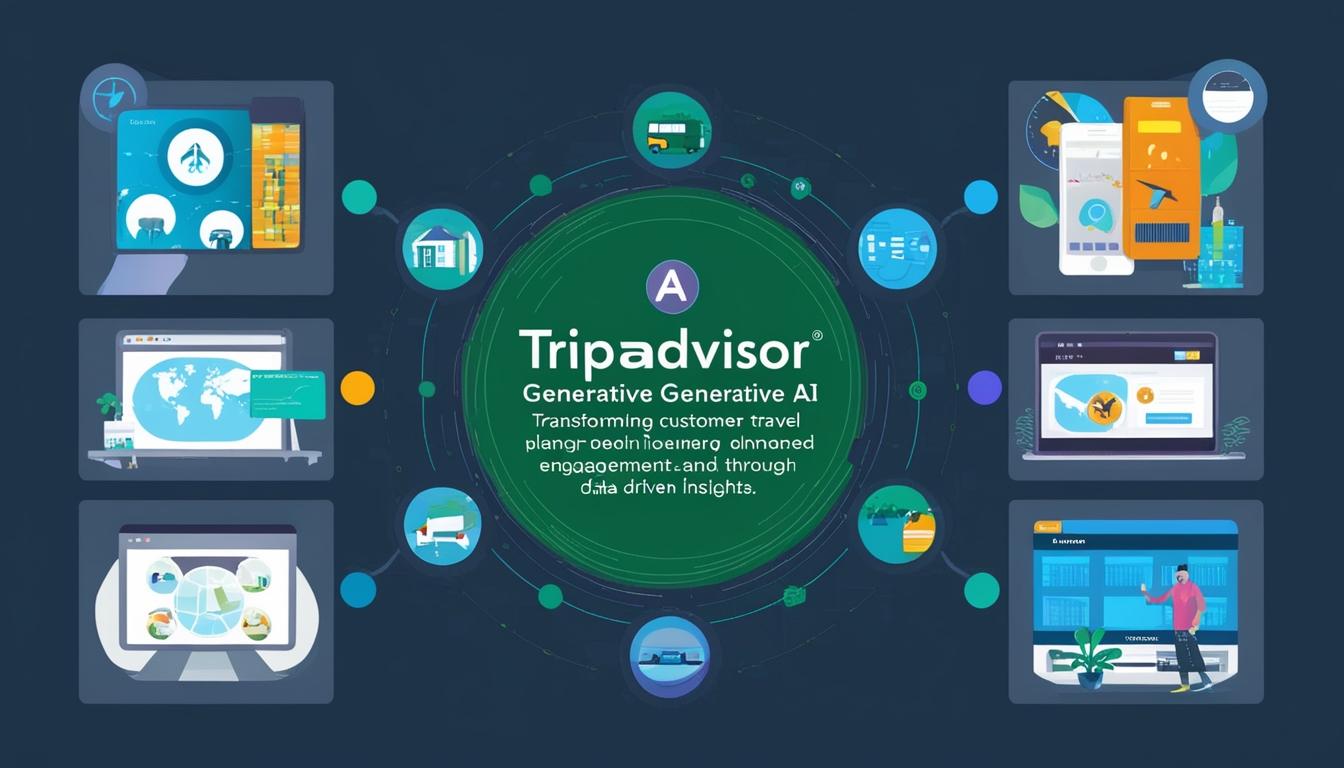

The perception of generative AI has shifted dramatically, with many projects expected to fail, yet companies like Tripadvisor demonstrate its transformative potential.
Since the launch of ChatGPT by OpenAI two years ago, generative artificial intelligence (gen AI) has experienced a rollercoaster ride in terms of industry perception and adaptation. While initially celebrated as a revolutionary tech development, recent insights, including Gartner’s forecast, suggest that the adoption of gen AI may be lagging. Gartner predicts that by the end of 2025, at least 30% of gen AI projects are expected to be abandoned after the proof-of-concept stage. This reality suggests that generative AI technologies may be descending into what analysts describe as the “trough of disillusionment.”
In stark contrast to the initial enthusiasm, some chief executives who previously extolled the virtues of gen AI are now showing reservation, with public apologies accompanying prior exuberance. A significant portion of the professional community shares a sentiment of disillusionment, questioning whether generative AI lives up to its initial promises of enhancing productivity and efficiency.
Despite this shift in reception, there are cases where gen AI has successfully transcended the experimental phase, becoming a pivotal tool for transformation within firms. One such instance is evident at Tripadvisor, where head of data and AI, Rahul Todkar, considers gen AI to be a groundbreaking innovation. Todkar asserts, “I’m a believer in generative AI technologies.”
Tripadvisor has effectively harnessed gen AI to revamp its customer service offerings, particularly with its Trip Planning Solution. This tool, developed in compliance with privacy regulations, utilizes extensive stores of customer data to provide personalised travel content. Launched successfully within nine months, it has facilitated over a million trips, highlighting its popularity among users.
Todkar explains that the foundation of a successful gen AI application lies in robust data-handling capabilities, achieved through platforms such as the Snowflake AI Data Cloud for Travel and Hospitality. By centralizing data, companies can effectively apply sophisticated large language models (LLMs), such as those from the GPT series, in tandem with proprietary recommendation engines.
The use of off-the-shelf and internally devised models enables Tripadvisor to offer highly tailored recommendations to users. According to Todkar, savvy use of data and models results in improved user engagement and satisfaction, which subsequently unlocks revenue potential for the company. For instance, when dining options are personalized to match a user’s dietary preferences, engagement metrics can triple, indicative of enhanced user experience.
Looking forward, Tripadvisor is broadening the use of gen AI across various functions. Their six-month project on review summarization exemplifies the potential to distil crowd-sourced opinions into concise, informative summaries—another layer of efficiency in user interaction. Furthermore, Todkar envisions a future where the vast catalog of user-submitted images on Tripadvisor’s site can be harnessed to offer even more personalized and interactive experiences.
The path for generative AI, while currently dotted with skepticism from some sectors, is marked by ambitious innovation plans at companies like Tripadvisor. With considered implementation and strategic innovations, gen AI technology possesses the latent potential to significantly reshape user engagement and operational efficiency across industries.
Source: Noah Wire Services







