






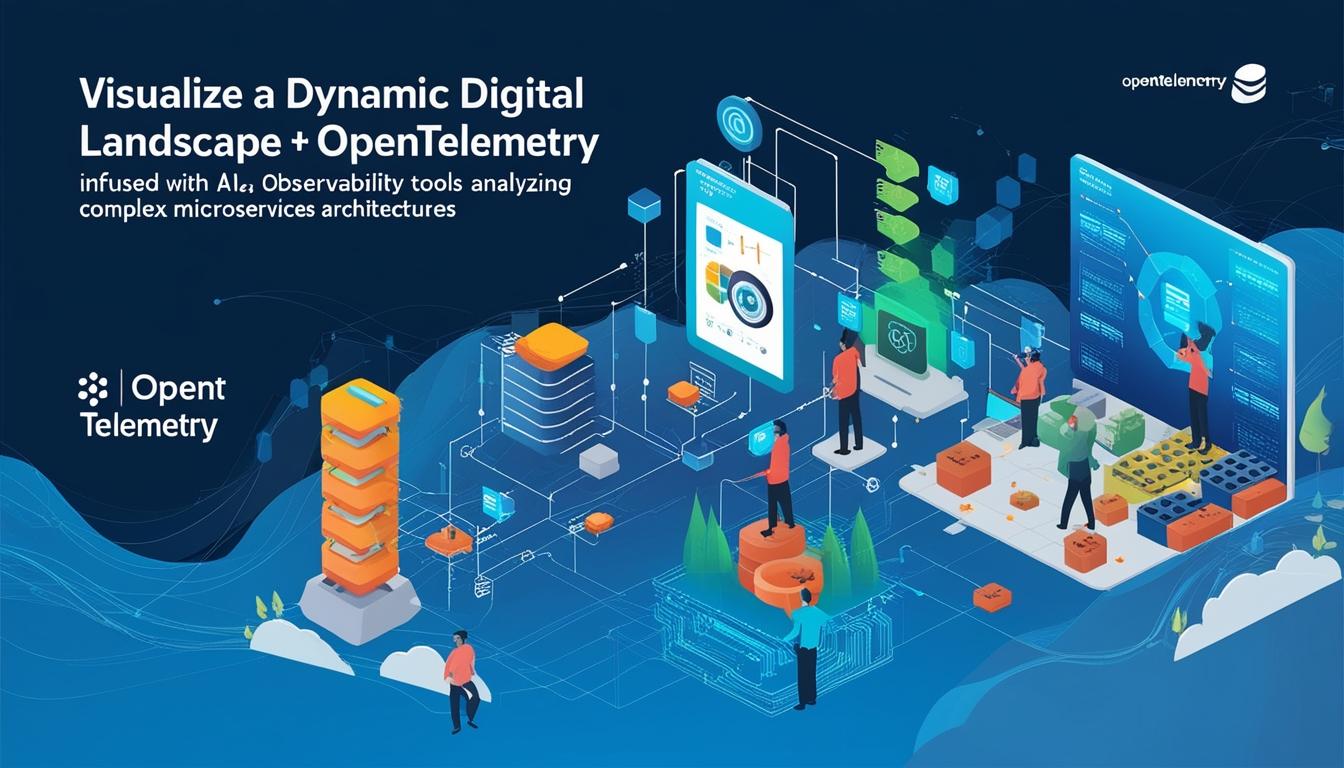
OpenTelemetry’s standardised tools and the rise of RAG-based AI assistants are reshaping how organisations manage complex digital infrastructures and enhance system monitoring.
In the realm of modern digital infrastructures, organisations are being confronted with increased complexity due to distributed systems and microservices architectures. This has made maintaining clarity and efficiency within these intricate systems a substantial challenge. Observability, a field focused on providing insights into system performance and operation, is witnessing significant transformation as a response.
A key player in advancing observability is OpenTelemetry, a collaborative open-source framework designed to provide standardised tools for collecting and analysing observability data. OpenTelemetry has been gaining traction across various industries and is projected by many analysts to become the primary standard for observability data within the next five years.
As digital systems grow more multifaceted, managing the vast amount of data becomes increasingly challenging. In this context, Generative AI (GenAI) is emerging as a means to enhance the capabilities of Site Reliability Engineers (SREs). It offers promising solutions in simplifying complex processes and facilitating rapid root cause analysis (RCA). AI assistants, particularly those leveraging Retrieval Augmented Generation (RAG), are at the forefront of this evolution, improving how systems are monitored and vulnerabilities are addressed.
Observability aims to offer a full understanding of system behaviour, performance, and health by using various data signals such as logs, metrics, traces, and profiling. However, implementing effective observability remains challenging as developers often deal with vast quantities of diverse data. OpenTelemetry aids in this by ensuring that the collected data adheres to open standards, facilitating easier interpretation.
A significant advancement within the AI domain is the introduction of RAG-based AI assistants. These leverage the robustness of large language models (LLMs), integrating them with specific internal data to enhance system understanding and provide actionable insights. This advancement enables these assistants to offer a depth of contextual understanding that was previously unavailable. Functions of these AI assistants include analysing live telemetry from OpenTelemetry, correlating it with logs, and applying established best practices grounded in comprehensive knowledge bases.
RAG-based AI assistants benefit operations in several decisive ways:
-
Understanding and Analysis: These assistants bring clarity to the complex architectures and interdependencies in distributed systems, enabling a more precise analysis of issues.
-
Contextual Troubleshooting: By identifying patterns and correlating them with known issues, these AI tools offer troubleshooting guidance tailored to different operational contexts.
-
Proactive Monitoring: Through extensive historical data analysis, these assistants can predict and prevent potential system crises.
-
Knowledge Sharing and Collaboration: Acting as dynamic repositories of the latest practices, they enhance team collaboration by providing consistent knowledge and understanding of system performance.
-
Operational Efficiency: The application of RAG-based AI yields improvements in operational processes by significantly reducing mean time to resolution (MTTR) for system issues, thus minimizing system downtimes and enhancing resource allocation. It allows engineers to concentrate on more complex problems by streamlining the initial analysis phase, and this focused approach facilitates better decision-making regarding capacity and system design.
An exemplar of this integration is Elastic, a company that integrates OpenTelemetry natively while offering RAG-based AI solutions. This dual approach illustrates how organisations can move beyond traditional, fragmented monitoring methods towards innovative, integrated systems management.
The emergence of RAG-based AI assistants alongside OpenTelemetry represents a pivotal change in how observability is approached. As organisations begin to leverage this blend of AI and open-source frameworks, they will not only streamline their operations but will also be strategically positioned to handle ever-evolving digital challenges.
In alignment with these advancements, professionals and industry leaders will convene to discuss and explore these topics further at KubeCon + CloudNativeCon North America, scheduled in Salt Lake City, Utah, from November 12-15, 2024. This event aims to further elaborate on the impact and future prospects of Kubernetes and the broader cloud-native ecosystem.
Source: Noah Wire Services







