
The electric vehicle sector is witnessing significant advancements, from ultra-fast racing cars to innovative business models, as industries shift towards sustainability.
Amidst the growing shifts towards sustainability and technological innovation across various industries, significant strides are being made in the electric vehicle (EV) sector, showcasing practical implementations and advancements that drive growth in the market.
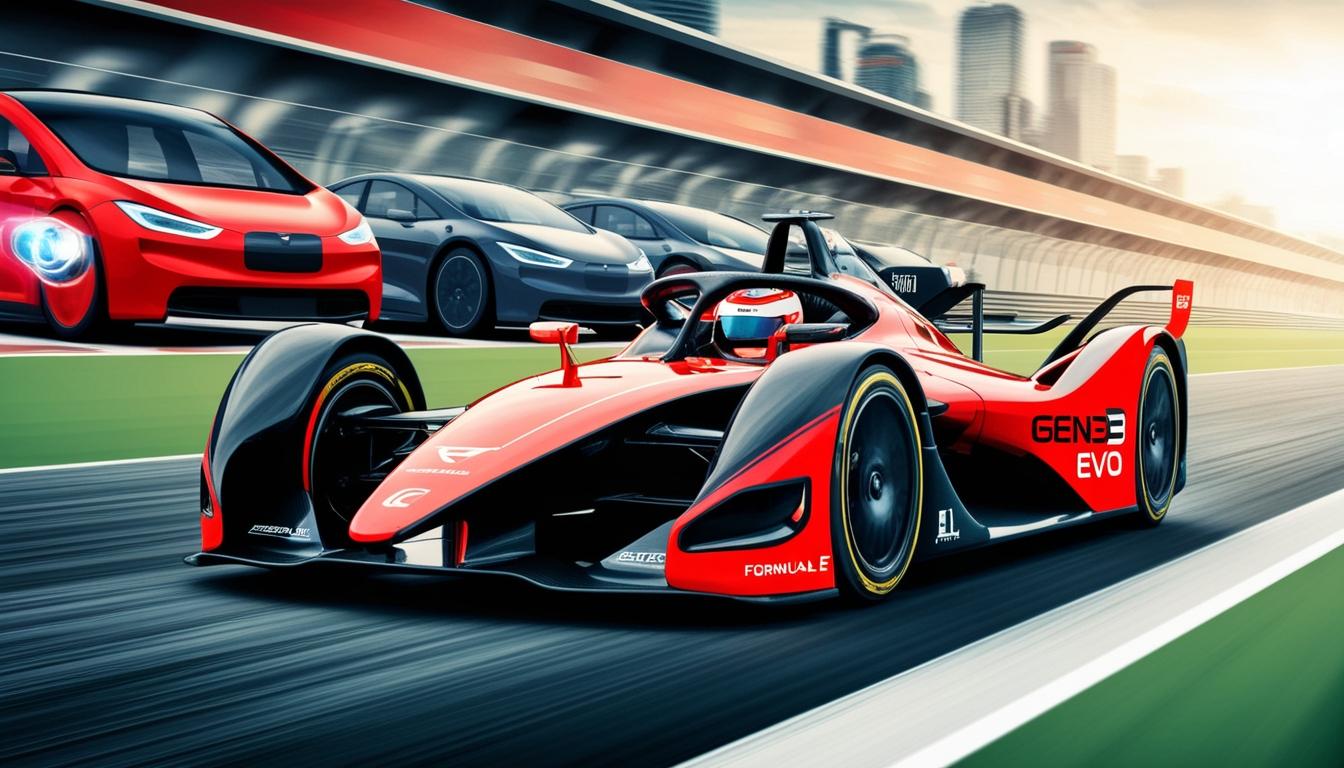
One of the most notable developments is the introduction of Formula E’s latest race car, the GEN3 Evo, which is poised to be the fastest Formula E car to date, capable of accelerating from 0 to 60 mph in just 1.82 seconds. With a top speed reaching 200 mph, the new model features an aggressive body kit designed for enhanced aerodynamics and robustness. The car will take to the track for its first race in São Paulo on December 7, 2024, indicating a lively competition ahead as the series continues to emphasise electric mobility in motorsport.
In terms of business models within the EV segment, Canoo, an emerging electric vehicle manufacturer, is shifting its strategy towards a subscription-based model. This new approach focuses on catering to businesses and urban fleets rather than individual consumers. The subscription model aims to open new revenue streams while aligning with the broader trend towards car-as-a-service, which analysts predict will expand significantly over the coming years.
Meanwhile, Renault has unveiled two innovative electric vehicles, the Mobilize Duo and Bento, which are designed to contribute to urban decarbonisation efforts. These compact vehicles boast zero exhaust CO₂ emissions, are constructed from 40% recycled materials, and are 95% recyclable. Furthermore, the vehicles feature five times fewer components than traditional cars, allowing for reduced manufacturing emissions. With a competitive entry price of around €9,000, Renault’s offerings target both affordability and sustainability.

In the fields of battery technology and safety, researchers from TU Darmstadt and MIT have developed a method that combines physical approaches with machine learning to monitor battery performance and prevent failures. This method employs recursive Gaussian processes to analyse operational changes in battery cells, drawing on a unique dataset from 28 returned battery systems. These advancements stand to enhance the safety and reliability of batteries, crucial elements in the ongoing transition to electric mobility.
As electric vehicle adoption escalates, particularly in China, traditional gasoline demand faces significant challenges. Recent statistics indicate that electric vehicles and hybrids have begun to account for more than half of the country’s retail passenger vehicle sales. Analysts from CITIC Futures Co. predict a pronounced decline in Chinese gasoline consumption, projecting a reduction of 4% to 5% per year through 2030.
Self-driving technology also continues to garner attention, with recent data illustrating that autonomous vehicles demonstrate a safer driving record than human-operated cars, with exceptions noted in certain conditions such as low-light situations. This statistic reinforces the growing viability of autonomous transportation in the coming years.
The aviation sector is not left behind in the shift towards electrification, with plans for the ES-30, the largest all-electric aircraft scheduled for a 2025 debut. This aircraft is designed for short runways and is set to connect underserved communities with improved accessibility, thus supporting the broader goals of sustainable transport.
In summary, across various industries, from motorsport to urban mobility and beyond, innovative applications of technology and newly formed business strategies are driving growth in the electric vehicle market. These developments highlight a collaborative effort towards reducing carbon footprints while rethinking traditional transport paradigms.
Source: Noah Wire Services
- https://www.fiaformulae.com/en/news/508043 – Corroborates the introduction of the GEN3 Evo race car, its acceleration capabilities, top speed, and technical enhancements such as the aggressive body kit and all-wheel drive.
- https://racer.com/2024/04/25/formula-e-reveals-new-and-improved-gen3-evo/ – Supports the details about the GEN3 Evo’s performance gains, all-wheel drive, new bodywork, and improved tires, as well as its sustainability features.
- https://www.the-race.com/formula-e/everything-you-need-to-know-about-formula-e-new-gen3-evo-car/ – Provides information on the GEN3 Evo’s acceleration, grip improvements, and the strategic use of all-wheel drive and attack mode.
- https://www.fiaformulae.com/fr/news/495569 – Details the specifications and enhancements of the GEN3 Evo, including the front powertrain kit, battery power output, and sustainable materials used.
- https://e-formula.news/wiki/technology – Lists the technical specifications of the GEN3 car, including its top speed, acceleration, and power output, which are relevant to the GEN3 Evo.
- https://www.fiaformulae.com/en/news/508043 – Mentions the GEN3 Evo’s debut and its emphasis on electric mobility in motorsport, including the race in São Paulo.
- https://racer.com/2024/04/25/formula-e-reveals-new-and-improved-gen3-evo/ – Discusses the GEN3 Evo’s dimensions, weight, and the introduction of fast-charging pit stops, aligning with its first race.
- https://www.the-race.com/formula-e/everything-you-need-to-know-about-formula-e-new-gen3-evo-car/ – Explains the performance and strategic improvements of the GEN3 Evo, including its impact on racing dynamics.
- https://www.fiaformulae.com/fr/news/495569 – Details the evolution of Formula E cars, including the GEN3 Evo’s advancements in power output, regenerative braking, and sustainable materials.
- https://e-formula.news/wiki/technology – Provides a comprehensive comparison of the technical specifications across different generations of Formula E cars, including the GEN3 Evo.
- https://www.fiaformulae.com/en/news/508043 – Highlights the GEN3 Evo’s focus on sustainability, including its net zero carbon footprint and the use of recycled materials.