






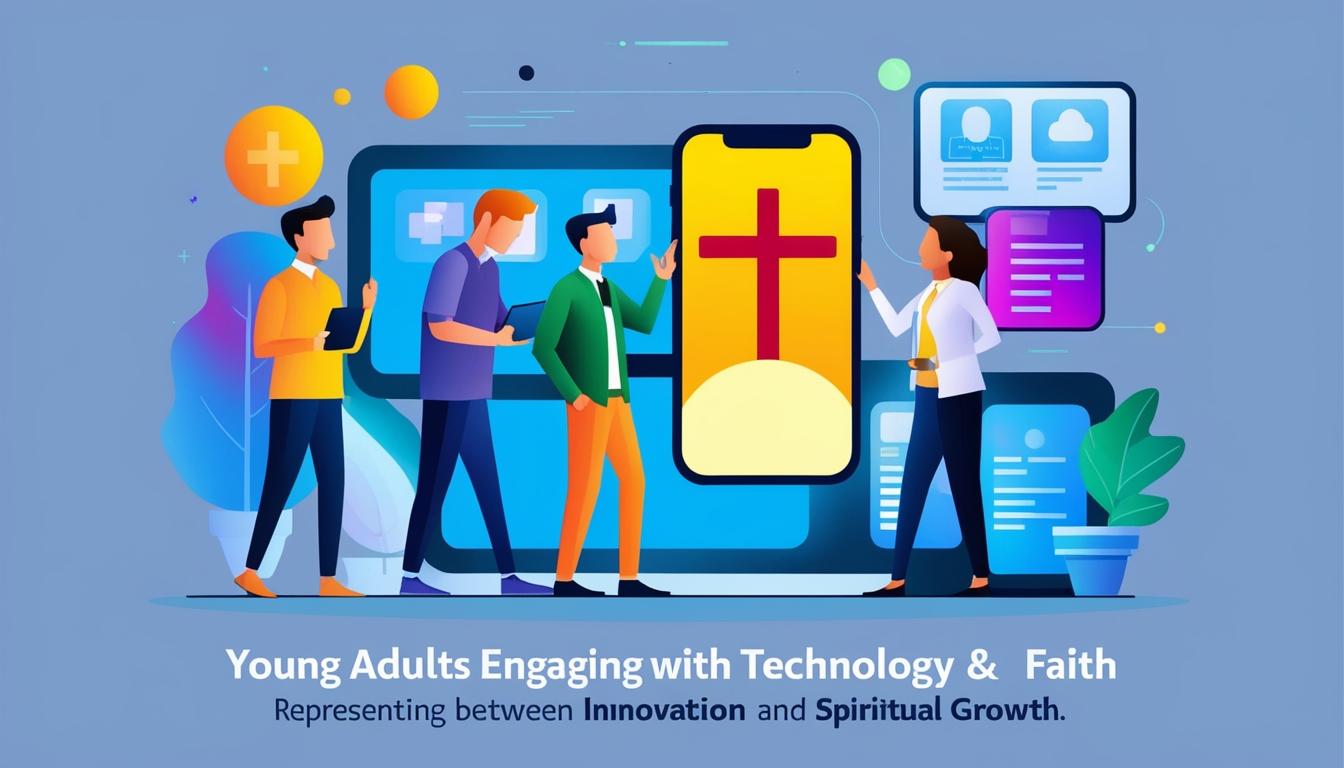

In a recent worldwide devotional, Elder David A. Bednar emphasised the dual nature of technology and encouraged young adults to anchor their use of innovations like artificial intelligence in gospel principles.
On the evening of Sunday, November 3, 2024, Elder David A. Bednar of the Quorum of the Twelve Apostles addressed a worldwide devotional aimed at young adults from Brigham Young University–Idaho. This event, held in Rexburg, Idaho, marked the unveiling of “Things as They Really Are 2.0,” revisiting themes from a speech he first delivered fifteen years prior on May 3, 2009. In his original address, Elder Bednar cautioned against the potential negativity of certain interactions within cyberspace, which he described as potentially stifling and suffocating for the soul.
Updating his remarks for a modern audience, Elder Bednar highlighted the dual nature of technological innovation. He emphasised that technology itself is neither inherently good nor bad but should be contextualised within the framework of an eternal plan of happiness. Citing President David O. McKay, Elder Bednar illuminated the idea that technology holds both perilous and promising facets.
Central to his updated discourse were two questions posed to the young audience: whether technology invites or hinders the constant companionship of the Holy Ghost, and whether the time spent with media enriches or restricts one’s ability to live meaningfully.
A significant addition to this updated address was the discussion on artificial intelligence (AI). Since Elder Bednar’s original speech, AI has developed into a prevalent technology. While acknowledging AI’s potential to advance knowledge and improve quality of life, Elder Bednar warned of its risks, such as distorting human identity and posing an obstacle to genuine human interaction. He underscored that AI could distract from spiritual growth and lead to a diminished reliance on divine guidance.
Elder Bednar encouraged young Latter-day Saints to identify gospel principles that could steer their use of technology, including AI. He also recommended reviewing a document titled “Principles for Church Use of Artificial Intelligence,” which was distributed by the Church earlier in the year, aiming to help individuals safeguard themselves against misuse of technology.
Moral agency, described by Elder Bednar as the privilege and ability to choose virtuous actions, remained a pointed concern. He expressed that AI, if misused, could undermine this agency by making individuals more passive in their spiritual and moral choices. Drawing from President Russell M. Nelson, Elder Bednar stated that while humans are called to “think celestial,” AI is limited to “thinking telestial,” unable to fulfil the divine roles of bearing witness to sacred truths or facilitating spiritual sanctification.
Elder Bednar’s speech originated from a devotional conducted earlier in January 2024 titled “Consider the Wondrous Works of God,” where he discussed the spiritual significance of work. His recent talk reiterated that genuine engagement in spiritual work is essential, warning against the shallow reliance on AI for tasks that offer growth through personal effort and righteousness.
At the conclusion of his address, Elder Bednar stressed the importance of living in harmony with spiritual entities in order to draw closer to faith. His wife, Susan Bednar, added her own reflections, targeting the notion of overcoming fear through faith in Jesus Christ. Addressing questions from young adults, she shared personal anecdotes and scriptural insights, including an interpretation of Isaiah 41:10, to illustrate the idea that Christ supports believers through life’s challenges.
Susan Bednar also alluded to biblical stories, such as Peter’s moment on water with Jesus, to make the case that divine support and strength are ever-present in times of trial and can be relied upon to uphold faithful individuals, drawing on their covenantal relationship with Christ.
The devotional ultimately sought to reinforce the idea of balancing technological engagement with spiritual tenets, urging young adults to ground their use of innovations like AI in principles that align with their faith, and to maintain a focus on personal spiritual progress and agency.
Source: Noah Wire Services







