





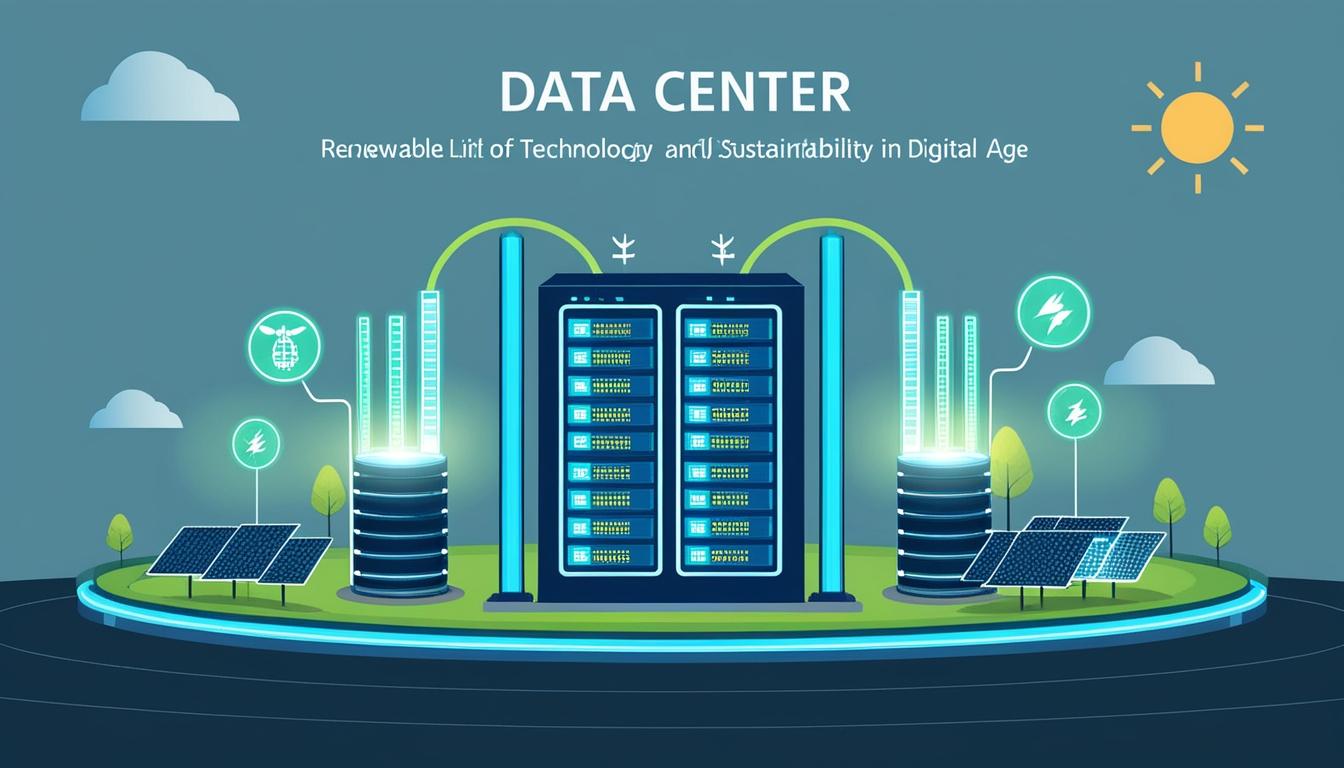

Data centres account for 3% of global electricity usage, prompting major tech firms to invest in renewable energy to meet growing demands while navigating challenges in resource competition.
Data Centers: Key Players in the Global Energy Landscape
In today’s digital age, data centres have emerged as vital components of the global energy consumption narrative, accounting for 3% of the world’s electricity usage. This phenomenon marks a substantial increase from the negligible figures recorded in the early stages of the digital revolution.
Data centres encompass a wide array of digital services, from the cloud storage provided by platforms like iCloud to the streaming of Instagram reels and Facetime calls. The storage demands vary significantly across content types, with blog posts consuming less data compared to podcasts, and videos requiring the most. Modern technological enhancements, such as the capability of smartphone cameras to produce images suitable for billboard advertising and Apple’s introduction of “Live” photos that combine images with short video clips, have contributed to the increased demand for data storage.
The advent of artificial intelligence (AI) has further compounded this trend. While a typical Google search requires just 0.3 watt-hours of energy, more complex AI tasks, such as inquiries made to platforms like ChatGPT, reportedly consume ten times that amount. As AI technologies continue to advance, the demand for energy-intensive processes is likely to grow.

In response to these mounting energy demands, major technology companies are making significant investments in renewable energy sources for their data centres. This shift is driven by the dual motives of cost-effectiveness and corporate sustainability pledges, which align with the expectations of environmentally conscious employees and consumers. In the United States, data centres are now responsible for over two-thirds of the total corporate market for renewables.
This development has spurred substantial advancements in the renewable energy sector, fostering large-scale projects and innovations aimed at improving energy efficiency in storage, transmission, and AI. As companies strive to optimise their operations, the energy used per unit of data is expected to decrease over time.
However, the competition driven by these tech giants for renewable resources has not been without its challenges. In Wyoming, for example, Project Bison—a direct air capture initiative by Carbon Capture, Inc.—was recently “paused,” facing obstacles in securing competitively priced clean energy. This is largely attributed to the influx of data centres into the region, drawn by the state’s abundant wind energy resources.
The intersection of data centres and renewable energy development continues to be a topic of considerable significance and debate. An exploration of this issue is scheduled for a webinar today, which will delve deeper into the implications of data centre growth on renewable energy sectors.
This complex interplay of technology and sustainability underscores the ongoing evolution of energy dynamics in the digital era, illustrating both the potential benefits and challenges posed by the ever-expanding footprint of data centres worldwide.
Source: Noah Wire Services







