






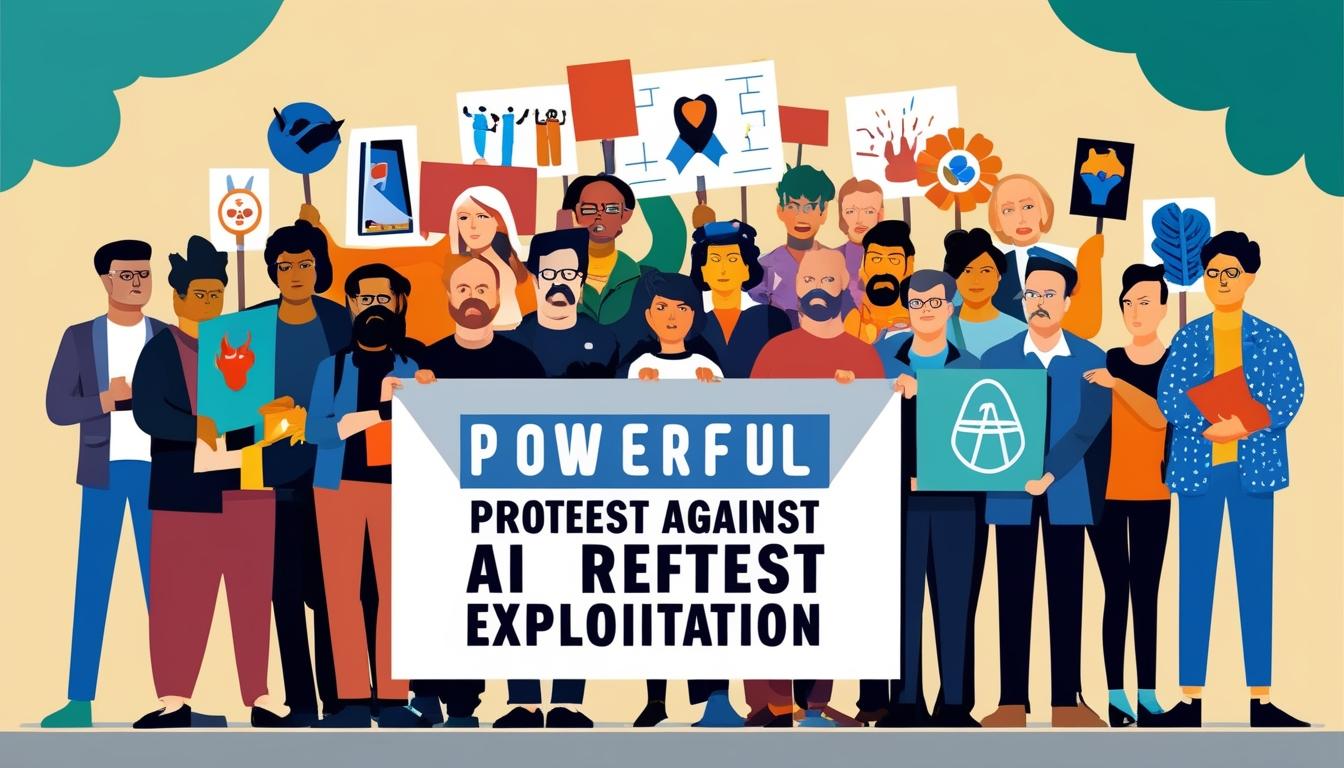
A powerful statement signed by over 10,500 creatives, including Björn Ulvaeus and Julianne Moore, warns of the unjust threat AI poses to artists’ livelihoods and calls for ethical use of creative works.
Renowned figures from the creative arts, including Abba’s Björn Ulvaeus, actress Julianne Moore, and Radiohead’s Thom Yorke, have joined over 10,500 other creatives to sign a powerful statement concerning the use of artificial intelligence (AI). The statement warns against the unlicensed utilisation of creative works as a significant and unjust threat to artists’ livelihoods. It highlights an intensifying conflict between the world of creative professionals and tech companies who use such works to train AI models like OpenAI’s ChatGPT.
The statement, succinctly crafted in a mere 29 words, addresses the practice of using copyrighted materials—such as text, images, and videos—without the express consent or compensation of creators. It calls this practice a major threat to the livelihoods of artists and categorically states it must not be permitted. Among the other notable supporters are Nobel laureate Kazuo Ishiguro, authors John Grisham and Ann Patchett, musician Robert Smith from the Cure, and actors like Kevin Bacon and Rosario Dawson.
Ed Newton-Rex, a former AI executive and the organiser behind this initiative, expressed deep concerns about the situation faced by individuals dependent on creative work for their living. Currently at the helm of Fairly Trained, a non-profit linking AI firms with ethical data practices, Newton-Rex criticised the tech industry’s use of creative outputs as “training data” without proper licensing or recognition. He likened this to a stark form of dehumanisation, stripping the creators of autonomy over their own work.
Newton-Rex, who resigned from his position at Stability AI due to disagreements over their stance on copyright fair use, emphasised his disapproval of the “opt-out” model currently being considered by the UK government. The proposal under discussion would allow AI companies to use creators’ work unless the artists and publishers actively choose to “opt-out.” Newton-Rex argued that such systems are ineffective, as many creators may remain unaware of their need to opt out.
In the United States, high-profile litigation against AI developers is already underway. Authors, including Jodi Picoult and George RR Martin, have launched lawsuits against OpenAI alleging copyright infringement. Meanwhile, major record labels such as Sony Music, Universal Music Group, and Warner Records are also pursuing legal action against AI music firms like Suno and Udio for similar reasons.
The legal landscape for these cases is complex, with challenges expected in demonstrating direct imitation of specific works inside AI-generated outputs. Nonetheless, some cases have gained traction in the courts, as seen when a U.S. District Judge in California allowed certain claims against OpenAI and other tech firms to proceed.
The pushback from the creative sector also reflects broader industry efforts to resist unconsented use of their work by AI systems. Prominent figures and organisations, including the Songwriters of North America and the CEO of Hachette Book Group, have voiced their support for the initiative. Previous protests have seen participation from a wide array of creatives, including musicians like Billie Eilish and authors like Margaret Atwood.
This ongoing debate captures a pivotal moment in the intersection of technology and intellectual property rights, as creatives call for measures to protect their work against what they see as exploitation by burgeoning AI technologies. How regulators and courts respond to these complaints could set crucial precedents for the future relationship between AI development and creative copyrights.
Source: Noah Wire Services







