






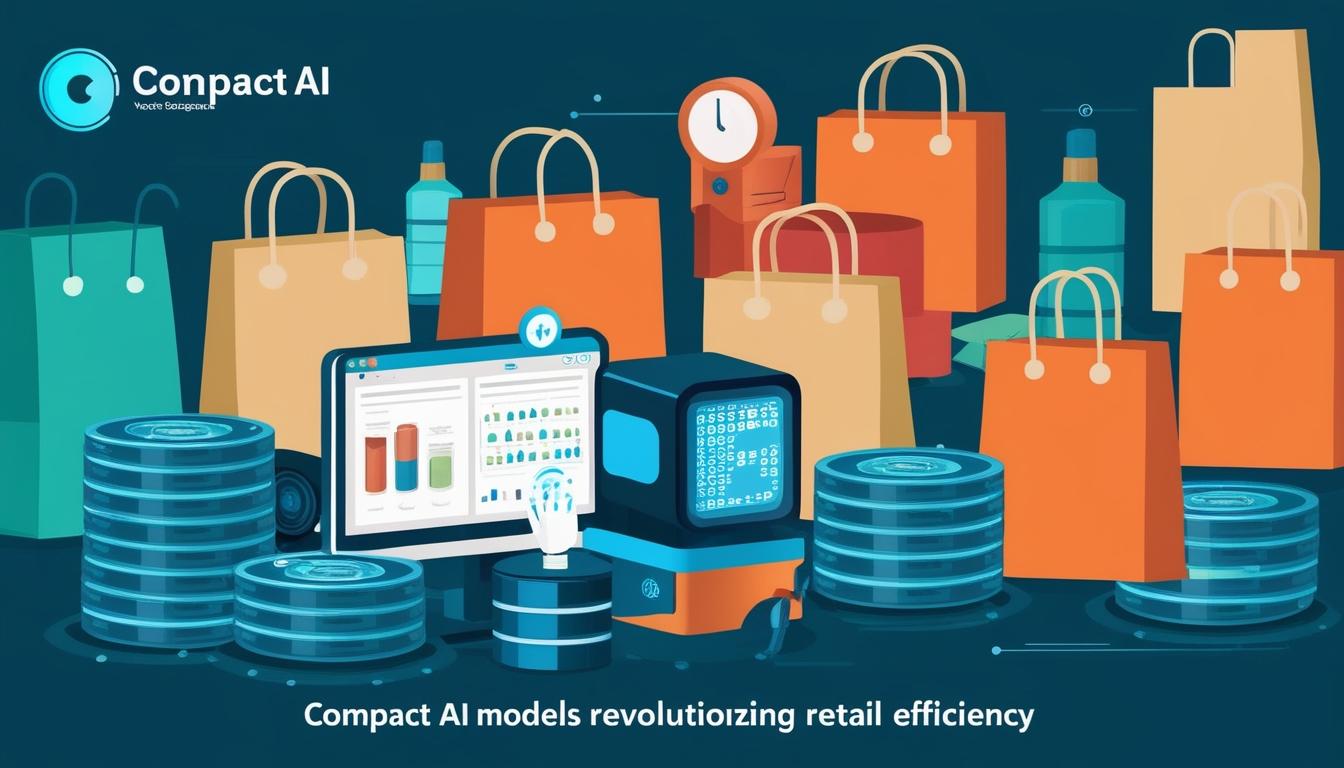
The introduction of smaller AI models is reshaping the landscape of technology, offering cost-effective solutions that enhance operational efficiency for businesses ranging from corner shops to large retail firms.
The landscape of artificial intelligence (AI) is experiencing a transformative shift, driven by the emergence of compact AI models that promise to deliver substantial economic benefits across various sectors. From local corner stores to large retail conglomerates, businesses are capitalising on smaller, budget-friendly AI models that match the performance of their larger predecessors, offering significant savings and efficiency.
A prominent player in this transition is H2O.ai, which recently introduced smaller AI models designed to redefine document processing and text recognition. These models, with parameters ranging from 0.8 billion to 2 billion, are a part of a broader industry trend towards compact AI systems. Available on the popular AI hosting platform Hugging Face, these models have been trained on a vast number of conversation pairs and reportedly surpass larger rivals in certain optical character recognition (OCR) tests.
These advanced yet efficient models are set to make a considerable impact on the industry. Steven Sermarini, the Senior Director of Engineering-Data & Analytics at Radial, an eCommerce logistics and payments firm, explained that smaller AI systems have the potential to democratise technology access across the retail sector. By reducing the computational costs associated with AI, these models afford small to medium businesses (SMBs) the opportunity to optimise inventory management, predict demand, and automate reordering processes — thus enhancing their operational efficiency.
The introduction of smaller language models could significantly lower the entry barriers for startups, enabling them to innovate without investing in expensive computing infrastructure. Hardik Chawla, Senior Product Manager at Amazon, mentioned that many startups are creating effective retail solutions that run on modest hardware, thanks to these lightweight models. Chawla illustrated that startups can now deploy focused models tailored for specific needs, such as dynamic pricing or stock-out prediction, rather than developing widespread AI systems. This targeted approach not only cuts down on development costs but frequently yields better outcomes than broader, general-purpose AI models.

While these smaller models present a promising cost-effective solution, Stephen DeAngelis, CEO of Enterra Solutions, highlighted that AI deployment in the logistics and retail sectors entails more complex challenges beyond just cost reduction. He noted that language models still necessitate thorough training, top-notch data, and expert insights to address intricate supply chain and business analytics challenges. Consequently, the full integration of these compact AI models into industry operations is expected to be gradual.
Despite the rise of AI, concerns about human job displacement remain minimal in the immediate term. In customer service and warehousing, for instance, AI can automate routine and repetitive tasks, allowing human workers to engage in more personalised customer interactions or handle physical tasks that machines cannot. Chawla indicated that AI could manage basic enquiries, thereby freeing human agents to focus on deeper customer engagement, while in warehouses, AI could optimise workflows, reducing errors and boosting productivity.
Chawla further suggested that as AI systems continue to evolve, skills in data literacy, AI monitoring, and technology-driven process management will become increasingly valuable. To navigate this shift, workforce reskilling and upskilling initiatives are essential, not for job elimination, but for evolving roles that complement human capabilities with AI’s efficiencies.
In summary, the advent of small AI models presents a substantial opportunity for businesses of all sizes to innovate and economise. While implementation will be progressive, these models herald a shift towards more democratised and efficient use of AI in business operations.
Source: Noah Wire Services







