Across various industries, businesses are integrating AI to improve operational efficiency and enhance customer interactions, with Edwards Federal Credit Union leading in innovative practices.
Businesses across various industries are increasingly adopting artificial intelligence (AI) to enhance operations and improve customer experiences, as evidenced by recent developments in the credit union sector and the broader corporate landscape. The significant impact of AI-driven solutions on operational efficiency and customer engagement has prompted organisations to rethink their strategies and offerings.
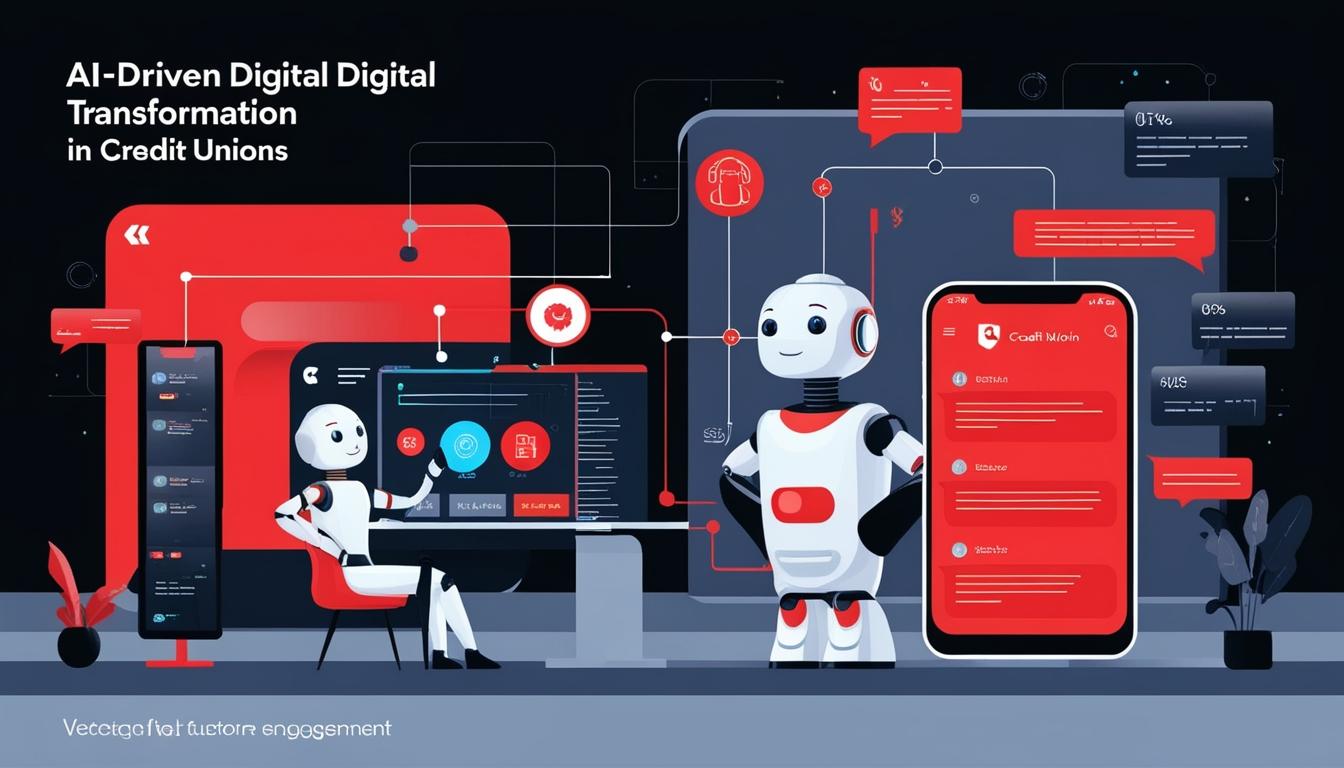
At Edwards Federal Credit Union, a robust digital transformation strategy is underway. Jennifer Quinn, the Vice President of Digital Services, spoke at a recent TQC event about the credit union’s innovative approach to integrating technology into its operations. Quinn elaborated on their digital transformation journey, stating that “digital transformation is a comprehensive, ongoing effort to evolve our operations, lending, and member services by leveraging technology.” The credit union is prioritising member experience through tools such as AI-powered chatbots, which provide 24/7 support and improve overall response times to inquiries. Quinn described how these AI initiatives are designed both to enhance service delivery and to streamline staff functions, ultimately allowing employees to focus on more complex and value-added tasks rather than routine operations.
The credit union’s digital strategy includes leveraging data analytics for decision-making, which allows for better predictions in loan demand and risk management. Quinn explained that “AI is automating repetitive tasks,” which significantly boosts operational efficiency, as it reduces the manual workload on staff. The initiative has not only improved service delivery but has personalized member experiences, enabling tailored communications and recommendations.
In the broader business context, AI adoption is on the rise, significantly influencing how teams collaborate and operate. Sameer Raje, General Manager and Head of India & SAARC Region at Zoom Communications, outlined in the Express Computer publication how AI is transforming workplace dynamics by facilitating hybrid collaborations. Raje highlighted how AI-driven tools enable smooth communication in hybrid environments, making the most out of face-to-face interactions by ensuring all participants are equally represented in meetings. This development underlines a shift towards more integrated and flexible workspaces.

Additionally, the analysis from PwC reflects that by 2024, organisations will need to be adept at leveraging AI for enhanced productivity and collaboration. The report indicates that an overwhelming 80% of Indian business leaders are already frequent users of AI, showcasing the technology’s crucial role in improving teamwork and project outcomes. Those that successfully integrate AI into their workflows are reporting heightened quality in deliverables, a sentiment echoed by Raje, who stated that “90% of [Indian business leaders] reported enhanced quality of their team’s work.”
As organisations navigate the adoption of these technologies, challenges persist, particularly concerning the integration of various systems and maintaining employee engagement with new tools. Insights from Quinn at Edwards FCU illustrate the importance of proper implementation strategies, highlighting that “integrating different technologies is one of the most significant challenges.” To cultivate a culture of innovation, successful firms encourage employee buy-in by demonstrating the tangible benefits of new technologies and inviting feedback for continual process improvement.
Looking ahead, experts predict a growing workforce familiar with AI, necessitating organisations to foster an AI-friendly culture. Emphasising a humanitarian approach to AI, Raje stated that businesses will need to blend AI efficiency with a human touch in customer interactions. The aim is to provide a seamless, personalised customer experience that respects individual needs while being responsive and efficient.
In summary, the integration of AI and digital transformation across industries represents a fundamental shift in operational strategy and customer interaction. With institutions like Edwards FCU leading by example in the credit union sector, and forward-thinking companies in broader contexts embracing AI innovations, the next few years are likely to see significant advancements that redefine standard practices in operational efficiency and customer engagement.
Source: Noah Wire Services
- https://interface.ai/case-studies/acu-virtual-assistant/ – Corroborates the adoption of AI-driven solutions, specifically Intelligent Virtual Assistants, in the credit union sector to enhance member experience and operational efficiency.
- https://www.fintechfutures.com/2024/03/californias-edwards-federal-credit-union-taps-apiture-for-consumer-banking-solution/ – Supports the digital transformation strategy at Edwards Federal Credit Union, including the integration of digital banking solutions and data intelligence.
- https://www.apiture.com/edwards-federal-credit-union-selects-the-apiture-digital-banking-platform/ – Provides details on Edwards FCU’s adoption of Apiture’s digital banking platform and data intelligence solution to enhance member experience.
- https://interface.ai/case-studies/acu-virtual-assistant/ – Highlights the use of AI-powered chatbots for 24/7 support and improved response times, aligning with Edwards FCU’s digital transformation efforts.
- https://www.fintechfutures.com/2024/03/californias-edwards-federal-credit-union-taps-apiture-for-consumer-banking-solution/ – Mentions the integration of various technologies, such as budgeting tools and credit score monitoring, which aligns with the use of data analytics for decision-making.
- https://www.apiture.com/edwards-federal-credit-union-selects-the-apiture-digital-banking-platform/ – Explains how the digital banking solution enhances service delivery and streamlines staff functions, allowing employees to focus on more complex tasks.
- https://interface.ai/case-studies/acu-virtual-assistant/ – Discusses the importance of proper implementation strategies and employee buy-in for new technologies, as highlighted by Edwards FCU’s experience.
- https://www.pwc.in/assets/pdfs/publications/2023/pwc-ai-report.pdf – Although not directly linked, PwC reports generally support the trend of AI adoption for enhanced productivity and collaboration, as mentioned in the broader business context.
- https://www.expresscomputer.in/magazine/ai-is-transforming-workplace-dynamics/53345/ – Supports the role of AI in transforming workplace dynamics and facilitating hybrid collaborations, as outlined by Sameer Raje.
- https://www.pwc.in/assets/pdfs/publications/2023/pwc-ai-report.pdf – Provides insights into the widespread adoption of AI among Indian business leaders and its impact on teamwork and project outcomes.
- https://interface.ai/case-studies/acu-virtual-assistant/ – Emphasizes the need for blending AI efficiency with a human touch in customer interactions, aligning with Raje’s humanitarian approach to AI.
- https://news.google.com/rss/articles/CBMiigFBVV95cUxQVW1fTGNCcE1tdTBsbFNnVnNFa08tWXpfTkxyQ2FuSmgxbDJ2NkVNUWV6OVdRazZKcUlMSlZ6REFyY055NUJ1eU5vSGFzMHAtZUszdnZJVzVYR3ZiZFV1dkRlZDNDazhQUUNJQ2RCMkUwRVlPeTV1OWVOX2pnLUd1SlJ3em5xRG03NXc?oc=5&hl=en-US&gl=US&ceid=US:en – Please view link – unable to able to access data