






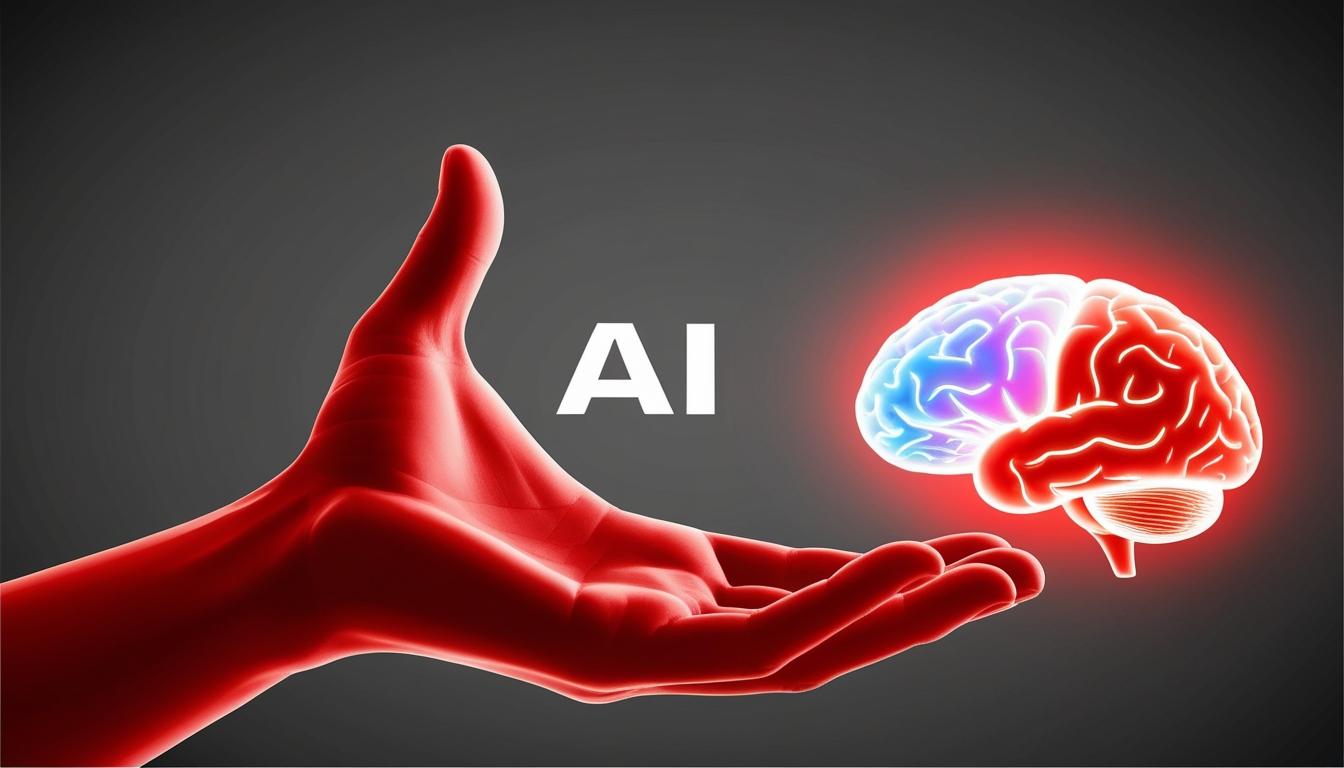
As businesses leverage generative AI in R&D, experts warn against over-reliance that could stifle true creativity and innovation.
In contemporary business environments characterised by relentless competition and rapid technological advancements, companies are increasingly turning to generative artificial intelligence (AI) as a strategic asset. This approach is particularly pronounced in research and development (R&D), where there is a belief that AI could significantly enhance idea generation, accelerate innovation, and potentially drive the next major breakthroughs. However, insights from Ashish Pawar, a software engineer, caution that an over-reliance on generative AI could undermine the very essence of meaningful innovation.
Pawar highlights several critical risks associated with the integration of generative AI into R&D processes. Firstly, he points out that generative AI functions primarily as a sophisticated prediction mechanism. Unlike human creativity, which can disrupt and redefine existing paradigms, generative AI relies heavily on historical data to make predictions about what combinations of words, images, or designs will yield desirable outcomes. This backward-looking nature of AI, while efficient at producing incremental improvements, can inhibit true creativity and breakthrough innovations.
A notable concern raised by Pawar is the potential for homogenisation in product offerings driven by AI. When many companies employ generative AI systems trained on similar datasets, the risk arises that these systems will produce closely aligned, albeit varied, versions of the same concept rather than truly unique innovations. He cites the example of competing smartphone manufacturers using generative AI for user interface design, suggesting that this could lead to a convergence of products lacking substantial differentiation. The infusion of AI-generated content into creative fields has already sparked debates about the originality of work, as evidenced by artists voicing concerns over the prevalence of AI-produced art that often lacks distinctiveness.
Moreover, Pawar addresses the essential role of human experiences and the element of serendipity in innovation. Historical breakthroughs, such as the discovery of penicillin or the invention of the microwave oven, have often stemmed from unexpected outcomes and the ability of human researchers to adapt and leverage these moments of chance. In contrast, he argues that generative AI lacks the capacity to embrace ambiguity or learn from failure, features that are intrinsic to the iterative process of genuine innovation.
The emotional and empathetic dimensions of design and innovation are also crucial to Pawar’s argument. He asserts that meaningful product development is not merely a technical endeavour; it is an exercise in understanding human needs and emotions. Innovations that resonate are often the result of insights into user frustrations or desires, something that generative AI cannot inherently grasp.
Additionally, Pawar raises concerns about the long-term implications of over-dependence on AI solutions, particularly the potential degradation of human skills in R&D. If teams become reliant on overseeing AI outputs, their ability to think critically and innovate independently may diminish. This poses a significant risk, especially in dynamic market environments where human ingenuity is needed to navigate uncertainties that AI may not effectively address.
Despite these risks, Pawar asserts that generative AI can have a constructive role in the innovation landscape, provided it is employed judiciously. He advocates for the use of AI as a tool to augment human capabilities rather than replace them. By leveraging AI to streamline processes, test ideas, and refine outputs, organisations can enhance productivity while preserving the core attributes of human creativity and vision.
The discourse surrounding the use of generative AI in R&D underscores the delicate balance that businesses must strike. As organisations venture into this transformative era, the imperative will be to harness the capabilities of AI in a manner that complements and enriches the human element of innovation, ensuring that the unique spark of creativity remains at the heart of their developmental efforts.
Source: Noah Wire Services
- https://thefoundercatalyst.com/top-three-trends-in-generative-ai-applications/ – This article supports the trend of customization over off-the-shelf generative AI solutions and the cautious internal use of AI with a shift toward customer integration, which aligns with the strategic integration of AI in R&D processes.
- https://masterofcode.com/blog/generative-ai-use-cases – This source provides examples of generative AI use cases in various industries, including R&D, and highlights the potential for cost-effective product development and intelligent code generation, which relates to the enhancement of innovation and productivity.
- https://www.mckinsey.com/capabilities/mckinsey-digital/our-insights/the-economic-potential-of-generative-ai-the-next-productivity-frontier – This article discusses the economic potential of generative AI across various business functions, including R&D, and the potential for significant value addition, which supports the discussion on the strategic use of AI in innovation.
- https://thefoundercatalyst.com/top-three-trends-in-generative-ai-applications/ – This source also discusses the shifting budget allocations for generative AI, reflecting its growing recognition as a standard business tool, which is relevant to the long-term implications of AI integration in R&D.
- https://masterofcode.com/blog/generative-ai-use-cases – The article highlights the potential of generative AI to automate repetitive tasks and accelerate manufacturing cycles, which contrasts with the concern about AI inhibiting true creativity and breakthrough innovations.
- https://www.mckinsey.com/capabilities/mckinsey-digital/our-insights/the-economic-potential-of-generative-ai-the-next-productivity-frontier – This source details how generative AI can support interactions with customers and generate creative content, but also raises questions about the originality and distinctiveness of AI-generated content, aligning with concerns about homogenization in product offerings.
- https://thefoundercatalyst.com/top-three-trends-in-generative-ai-applications/ – The article mentions the cautious approach to exposing AI tools directly to end customers due to concerns about data privacy and security, which relates to the risks associated with over-reliance on AI in R&D.
- https://masterofcode.com/blog/generative-ai-use-cases – This source emphasizes the role of generative AI in predicting user behavior and enhancing analytics, but also underscores the importance of human insights in understanding user needs and emotions, a key point in Pawar’s argument.
- https://www.mckinsey.com/capabilities/mckinsey-digital/our-insights/the-economic-potential-of-generative-ai-the-next-productivity-frontier – The article discusses how generative AI can automate work activities, which raises concerns about the degradation of human skills in R&D if teams become overly reliant on AI solutions.
- https://thefoundercatalyst.com/top-three-trends-in-generative-ai-applications/ – This source supports the idea that generative AI should be used to augment human capabilities rather than replace them, aligning with Pawar’s advocacy for a balanced approach to AI integration in innovation.
- https://masterofcode.com/blog/generative-ai-use-cases – The article provides examples of how generative AI can streamline processes and refine outputs, which is in line with the recommendation to use AI as a tool to enhance productivity while preserving human creativity and vision.







