






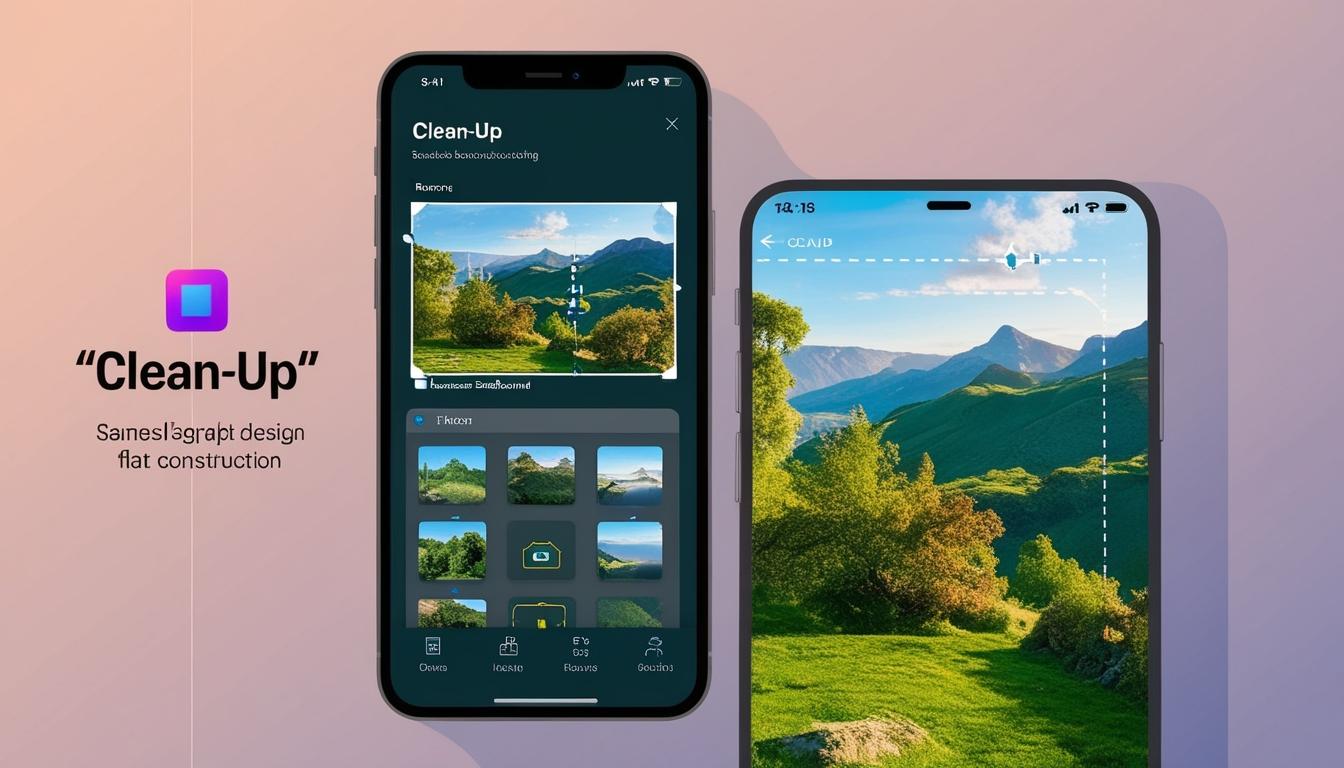

Apple has unveiled an AI-powered ‘Clean-up’ tool in iOS 18.1, designed to remove unwanted elements from photos and compete with Google’s Magic Eraser feature.
Apple’s New ‘Clean-up’ Feature in iOS 18.1 Seeks to Rival Google’s Magic Eraser
In the realm of digital photography, Apple has taken a significant leap forward with the release of its latest operating system, iOS 18.1. Among the standout features introduced in this update is the AI-powered “Clean-up” tool, specifically designed to enhance photo editing capabilities within the Photos library. This innovative feature allows users to seamlessly remove unwanted elements from their photos and smoothly reconstruct the background, a boon for photography enthusiasts looking to perfect their shots.
This development brings iOS users up to speed with a similar offering from Google. Google launched its “Magic Eraser” tool back in 2023 for Pixel phone users and has progressively rolled out this feature to all Google Photos users, irrespective of their mobile operating system. Thus, both platforms now empower users to refine their photos by eliminating disturbances in the background, whether they are people, signs, or other objects that could detract from the intended composition of a photograph.
According to expert analysis conducted by technology reviewer Sabrina Ortiz, who tested both tools with various images, Apple’s Clean-up feature boasts a user-friendly interface. Users can find the tool easily in the photo-editing section without needing to search or toggle through different menus. Once a photo is selected for editing, the tool automatically suggests elements for removal, allowing for quick and efficient photo clean-ups. However, Sabrina noted that not every object is detected consistently; darker or more obscured elements, such as a sign in the lower corner of a photo, might be overlooked.
The test results revealed that Apple’s Clean-up feature performs well even with complex images, although in highly intricate scenarios, slight graininess might be noted on closer inspection. Nevertheless, the alterations maintain a realistic appearance, making photos ready for social media sharing without noticeable editing traces.
In comparison, Google’s Magic Eraser also provides the capability to remove unwanted objects automatically. However, iPhone users keen on using Google’s offering must first download the Google Photos app. While adding an extra step in the editing process, the app is free and provides additional benefits such as ample cloud storage and organisational tools. Despite these added advantages, Magic Eraser occasionally struggles with more complicated images, as evidenced by Sabrina Ortiz’s testing, where the tool faltered in accurately identifying and removing certain objects, thereby resulting in blurred outcomes in some cases.
From a usability and results standpoint, Apple’s Clean-up tool edges out its competition slightly, offering a more seamless experience for users who already own iOS devices. The tool’s integration within the native Photos app reduces friction in accessing and utilising the feature, and its ability to blend edited portions into the background effectively adds to its allure.
While Apple’s solution benefits from a more integrated and intuitive approach, Google Photos remains a strong and viable alternative for those without access to the latest iOS capabilities or the necessary hardware to run iOS 18.1. As it stands, both platforms offer valuable tools for photo enthusiasts seeking to elevate their photography skills by refining and perfecting their imagery.
Source: Noah Wire Services







