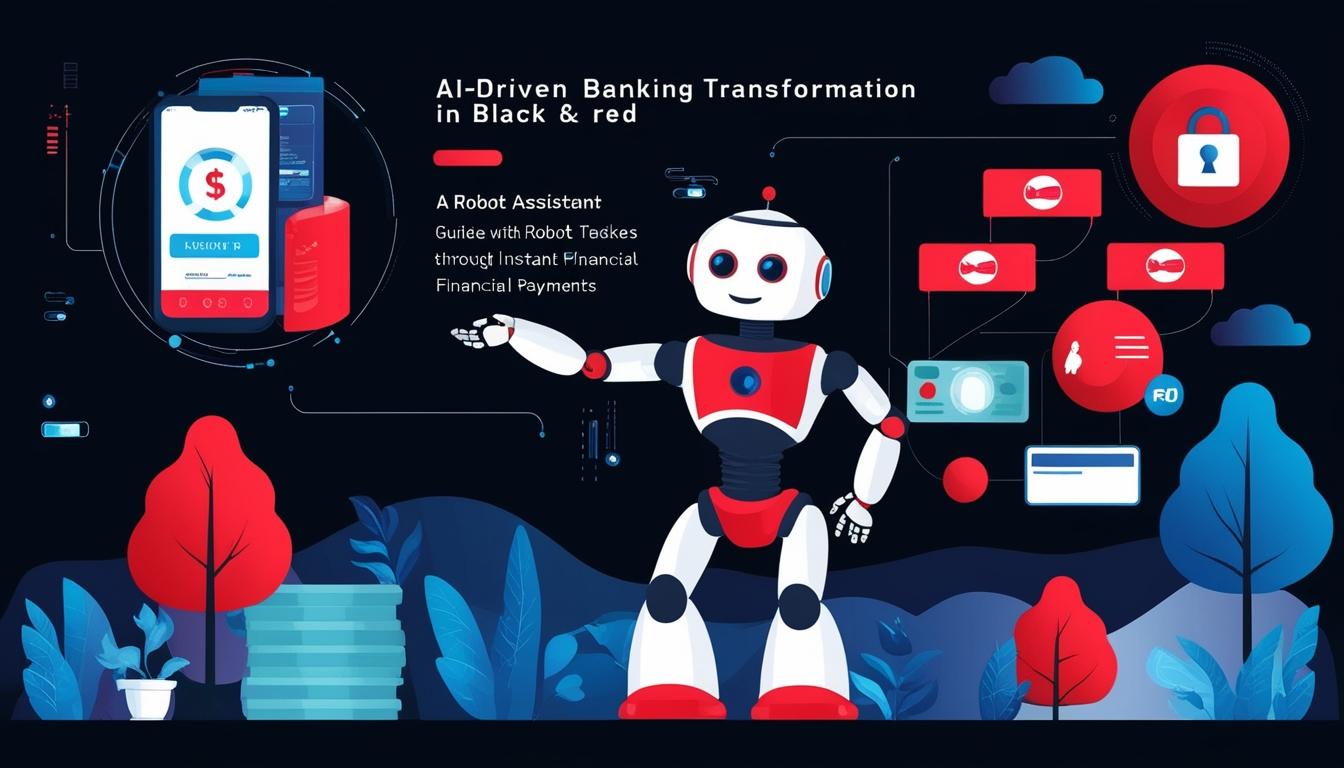

The banking and finance sector is set for transformation as AI and other technologies enhance financial services, change workforce dynamics, and drive trends like instant payments and financial inclusion.
The banking and finance sector is currently undergoing significant technological transformations, with artificial intelligence (AI) poised to play a critical role in reshaping the landscape by 2025. Experts in the industry have outlined several key trends that are expected to drive change and enhance the way businesses and consumers engage with financial services.
James Barrese, senior vice president of fintech at Intuit, highlighted that the fintech ecosystem will evolve around four major trends. Key among these is the increasing demand for instant payments, allowing for faster and more efficient money movement. Barrese noted, “A shift towards banking payments and a preference for instant payments will drive the demand for faster and more efficient money movement.” He also indicated the necessity for robust digital identity frameworks that will build trust and secure transactions in the digital economy. Furthermore, he expects that embedded fintech solutions will proliferate, integrating financial services seamlessly within non-financial platforms, and the rise of AI agents will push the development of payment infrastructures capable of supporting AI-initiated transactions.
The advent of AI is expected to bring about significant changes in workforce dynamics as well. Naeem Siddiqi, senior risk advisor at SAS, expressed that technology is beginning to replace traditional roles in banking. He predicts that “robot assistants will begin replacing branch staff and customer service desks,” enhancing the level of customer service. These AI-driven assistants are likely to surpass the capabilities of ATMs by providing expert guidance to customers, although this will require financial institutions to enhance their governance and control measures.
Real-time payments are another anticipated trend in the fintech sector, as highlighted by Sarah-Jayne Martin, director of financial automation at Quadient. She posits that “real-time payments will become the expected norm in business transactions,” influenced by the corporate world’s adaptation of practices seen in consumer banking. This shift, according to Martin, will liberate working capital much faster, strengthen vendor relationships, and respond more agilely to market changes, ultimately fostering a more effective financial landscape.

AI will also significantly alter data management in the financial sector. Vaikkunth Mugunthan, CEO and co-founder of Dynamo AI, suggested that the merging of customer data and financial services through Open Banking could create innovative solutions, but he cautioned that recent instances of personal data misuse could prompt regulatory reactions in jurisdictions like the UK, EU, and USA. Similarly, Julie Muckleroy, global banking strategic advisor at SAS, warned that the uncontained growth of data could either be an asset or a liability for banks, depending largely on their ability to implement effective data frameworks and governance processes.
Alternative payment methods are expected to continue their upward trajectory, particularly in Europe, where there has been a notable rise in the use of mobile-based instant transfer apps. Azimkhon Askarov, co-partner at Concryt, remarked that while Open Banking will gradually increase its market share, it will not pose an immediate threat to the dominance of traditional payment card companies like Visa and Mastercard. Apps such as Blik in Poland and Bizum in Spain are making strides, with the recently launched Wero wallet gaining traction as a potential competitor.
The youth demographic is becoming increasingly financially literate, spurred on by app-based financial management tools. Tom Eyre, co-founder and co-CEO of Loqbox, highlighted that young people today are acquiring skills in budgeting, saving, and investing much earlier than previous generations, a necessity given the challenging economic environment. This trend is expected to encourage banks and fintechs to create more personalised tools tailored to younger consumers’ financial aspirations.
Moreover, Manpreet Haer, co-founder of PayFuture, foresees fintech as a driving force for financial inclusion by addressing the stark gap faced by 1.4 billion unbanked individuals worldwide. He noted that “without financial inclusion, the world economy will stagnate,” and emphasised the significant role fintech could play in increasing access to essential financial services within underserved communities.
Alongside operational advancements, security remains a pressing concern within the finance sector. Rich Vibert, co-founder and CEO of Metomic, urged that building a ‘human firewall’ will become central to cybersecurity strategies in financial services. He mentioned that financial institutions have been prime targets for cyberattacks, which have cost the financial sector approximately $12 billion over the past two decades. Vibert predicts a shift towards empowering the workforce to play a vital role in safeguarding sensitive data, promoting a culture of collective cybersecurity vigilance.
As the fintech sector evolves over the coming years, these insights underscore a transition toward greater efficiency, increased use of automation, and a more prominent role for technology in financial transactions and strategies.
Source: Noah Wire Services
- https://appian.com/blog/acp/finance/banking-technology-trends-you-need-to-watch-in-2025 – Corroborates the increasing adoption of AI in banking, particularly in risk management, fraud detection, and regulatory compliance, as well as the importance of cloud migration and data fabric in enhancing operational efficiency.
- https://www.bluevine.com/blog/fintech-trends-for-2025 – Supports the trend of AI and machine learning enhancing fraud protection, assessing lending risk, and providing personalized banking recommendations, as well as the evolution of AI in customer service.
- https://www.bluevine.com/blog/fintech-trends-for-2025 – Highlights the role of AI in creating more responsive customer service chatbots and personalized user experiences, aligning with the expectation of AI-driven customer service advancements.
- https://appian.com/blog/acp/finance/banking-technology-trends-you-need-to-watch-in-2025 – Discusses the integration of AI into banking operations, including the use of AI-powered virtual assistants and the importance of process automation, which aligns with the predicted workforce dynamics changes.
- https://www.ciklum.com/resources/blog/banking-trends-2025 – Details the transformation of banking experiences through AI-powered customer support, hybrid service models combining AI and human expertise, and the significant investment in generative AI.
- https://appian.com/blog/acp/finance/banking-technology-trends-you-need-to-watch-in-2025 – Mentions the trend of real-time payments and the impact of open banking APIs on the financial sector, including the potential for new financial products and increased cybersecurity risks.
- https://www.bluevine.com/blog/fintech-trends-for-2025 – Supports the trend of alternative payment methods, such as mobile-based instant transfer apps, and the gradual increase in the market share of open banking.
- https://appian.com/blog/acp/finance/banking-technology-trends-you-need-to-watch-in-2025 – Highlights the importance of financial inclusion and the role of fintech in addressing the gap faced by unbanked individuals, as well as the need for robust digital identity frameworks.
- https://www.ciklum.com/resources/blog/banking-trends-2025 – Corroborates the increasing financial literacy among the youth demographic due to app-based financial management tools and the need for personalized financial tools tailored to younger consumers.
- https://appian.com/blog/acp/finance/banking-technology-trends-you-need-to-watch-in-2025 – Emphasizes the critical role of cybersecurity in the finance sector, including the need for a ‘human firewall’ and the importance of workforce empowerment in safeguarding sensitive data.
- https://betanews.com/2024/12/16/easier-payments-robot-assistants-and-improved-accessibility-fintech-predictions-for-2025/ – Please view link – unable to able to access data