






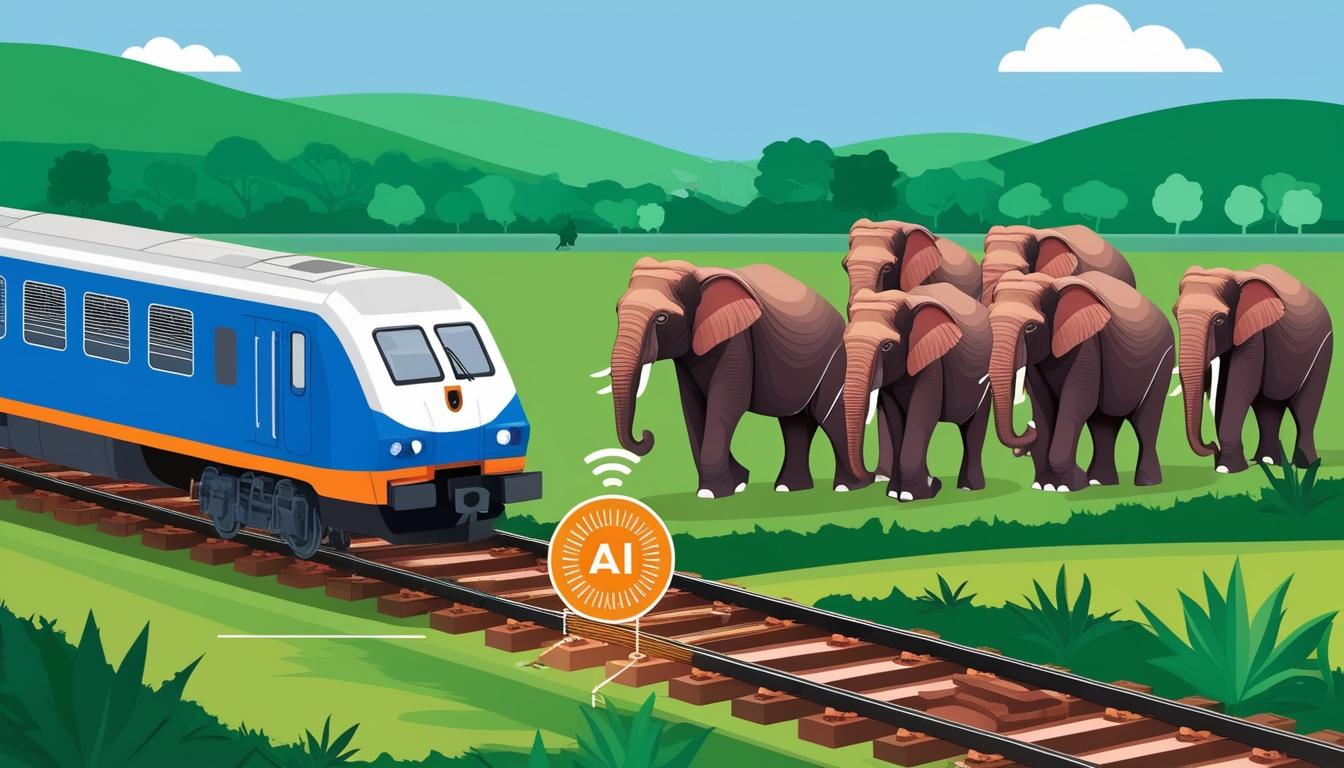

An AI-driven safety system has successfully prevented a potentially catastrophic train collision with a herd of elephants in Assam, highlighting the significant role of technology in wildlife protection efforts.
AI Technology Plays Key Role in Preventing Elephant-Train Collisions in Assam, India
In a remarkable demonstration of technology aiding wildlife conservation, a train driver in Assam, India narrowly avoided a potentially catastrophic collision with a herd of elephants. The incident occurred on the railway tracks between Habaipur and Lamsakhang, a region renowned for its rich biodiversity and wildlife corridors.
The successful intervention was made possible by an advanced artificial intelligence (AI) system designed to detect wildlife and alert trains in the vicinity. This AI-driven safety mechanism identified the presence of a herd of approximately 60 elephants, prompting an alert to be swiftly conveyed to J.D. Das, the driver of the 15959 Kamrup Express. He, along with his assistant Umesh Kumar, acted promptly by applying the emergency brake, allowing the majestic creatures to pass safely and without disturbance.
This incident is part of a broader initiative by the East Central Railways, which aims to mitigate human-animal conflicts on the railway lines. The AI system has already been credited with averting nearly 800 potential collisions with elephants in the states of Tamil Nadu and Assam, regions known for significant elephant populations and frequent railway traffic.
The railway authorities have expressed intentions to expand this AI-based monitoring system across their network, ensuring comprehensive surveillance of all elephant corridors within their jurisdiction. This move signifies a substantial step forward in the protection of wildlife, as it helps prevent fatal accidents that not only threaten the animals but also put human lives at risk.
In a related technological advancement, India has witnessed global recognition for innovative uses of AI in wildlife protection. In Virginia, USA, two Indian-Americans received a $15,000 award for their development of an AI detection system aimed at preventing deer-related traffic accidents. This system operates by detecting the presence of deer and vehicles in close proximity, subsequently emitting high-frequency pulses and animal sounds to deter deer from crossing roads at critical times.
Virginia’s deer-related traffic incidents in 2022 accounted for 15% of the total collisions, resulting in injuries to 500 individuals. The AI system is thus seen as a critical tool in reducing such occurrences, much like its counterpart in India is for elephant safety on railway tracks.
Beyond terrestrial applications, AI is also being harnessed to enhance safety in marine environments. The SafeWaters.AI app has emerged as a significant advancement in predicting shark activity near beaches, utilising a deep learning algorithm that analyses over a century’s worth of shark attack data. The app claims an 89% accuracy in forecasting potential shark threats, aiming not only to safeguard human lives but also to prevent unwarranted persecution of sharks following human encounters.
The integration of AI in these diverse fields underscores its potential to address various aspects of human-wildlife interactions, often leading to groundbreaking solutions that benefit both humans and the environment. As AI technology continues to evolve, its role in conservation and safety is likely to expand, encouraging ongoing innovation and collaboration.
Source: Noah Wire Services







