






The construction sector is undergoing a significant transformation with the integration of AI technologies, enhancing productivity and quality while addressing challenges in project management and sustainability.
AI Revolutionises Construction Industry: A New Dawn for Efficiency and Innovation
The construction industry is witnessing a transformative shift sparked by the rise of artificial intelligence (AI). As AI technologies become increasingly integrated, they promise to enhance productivity, improve quality, and boost cost efficiency across construction projects globally. A prime example of this integration is Building Information Modelling (BIM), which has made significant strides in the UK, now a mandatory tool for publicly funded projects. With AI enhancements, BIM now offers even more sophisticated 3D modelling and simulation capabilities.
A notable adoption of AI technology has been seen at Belfast’s SSE Arena, pioneering the use of Amazon’s “Just Walk Out Technology” as the first indoor arena in Europe to implement this system. This technology allows patrons to make transactions by simply scanning the palm of their hand, and even on a trial run, the venue reported increased sales and a notable improvement in customer experience.
Understanding AI
Artificial intelligence, fundamentally, involves computer systems performing tasks traditionally completed by humans. AI hinges on machine learning (ML), where computers employ statistical techniques to learn from data inputs. The larger the dataset, the more efficient the learning process becomes. AI aims to augment human capabilities, enhancing decision-making and operational efficiency.
AI’s Role in Construction
Given the intrinsic complexity of construction projects—from contract formation and detailed designs to contract management and safety considerations—AI presents solutions to streamline these multifaceted processes.
-
Contract Administration: AI envisions an automated certifier role, generating reliable records of certifications and instructions throughout project timelines.
-
Design: Algorithms driven by AI optimise building designs for energy efficiency and sustainability, addressing budgetary constraints as well.
-
Project Management: Through historical data analysis, AI predicts potential project delays, identifying risks and suggesting mitigation strategies.
-
Weather Prediction: AI tools enhance forecast accuracy, informing smart contracts and automating compensations for weather-induced delays.
-
Safety and Risk Management: Real-time monitoring systems powered by AI detect and alert about potential safety hazards on construction sites.
-
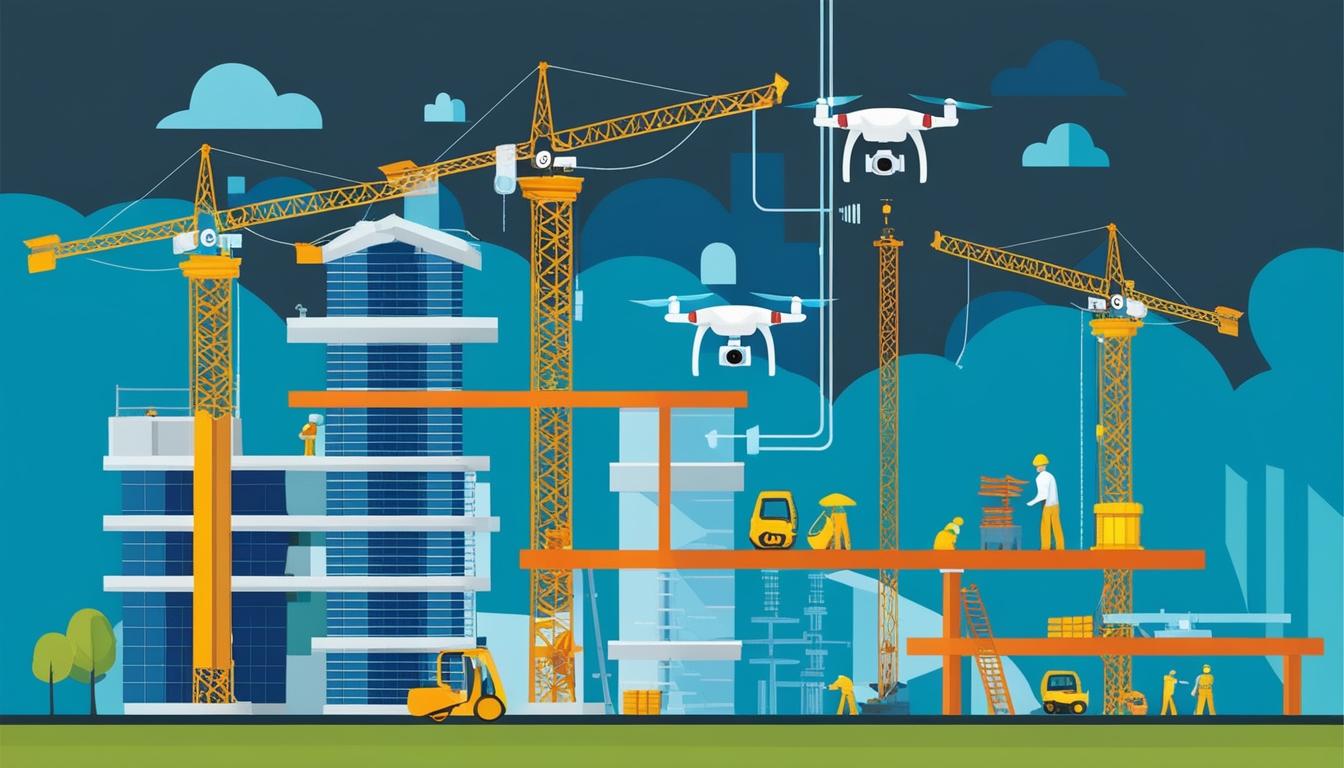
Quality Control: Drones, equipped with AI, oversee construction progress, identifying design deviations and defects through comprehensive site imagery.
-
Geographic Accuracy: Computer vision technology assists in optimising locations for construction activities, minimizing environmental disruptions.
-
Supply Chain Optimisation: AI streamlines material supply chains, ensuring availability and reducing delays by predicting material demand and optimising inventory.
-
Sustainability: AI analyses guides resource usage, suggesting eco-friendly materials and methods, promoting sustainable building practices.
Challenges and Considerations
Despite the significant advantages AI offers, it poses challenges, particularly for smaller firms. High costs associated with technology adoption, infrastructure changes, and necessary personnel training can be prohibitive. Moreover, the integration of AI with existing systems may incur additional expenses, deterring some businesses from adopting these technologies.
There exists an ethical dimension concerning AI’s role in decision-making processes, necessitating responsible application and reliance on high-quality data inputs to ensure accuracy. Incomplete data can negatively impact the effectiveness and reliability of AI outputs.
While challenges are inherent, the benefits of AI can potentially surpass these hurdles, ushering in a new era of innovation in construction. The industry stands on the brink of a significant evolution, with AI positioned to redefine conventional practices.
Source: Noah Wire Services







