





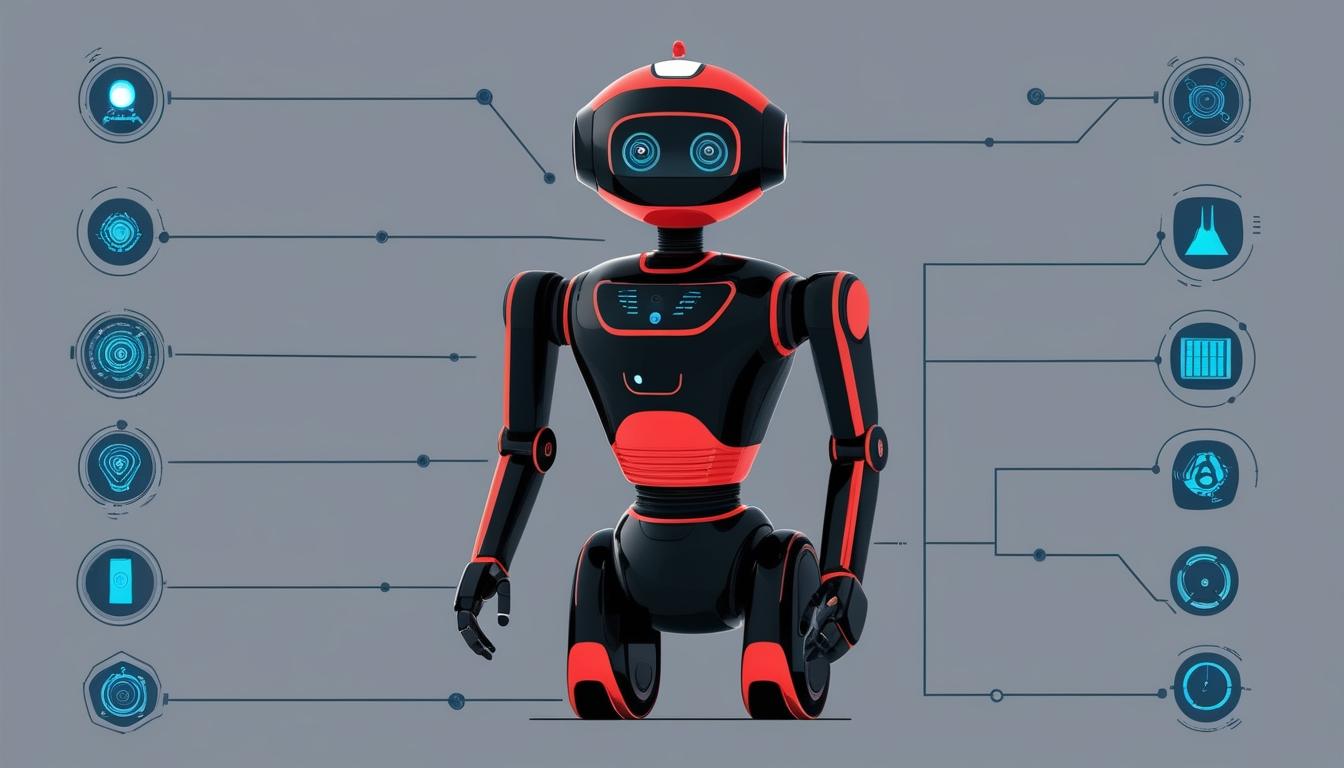

The integration of advanced technologies in robotics is revolutionising perception and navigation, promising transformative impacts across various sectors, from logistics to healthcare.
The integration of advanced technologies within robots is fostering a transformation in their ability to interpret and interact with the world around them. This evolution centres on the enhancement of robotic perception and navigation capabilities, with significant implications for various industries. As artificial intelligence (AI) increasingly underpins these technologies, the potential for autonomous systems to redefine business practices is becoming apparent.
One of the foremost advancements in this realm is computer vision, which equips robots with an evolved mechanism for sight. By utilising sophisticated imaging techniques that go beyond conventional capabilities, robots can process still and moving images with heightened accuracy. In practical terms, this development is critical for autonomous guided vehicles (AGVs) in logistics settings. These robots must assess potential collisions with unpredictable human behaviours, while also enhancing quality control in manufacturing through defect detection.
Alongside computer vision, Light Detection and Ranging (Lidar) technology is rapidly becoming a cornerstone of autonomous navigation for unmanned ground vehicles, including self-driving cars. By employing laser-based systems and GPS, Lidar facilitates the construction of detailed 3D maps of environments, allowing for precise navigation even in complex settings. The advent of sensor fusion—a method that combines data from multiple sensors—significantly reduces the risks of object occlusion, thereby enhancing the vehicle’s ability to detect and respond to obstacles in real time.
Simultaneous Localization and Mapping (SLAM) algorithms further augment this navigational prowess. Serving as sophisticated GPS substitutes, these algorithms enable robots to generate a dynamic map of their surroundings while concurrently determining their location within that space. This technology holds the potential to improve logistics operations and smart devices, enriching the efficiency of tasks ranging from fleet management to domestic cleaning.
Natural Language Processing (NLP) contributes another layer to robotic capabilities, facilitating more intuitive interactions between humans and machines. As robots are increasingly deployed as collaborative workers, their ability to comprehend and respond to spoken language enhances workplace dynamics. For instance, in industries involving hazardous machinery, AI-equipped robots capable of interpreting verbal commands can significantly reduce ergonomic risks and bolster safety.
The rise of adaptive learning further underscores the evolution of robotic intelligence. By continuously assimilating data from their environments, robots can refine their cognitive functions and improve decision-making processes over time. This adaptability not only enables smoother cooperation among multiple robots but also enhances their performance in educational contexts as intelligent tutoring systems.
Lastly, the development of embodied AI is poised to refine robotic engagement in social settings. Unlike traditional AI systems, these advanced robots can interpret emotional and social cues, such as gestures and facial expressions. This capability is particularly advantageous in customer service scenarios, where a robot’s ability to perceive and react to human emotions could streamline interactions and improve service delivery.
As these technologies converge, they promise to extend the boundaries of Industry 5.0, creating a new landscape where AI and robotics work in concert to enhance operational efficiency. The collective advancements in perception, navigation, and social interaction will likely influence myriad sectors, from healthcare to logistics, fundamentally reshaping how businesses operate.
The ongoing collaboration among industry experts and innovators is critical to fully realize the potential of these advancements. The integration of improved AI-driven perception technologies into robotic systems paves the way for a future where robots not only support but also enhance human capabilities across various fields. As different applications continue to emerge, the emphasis on improving robotic intelligence will set the stage for the next phase of automation in business practices.
Source: Noah Wire Services
- https://www.azorobotics.com/Article.aspx?ArticleID=708 – Corroborates the role of computer vision in robotics, enabling robots to analyze visual data, perform complex tasks, and interact with their environments.
- https://www.ultralytics.com/blog/understanding-the-integration-of-computer-vision-in-robotics – Supports the integration of computer vision in robotics, highlighting its impact on autonomous robots and various industrial applications.
- https://viso.ai/computer-vision/computer-vision-in-robotics/ – Explains how computer vision enhances robotic perception and interaction, including applications in space and disaster response.
- https://aijourn.com/ai-in-robotics-current-and-future-trends/ – Discusses the current trends and future prospects of AI in robotics, including advancements in computer vision, machine learning, and deep learning.
- https://www.computar.com/blog/current-trends-in-machine-vision-and-industrial-robotics – Details the role of machine vision in industrial robotics, including its use in visual inspection, defect detection, and navigation.
- https://www.azorobotics.com/Article.aspx?ArticleID=708 – Provides insight into the use of computer vision for quality control in manufacturing through defect detection.
- https://viso.ai/computer-vision/computer-vision-in-robotics/ – Describes the use of computer vision in autonomous navigation, such as in NASA’s Mars rovers, and its application in constructing detailed maps of environments.
- https://aijourn.com/ai-in-robotics-current-and-future-trends/ – Explains the role of Simultaneous Localization and Mapping (SLAM) algorithms in enhancing navigational capabilities of robots.
- https://www.ultralytics.com/blog/understanding-the-integration-of-computer-vision-in-robotics – Highlights the importance of Natural Language Processing (NLP) in facilitating intuitive interactions between humans and robots.
- https://aijourn.com/ai-in-robotics-current-and-future-trends/ – Discusses the concept of adaptive learning in robots, enabling them to refine their cognitive functions and improve decision-making processes.
- https://viso.ai/computer-vision/computer-vision-in-robotics/ – Explains the development of embodied AI and its potential to refine robotic engagement in social settings by interpreting emotional and social cues.







