
Diego Padilla-Philipps of WSP explores the transformative role of AI in various industries, highlighting its potential to enhance efficiency while addressing ethical and sustainability concerns.
Artificial intelligence (AI) is significantly reshaping the operational landscape across various industries, with a clear trajectory pointing towards its further integration into essential business functions by 2025. WSP’s Diego Padilla-Philipps outlines current advancements and future implications of AI in a comprehensive analysis published in Building.
As of 2023, AI is already deeply embedded in societal frameworks, from smartphones to smart home devices. However, the scepticism surrounding the ethical use of data persists. Padilla-Philipps argues that AI’s potential should be recognised not as a standalone force but as a critical enabler for organisational growth and efficiency.
In the coming year, AI’s role in corporate settings will continue to evolve. Tools like Microsoft’s AI-powered assistants—Co-Pilot and Gemini—are already transforming workflows, performing tasks such as project management, email sorting, and meeting documentation. “These agents represent AI doing things with you or for you,” Padilla-Philipps articulates, highlighting the anticipated expansion of such technologies within corporate processes.
The construction and design sectors are particularly poised for a revolution through automation. Traditionally favouring a Design for Manufacture and Assembly (DfMA) approach—commonly utilised in car manufacturing—this strategy is increasingly being applied in construction projects. Automation is enabling reduction in waste and time, and WSP is advancing this evolution through platforms comprising digitally designed components, facilitating streamlined project execution.

Despite concerns regarding job displacement due to automation, Padilla-Philipps expresses a more measured outlook: “AI should and will support us in our careers, working with us to achieve optimal outcomes.” He emphasises that rather than diminishing the workforce, AI’s incorporation will necessitate a shift towards training and development, providing employees with the skills to collaborate with automated systems confidently.
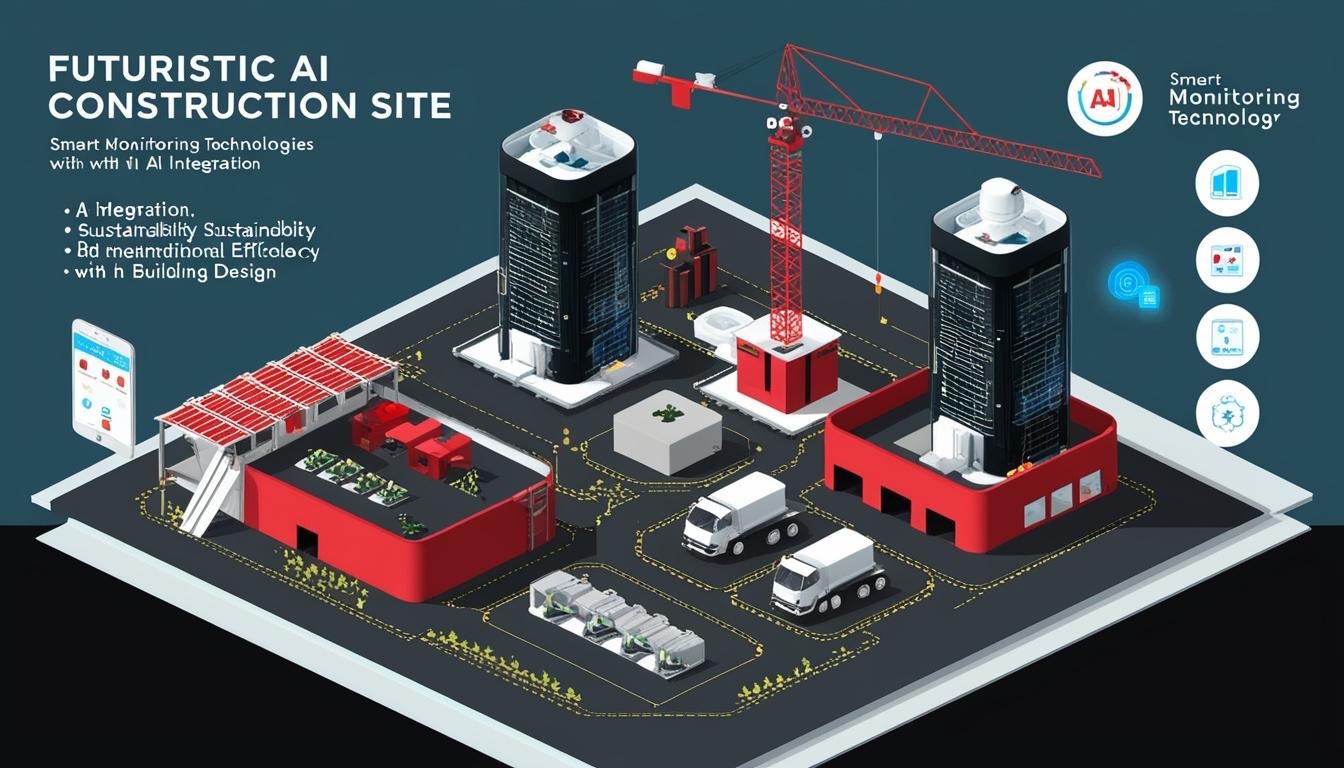
On construction sites, the integration of smart monitoring technologies will enable real-time oversight of operations. These advanced systems will enhance safety by assessing compliance with personal protective equipment (PPE) regulations and monitoring interactions between personnel and machinery. “This has the potential to transform how we monitor sites, from safety and progress to emergencies and supplies,” Padilla-Philipps notes, pointing out the importance of effective communication facilitated by these technologies.
Looking ahead, the demand for data and AI is projected to increase, which will, in turn, drive expansion in data centre construction. However, Padilla-Philipps cautions that the energy needs associated with this growth present ongoing challenges. As AI technology expands, so too does the exploration of innovative energy solutions, including mini nuclear reactors and enhanced renewable energy projects.
The synergy between AI and sustainability will be most evident in the design and construction of futuristic buildings. AI will enable the generation of real-time performance data, allowing for more efficient design modifications. WSP’s parametric design tool, Daisy, exemplifies this advancement; utilising machine learning and optimisation techniques, it explores thousands of potential designs based on sustainability metrics. Padilla-Philipps anticipates that as 2025 approaches, such technologies will be seamlessly integrated into design practices, ensuring consistent delivery of sustainable outcomes.
In summary, as businesses increasingly leverage AI technologies, significant advancements across various sectors are anticipated. The emphasis will be on the dual objectives of enhancing operational efficiency while fostering sustainability. As AI’s capacities continue to develop, employee training and digital integration are set to become pivotal in achieving the delivery of cost-effective projects moving forward.
Source: Noah Wire Services
- https://cmitsolutions.com/charleston-sc-1165/blog/5-ways-ai-is-revolutionizing-businesses-in-2025/ – This article supports the claim that AI is transforming businesses by enhancing customer experiences, improving operational efficiency, and optimizing various business functions, such as workforce schedules and energy consumption.
- https://www.calendar.com/blog/top-12-ai-trends-shaping-the-business-world-in-2025/ – This source corroborates the future implications of AI in business, including hyper-automation, AI-driven sustainability initiatives, and the use of edge AI for real-time insights and enhanced privacy and security.
- https://cmitsolutions.com/charleston-sc-1165/blog/5-ways-ai-is-revolutionizing-businesses-in-2025/ – It also supports the idea that AI is being used to create personalized customer experiences through data analysis and recommendation engines.
- https://www.calendar.com/blog/top-12-ai-trends-shaping-the-business-world-in-2025/ – This article highlights the role of AI in streamlining business processes, automating customer service, and predicting market trends, aligning with the anticipated expansion of AI in corporate processes.
- https://cmitsolutions.com/charleston-sc-1165/blog/5-ways-ai-is-revolutionizing-businesses-in-2025/ – It further explains how AI tools are being used to improve operational efficiency across various sectors.
- https://www.calendar.com/blog/top-12-ai-trends-shaping-the-business-world-in-2025/ – This source discusses the integration of AI in construction and design sectors, particularly through automation and the use of digitally designed components.
- https://cmitsolutions.com/charleston-sc-1165/blog/5-ways-ai-is-revolutionizing-businesses-in-2025/ – It supports the notion that AI will necessitate a shift towards training and development for employees to collaborate with automated systems.
- https://www.calendar.com/blog/top-12-ai-trends-shaping-the-business-world-in-2025/ – This article mentions the use of smart monitoring technologies for real-time oversight of operations, enhancing safety and efficiency on construction sites.
- https://cmitsolutions.com/charleston-sc-1165/blog/5-ways-ai-is-revolutionizing-businesses-in-2025/ – It also touches on the synergy between AI and sustainability, particularly in generating real-time performance data for more efficient design modifications.
- https://www.calendar.com/blog/top-12-ai-trends-shaping-the-business-world-in-2025/ – This source highlights the importance of AI in fostering sustainability through optimized energy use and reduced waste in supply chains.
- https://cmitsolutions.com/charleston-sc-1165/blog/5-ways-ai-is-revolutionizing-businesses-in-2025/ – It supports the overall emphasis on enhancing operational efficiency and fostering sustainability as AI technologies continue to develop.