
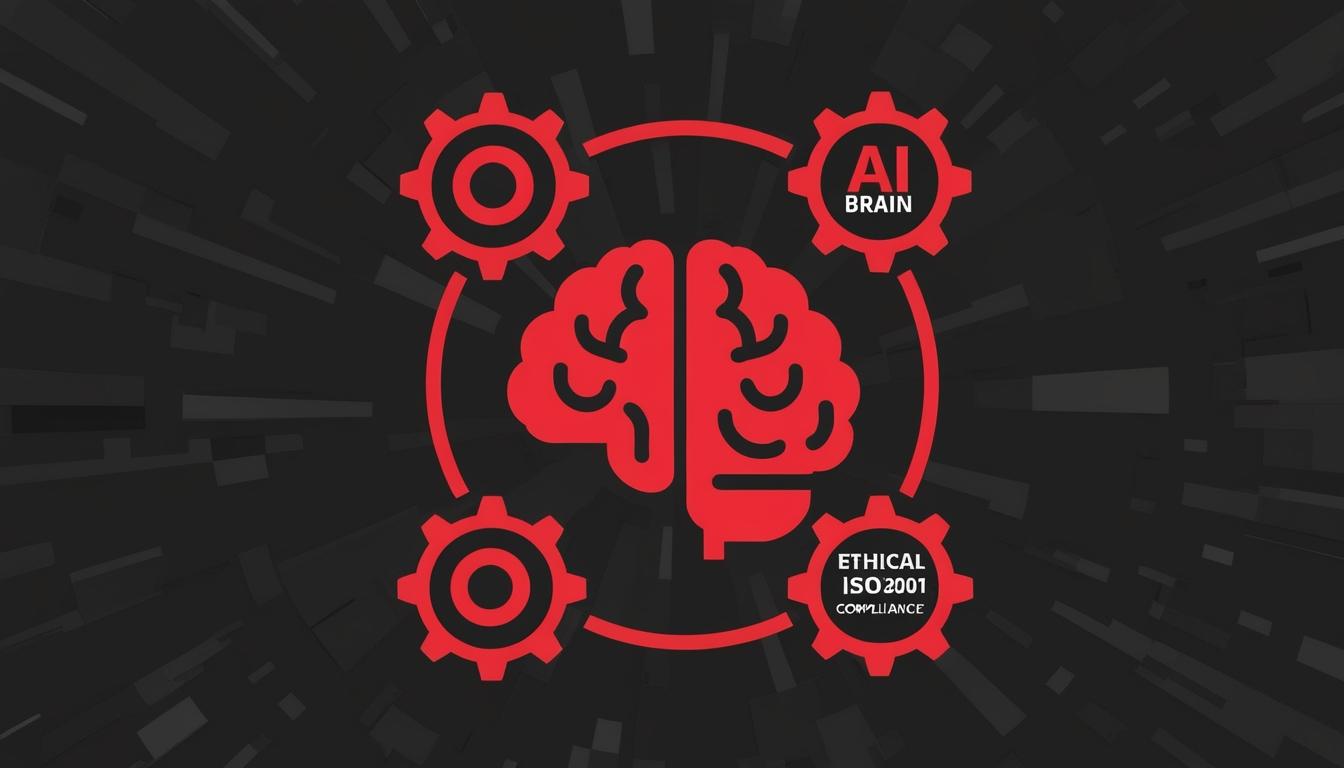
With the launch of ISO/IEC 42001, companies have a structured pathway to ensure ethical AI development, addressing challenges while maximising potential benefits.
In an era where artificial intelligence (AI) is becoming increasingly integral to business operations, companies are realising both the potential advantages and the associated challenges of integrating AI into their systems. With the launch of ISO/IEC 42001, an international standard aimed at ensuring the ethical development and deployment of AI management systems, organisations now have a structured pathway to navigate these challenges while capitalising on AI’s vast capabilities.
ISO 42001 serves as a pivotal framework for businesses looking to solidify their approach to artificial intelligence, addressing critical issues such as ethics, transparency, and continuous improvement. By providing guidelines for businesses to develop and implement AI responsibly, this standard allows firms to not only demonstrate their commitment to ethical practices but also achieve compliance with anticipated regulations, such as the EU AI Act.
The certification process for ISO 42001 requires organisations to adopt a risk-based approach, demanding thorough assessments that encompass various phases. Key steps include defining the operational context of AI systems, identifying relevant stakeholders, and understanding the expectations outlined in the framework. This process culminates in the creation of a comprehensive AI management system (AIMS), encapsulating elements like fairness, safety measures, and impact assessments related to AI technologies.
Achieving compliance with ISO 42001 can significantly influence a company’s strategy in utilising AI. For instance, certification serves as independent verification that a company manages its AI systems in an ethical manner, thereby enhancing trust among customers, partners, and regulators. Furthermore, businesses that engage in the certification process stand to improve their risk management practices, allowing them to identify and mitigate potential ethical and security issues associated with AI deployment proactively.
Among the firms pursuing this certification, one has recently shared insights from their journey. Their experience, encompassing a six-month collaboration with an accredited auditing body, underscores the importance of adhering to rigorous standards. The company emphasises that becoming one of the first to secure ISO 42001 certification not only reaffirms their commitment to responsible AI practices but also positions them favourably in a competitive market.
The organisation notably partnered with Schellman, an ANAB-accredited auditing body, to ensure the credibility of their certification. This collaboration provided reassurance that their compliance with the ISO 42001 framework would be verified by an appropriately accredited entity, thereby boosting the overall credibility of their claims regarding ethical and secure AI practices.
While the certification does not guarantee complete security, it establishes a robust framework for mitigating risks effectively. As AI continues to transform various industries, successful compliance with standards such as ISO 42001 will likely become crucial for businesses seeking to reassure stakeholders of their commitment to ethical AI deployment and management.
As the landscape of AI management continues evolving, many companies are recognising the importance of robust frameworks and standards that can guide them through the complexities of ethical AI integration, ensuring they can harness the full potential of this transformative technology while safeguarding against potential risks.
Source: Noah Wire Services
- https://www.isms.online/iso-42001/ – Corroborates the importance of ISO/IEC 42001 in ensuring ethical development and deployment of AI management systems, addressing ethics, transparency, and continuous improvement.
- https://www.qualitymag.com/articles/98100-the-rise-of-ai-governance-unpacking-iso-iec-42001 – Supports the role of ISO/IEC 42001 in providing a comprehensive framework for AI management, including risk assessments and impact evaluations.
- https://www.iso.org/standard/81230.html – Provides details on the scope and application of ISO/IEC 42001, including its importance in managing AI-related risks and opportunities across organizations.
- https://www.osler.com/en/insights/updates/the-role-of-iso-iec-42001-in-ai-governance/ – Explains the key concepts of ISO/IEC 42001, such as ethics, transparency, accountability, and continuous improvement, and its integration with other ISO standards like ISO/IEC 27001.
- https://www.iso.org/artificial-intelligence/ai-management-systems – Describes how ISO/IEC 42001 helps businesses navigate AI challenges, ensuring responsible and sustainable deployment of AI technologies.
- https://www.isms.online/iso-42001/ – Details the certification process for ISO 42001, including the need for a risk-based approach and comprehensive AI management system (AIMS).
- https://www.qualitymag.com/articles/98100-the-rise-of-ai-governance-unpacking-iso-iec-42001 – Outlines the steps for compliance with ISO 42001, such as conducting a gap analysis, developing an AIMS, and performing risk and impact assessments.
- https://www.iso.org/standard/81230.html – Highlights the benefits of achieving ISO 42001 certification, including enhanced trust, improved risk management, and compliance with legal and regulatory standards.
- https://www.osler.com/en/insights/updates/the-role-of-iso-iec-42001-in-ai-governance/ – Discusses the importance of partnering with accredited auditing bodies to ensure the credibility of ISO 42001 certification and the overall credibility of ethical and secure AI practices.
- https://www.iso.org/artificial-intelligence/ai-management-systems – Emphasizes that while certification does not guarantee complete security, it establishes a robust framework for mitigating risks effectively in AI deployment and management.
- https://www.qualitymag.com/articles/98100-the-rise-of-ai-governance-unpacking-iso-iec-42001 – Explains how successful compliance with ISO 42001 will become crucial for businesses to reassure stakeholders of their commitment to ethical AI deployment and management as AI continues to transform industries.