









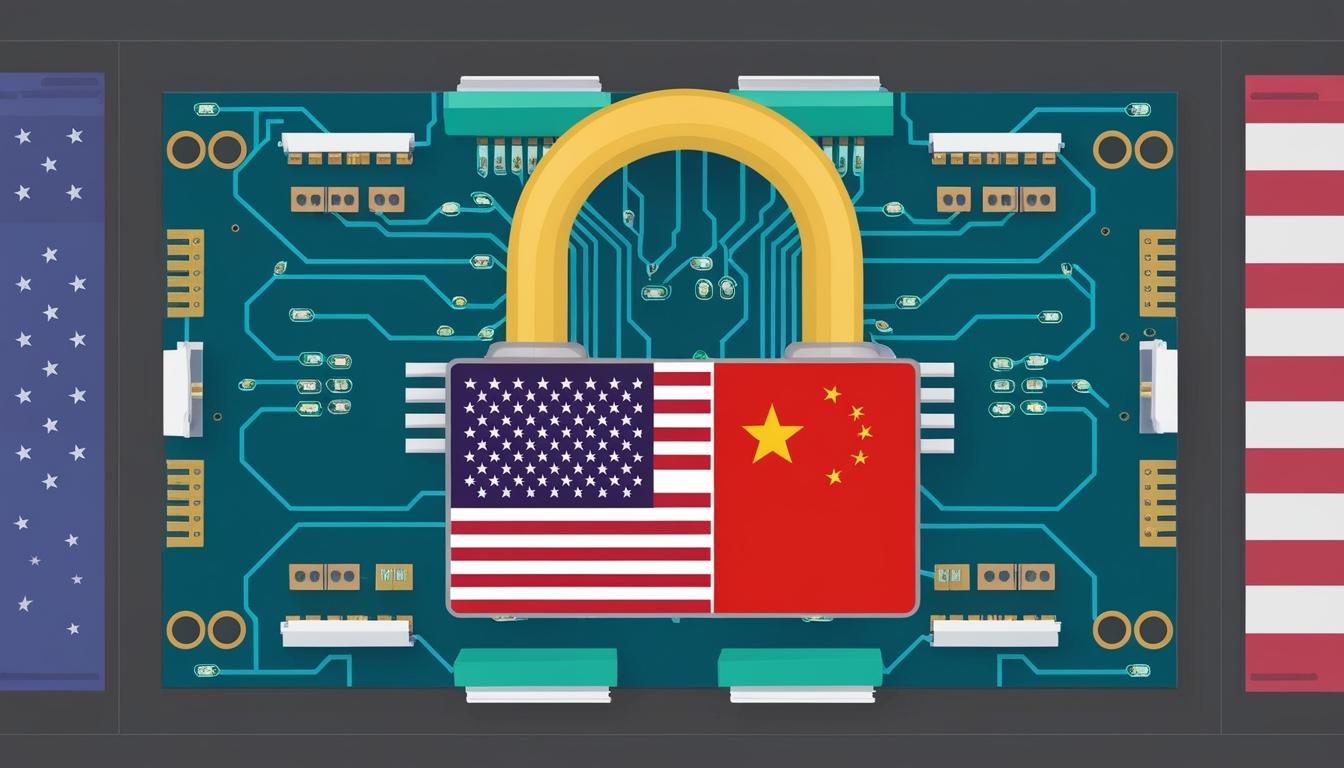
In a move to protect national security, the US Treasury Department has announced new investment restrictions targeting Chinese technology startups in the AI sector, effective January.
In a strategic move aimed at safeguarding national security, the United States Treasury Department has unveiled new restrictions on American investments in Chinese technology startups, specifically targeting the burgeoning field of artificial intelligence (AI). These measures, which are set to come into force in January, are designed to tighten control on the inflow of US venture capital into China’s advanced AI sector. The policies form part of a broader initiative to maintain the United States’ lead in this critical technological domain.
The investment restrictions specifically target two primary areas. Firstly, they prohibit US investors from funding Chinese companies engaged in developing AI technologies tailored for sensitive applications, such as military and intelligence-related projects. These restrictions aim to prevent any potential advancements in technology that could enhance China’s military capabilities.
Secondly, the regulations impose a quantitative limitation on investments in Chinese consumer AI companies. Determined by the complexity of the AI models being developed, this limitation uses a specific threshold measured in floating point operations per second or flops. American venture capitalists are prohibited from investing in firms whose AI models exceed 1025 flops, aligning with thresholds set by the European Union for heightened regulatory scrutiny. This threshold relates to the computing power and potential impact of an AI system. A stricter limit of 1024 flops applies to models developed primarily based on biological sequence data, reflecting concerns over security risks such as the creation of bioweapons.
Jaime Sevilla, the director of the research entity Epoch AI, elucidates the significance of these numerical thresholds, clarifying that they demarcate the frontier of AI development. Major AI systems in the global arena, such as OpenAI’s GPT and Google’s Gemini, fall within the specified range of 1025 to 1026 flops. According to Sevilla, most contemporary AI innovations are advancing well beyond the 1024 flop level, indicative of rapid technological progression within the sector.
Currently, only two Chinese entities, ByteDance and Zhipu AI, have disclosed AI models surpassing the 1025 flop threshold. As for AI systems developed using biological sequence data, no Chinese company has yet exceeded the 1024 flop benchmark. There is a noticeable trend toward caution in the public disclosure of AI model capabilities, potentially due to regulatory scrutiny.
These investment restrictions are set to function in tandem with existing measures, including export controls on sophisticated microchips and the involvement of the Committee on Foreign Investment in the United States (CFIUS), in a comprehensive effort to impede China’s rapid developments in AI technology.
As President-elect Donald Trump prepares to take office shortly after these measures are enacted, his administration is anticipated to review and potentially expand these restrictions, possibly heightening their severity. This regulatory initiative reflects ongoing efforts by the US government to fortify its positions in the face of growing competition from China in pivotal technological arenas.
Source: Noah Wire Services
- https://sanctionsnews.bakermckenzie.com/final-us-outbound-investment-security-rules-issued-by-us-treasury-department/ – This link corroborates the issuance of the final rule by the US Treasury Department, targeting US outbound investments in Chinese businesses involving advanced technologies like AI, semiconductors, and quantum information technologies.
- https://home.treasury.gov/policy-issues/international/outbound-investment-program – This link provides an overview of the Outbound Investment Security Program, including the categories of national security technologies and products targeted, such as AI, semiconductors, and quantum information technologies.
- https://home.treasury.gov/news/press-releases/jy2690 – This link details the specific prohibitions and notification requirements for covered transactions involving AI systems, including the thresholds related to computing power and biological sequence data.
- https://www.debevoise.com/insights/publications/2024/11/treasury-finalizes-us-outbound-investment-restrict – This link explains the requirements and scope of the Outbound Investment Rule, including the prohibition on certain investments and the notification requirements for U.S. persons investing in Chinese companies.
- https://www.orrick.com/en/Insights/2024/11/Treasury-Publishes-Final-Outbound-Investment-Restrictions-With-Focus-on-Tech-Sector-and-China – This link discusses the final rule’s impact on U.S. investments in Chinese tech companies, particularly those involved in AI, semiconductors, and quantum computing, and the process for notifying Treasury of covered transactions.
- https://sanctionsnews.bakermckenzie.com/final-us-outbound-investment-security-rules-issued-by-us-treasury-department/ – This link highlights the modifications in the definition of AI and the scope of covered transactions, including the de minimis rule and excepted transactions, under the final rule.
- https://home.treasury.gov/policy-issues/international/outbound-investment-program – This link explains the executive order and the national emergency declared to address threats posed by countries of concern, including China, and the role of the Treasury Department in implementing these regulations.
- https://home.treasury.gov/news/press-releases/jy2690 – This link provides details on the prohibited and notifiable transactions, including those related to AI systems, and the process for filing notifications with the Treasury.
- https://www.debevoise.com/insights/publications/2024/11/treasury-finalizes-us-outbound-investment-restrict – This link discusses the compliance requirements for U.S. persons and their controlled foreign entities, and the potential for future legislative or executive actions to expand these restrictions.
- https://www.orrick.com/en/Insights/2024/11/Treasury-Publishes-Final-Outbound-Investment-Restrictions-With-Focus-on-Tech-Sector-and-China – This link explains the penalties for violations, including civil and criminal penalties, and the process for voluntarily disclosing potential violations under the final rule.
- https://home.treasury.gov/policy-issues/international/outbound-investment-program – This link outlines the exceptions to the restrictions, such as transactions involving publicly traded securities, derivatives, and certain intracompany transactions, and the potential for national interest exemptions.






