

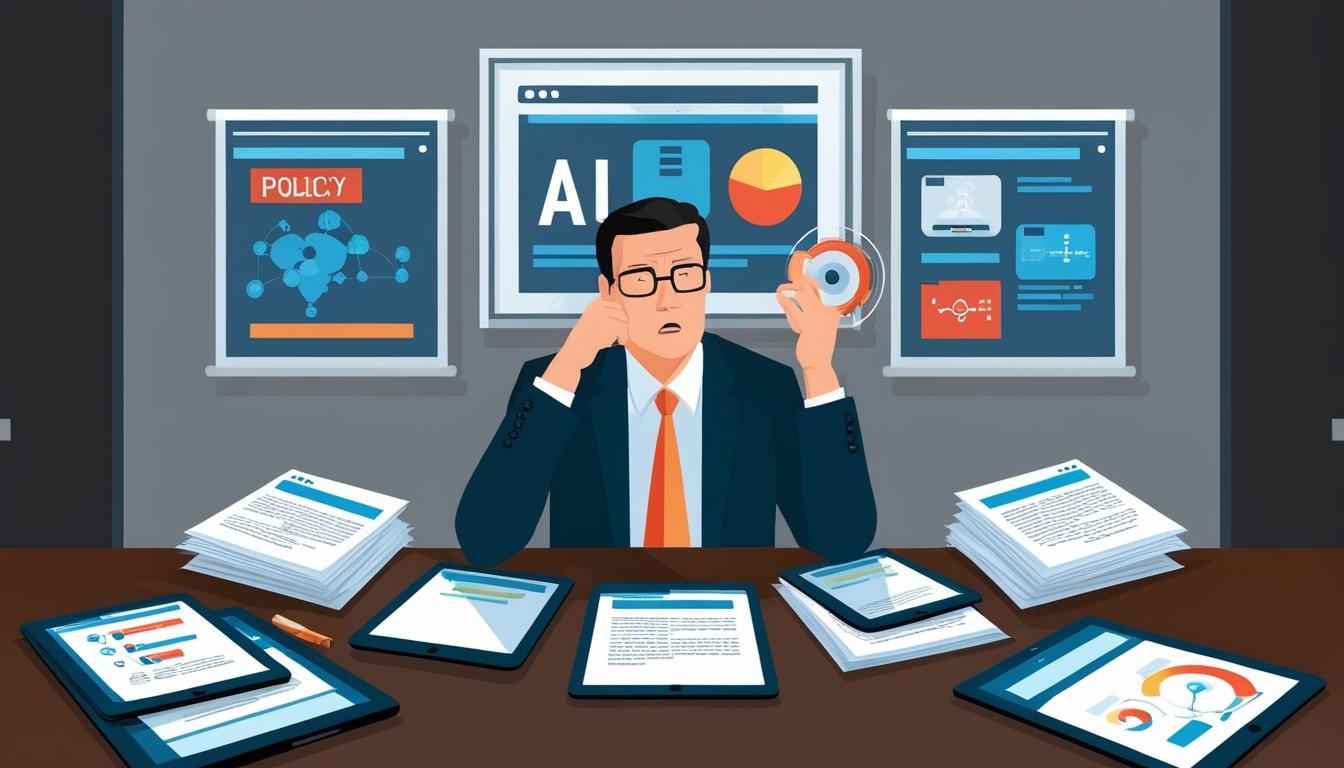
A recent survey reveals that only 44% of US organisations have established policies for employee use of generative AI tools, despite significant adoption and increasing regulatory concerns.
As the integration of artificial intelligence (AI) into American businesses continues to gain momentum, the establishment of policies for the use of AI technologies among employees remains inconsistent, reveals a recent survey. Conducted by Littler, a prominent law firm specialising in employment and labour law, the survey focused on C-suite executives and provides insights into how organisations are adapting to the growing presence of generative AI tools in the workplace.
The 2024 AI C-Suite Survey, which queried over 330 executives, indicates that only 44% have put policies in place regarding employee use of generative AI tools. Although this figure marks an improvement from the previous year’s 10%, it highlights the significant gap between AI adoption and policy development within organisations.
Marko Mrkonich, a key figure within Littler’s AI and Technology Practice Group, comments on the progress while acknowledging the challenges that remain. He points out the complexity of creating policies due to varying perceptions of the risks and opportunities associated with generative AI among different stakeholders within a company.
The survey reveals that for those organisations that have established policies, 74% enforce them strictly, requiring adherence, while another 23% have issued guidelines. A mere 3% of respondents indicate a total prohibition on the use of generative AI by employees. These policies typically restrict usage to tools that have received approval, with half of the executives stating that decisions are made by managers, supervisors, or a specific AI oversight group. Furthermore, 40% of those surveyed restrict AI use to approved tasks, and about 21% limit usage to certain employee groups.
Industry experts, like Niloy Ray from Littler’s AI and Technology Practice, describe the current policy landscape as a continuum. Organisations often begin policy development by vetting particular AI tools before considering their application to specific tasks and departments.
Regarding policy enforcement, 67% of executives reported setting clear usage expectations, with a reliance on employee compliance. More than half utilise access controls tied to specific groups or roles and depend on employees to report any policy violations.
However, a notable gap exists in training and education around generative AI, with only 31% of companies offering programmes to ensure employees understand and comply with AI policies. Britney Torres, also from Littler’s AI and Technology Practice, underscores the importance of training as part of implementing effective policies. She notes that clarity in organisational objectives and comprehensive education on compliance and technical use are crucial for maximising the benefits of AI technologies.
The survey also sheds light on AI’s role in human resources (HR) functions, with 66% of the executives reporting its use for creating HR materials, recruiting, and sourcing candidates. Despite this, concerns regarding potential litigation and an evolving regulatory environment appear to be tempering enthusiasm. Brad Kelley, a Littler shareholder, notes the growing regulatory attention to AI use in workplaces, with 85% of executives worried about possible legal challenges and 73% reducing AI deployment within HR due to regulatory uncertainties.
In the US, while a regulatory framework similar to the EU AI Act is absent, there has been a noticeable increase in federal guidelines and state and local laws addressing AI in the workplace. Kelley notes that this evolving regulatory landscape demands careful consideration from executives as they plan their organisations’ future AI strategies.
Overall, while the use of AI by US businesses is expanding, the survey highlights significant gaps in policy development and regulatory compliance, underscoring the need for organisations to continuously evaluate their approach to AI integration.
Source: Noah Wire Services