






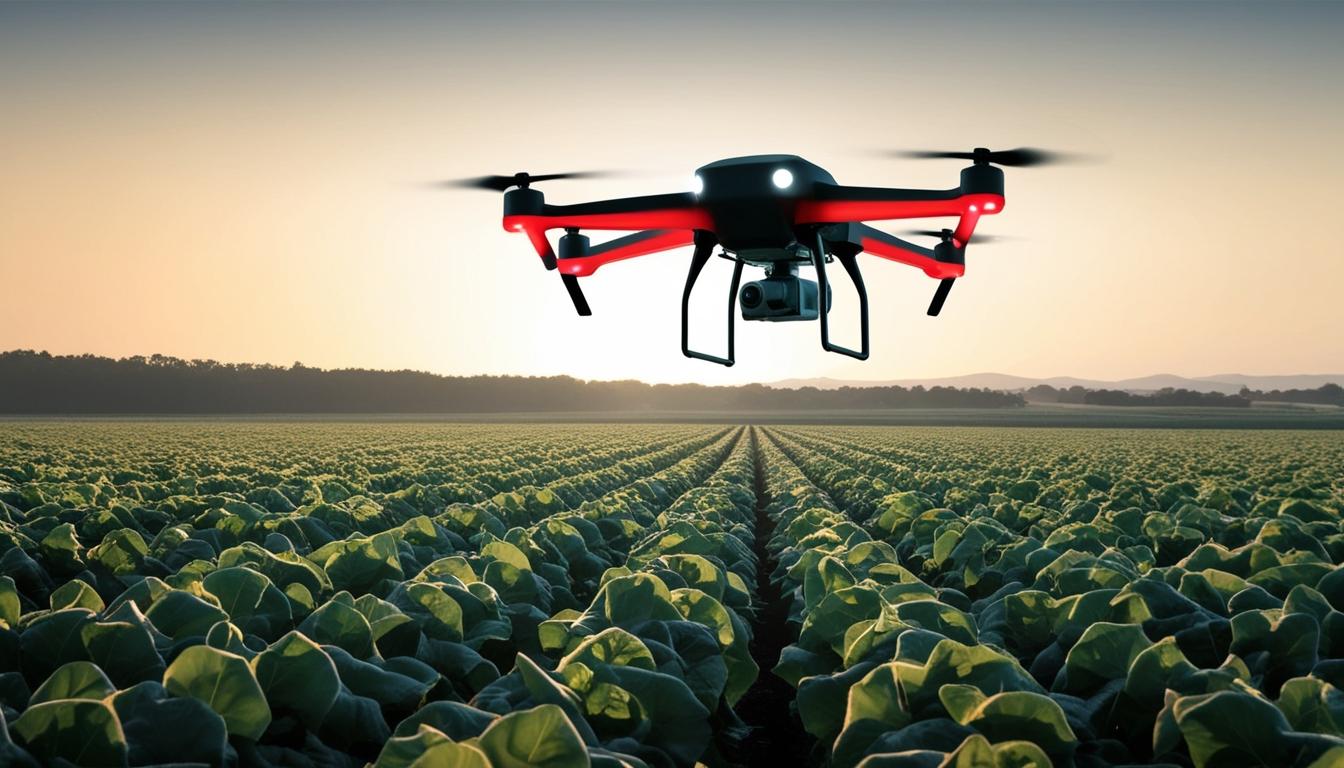

The use of unmanned aerial and ground vehicles is transforming livestock management, enhancing productivity and efficiency in the agricultural sector.
In the rapidly evolving landscape of agricultural technology, unmanned aerial vehicles (UAVs) and unmanned ground vehicles (UGVs) are emerging as significant players in livestock management. Increasingly, these innovative technologies are being researched and developed to enhance the productivity and efficiency of livestock producers.
UAVs, commonly known as drones, operate in the air, while UGVs are designed for ground-level tasks. Both types of unmanned vehicles can be controlled remotely or can operate autonomously without human oversight. Their applications in agriculture focus on addressing various challenges that livestock producers face daily.
Austin Fruge, a doctoral student at the University of Arkansas, has been exploring the potential of these technologies within the agricultural sector. “The rapid advancements in AI and robotics technology have sparked a lot of interest in enhancing automation and efficiency,” he stated. Fruge’s research highlights UAVs and UGVs as vehicles with extensive untapped potential that can significantly contribute to livestock management.
One of the most prominent advantages associated with these unmanned technologies is their capability to improve data collection and utilisation, which Fruge noted as “the most significant benefit” they provide. Enhanced data collection leads to better resource optimization, thereby allowing producers to improve feed and pasture management while simultaneously reducing production costs.

The practical applications of UAVs in livestock production are already being realised. Producers are using drones for aerial surveys of pastures, monitoring the health of herds, identifying possible water shortages, spotting invasive plant species, and locating lost livestock through the use of thermal imaging. UGVs also play a crucial role; they are employed for tasks such as feeding livestock, managing manure, and observing animal behaviour.
The automation of these tasks contributes not only to increased efficiency but also to a reduction in the reliance on manual labour, which is an advantage noted by Fruge. However, alongside these benefits come several challenges that producers may encounter.
One primary concern is the interaction between livestock and unmanned vehicles, as these animals can sometimes be startled or show fear in the presence of UGVs or UAVs, potentially hindering data collection efforts. Furthermore, the integration of such advanced technologies can entail substantial investment, which may be daunting for some producers.
Fruge elaborated on the complexities involved, stating, “On the producer side, there are complexities related to data management, the relative high costs of implementation, regulatory obstacles, and the need to integrate these technologies into existing systems.”
For those interested in adopting UAVs or UGVs, Fruge offers several recommendations:
- Start Small: Concentrate on a particular issue where the technology can provide support.
- Invest the Time: Familiarise oneself with unmanned vehicles and their potential benefits for the operation.
- Evaluate the Costs and Benefits: Ensure that the benefits presented by the technology surpass its costs.
- Choose the Right Equipment: Select UAVs and UGVs that meet specific operational needs.
- Seek Expert Guidance: Consult with experts for assistance and answers to queries regarding unmanned vehicles.
In summary, UAVs and UGVs represent a promising advancement for livestock operations. The potential for improved herd health and productivity, coupled with the increasing automation of agricultural tasks, highlights a significant shift in how livestock producers manage their resources, paving the way for more efficient agricultural practices in the future.
Source: Noah Wire Services
- https://coptrz.com/blog/drones-for-livestock-management/ – Corroborates the use of UAVs for aerial surveys of pastures, monitoring herd health, and locating lost livestock using thermal imaging.
- https://www.ecko360industrial.com/post/using-drones-in-livestock-management – Supports the use of drones for counting animals, identifying sick or dead animals, and inspecting fences, as well as optimizing feed and pasture management.
- https://advexure.com/blogs/news/ranching-redefined-drones-for-livestock-management – Details the use of drones with thermal imaging for locating ill animals, monitoring health remotely, and managing pastures efficiently.
- https://coptrz.com/blog/drones-for-livestock-management/ – Explains how drones can improve data collection and utilization, leading to better resource optimization and reduced production costs.
- https://www.ecko360industrial.com/post/using-drones-in-livestock-management – Highlights the role of drones in monitoring grazing patterns and land usage, aiding in rotational grazing and land conservation.
- https://advexure.com/blogs/news/ranching-redefined-drones-for-livestock-management – Discusses the use of drones for tasks such as spotting invasive plant species and managing water resources.
- https://coptrz.com/blog/drones-for-livestock-management/ – Mentions the automation of tasks by UAVs, reducing the reliance on manual labor and improving efficiency.
- https://www.ecko360industrial.com/post/using-drones-in-livestock-management – Addresses the challenges of integrating advanced technologies, including data management and high implementation costs.
- https://advexure.com/blogs/news/ranching-redefined-drones-for-livestock-management – Provides recommendations for adopting UAVs, such as starting small, investing time in familiarization, and evaluating costs and benefits.
- https://coptrz.com/blog/drones-for-livestock-management/ – Emphasizes the importance of choosing the right equipment and seeking expert guidance when implementing UAVs.
- https://www.ecko360industrial.com/post/using-drones-in-livestock-management – Highlights the future potential of UAVs and UGVs in enhancing livestock operations and agricultural practices.







