









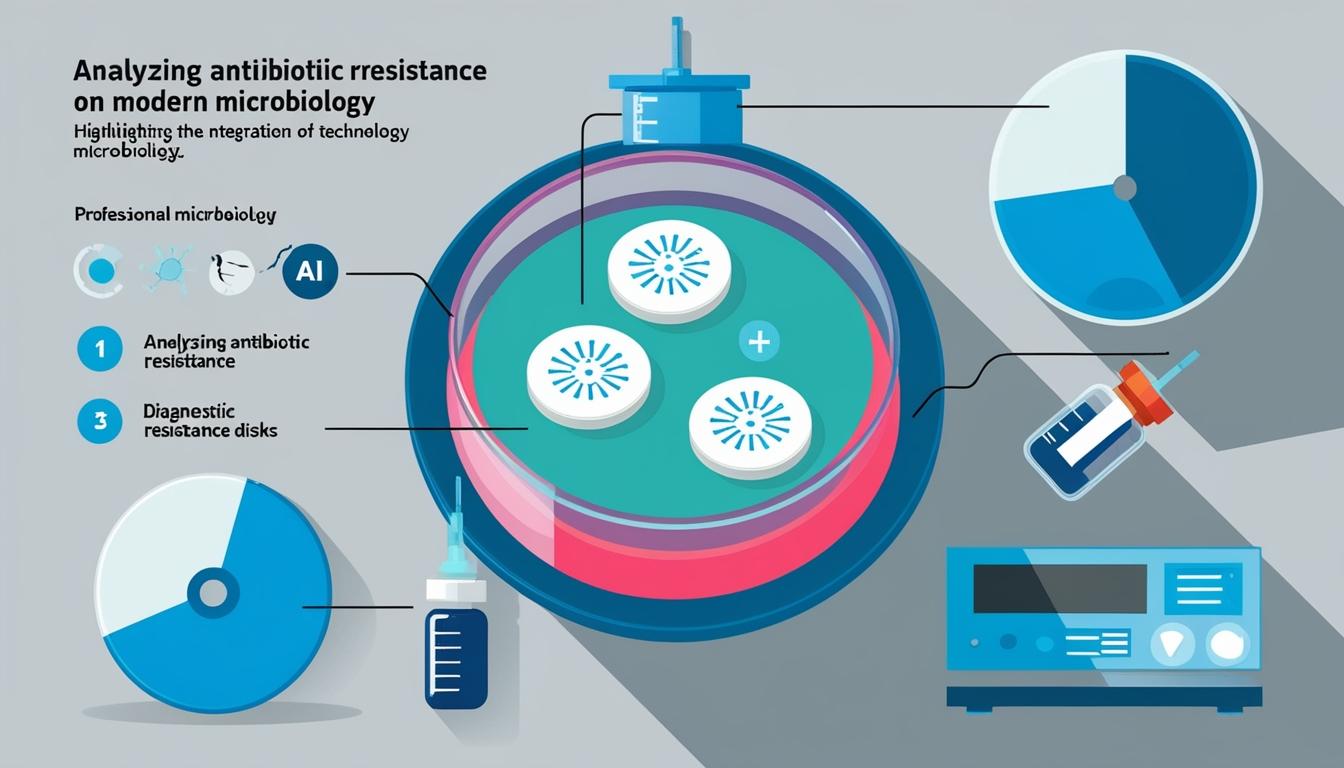
A team at the University of Zurich is harnessing the power of AI, specifically GPT-4, to improve the analysis of antibiotic resistance, presenting a potential breakthrough in diagnostics.
Researchers at the University of Zurich (UZH) have made strides in the battle against antibiotic resistance through the innovative use of artificial intelligence (AI). Led by Professor Adrian Egli from UZH’s Institute of Medical Microbiology, the research team is pioneering the use of GPT-4, a sophisticated AI model developed by OpenAI, to better analyse and understand antibiotic resistance mechanisms.
This breakthrough focuses on enhancing the interpretation of the Kirby-Bauer disk diffusion test, a widely utilised method in laboratories that helps doctors determine the susceptibility of bacteria to various antibiotics. The test involves placing antibiotic-infused paper disks on a petri dish containing bacteria; the proximity of bacterial growth to these disks indicates resistance levels. The AI, named “EUCAST-GPT-expert”, adheres to guidelines set by the European Committee on Antimicrobial Susceptibility Testing (EUCAST) to ensure rigorous standardisation in interpreting these tests.
The team’s findings, recently published in the Journal of Clinical Microbiology, detail how the AI was utilised to test hundreds of bacterial samples. While it excelled in detecting certain antibiotic resistances, it also exhibited limitations, occasionally misidentifying resistant strains. Although currently less accurate than seasoned microbiologists, the AI system holds potential for streamlining and standardising diagnostic processes.
Professor Egli highlights the urgent need for speedier and more reliable detection tools amidst the worldwide threat of antibiotic resistance. He views the integration of AI as a complementary enhancement to existing methods, aiming to expedite routine diagnostics and assist medical personnel in identifying resistant bacteria more swiftly. Despite the promising results, Egli stresses the necessity for further development before AI tools like EUCAST-GPT-expert can be implemented in clinical settings, acknowledging that the technology is not yet ready to replace human expertise.
The study underscores the potential for AI to transform healthcare practices by offering consistent and objective diagnostic interpretations. This integration could ultimately minimise human error and variability, thereby refining patient treatment outcomes. Moreover, AI’s role could extend globally, aiding laboratories in more accurately and promptly identifying drug-resistant strains and contributing to the preservation of current antibiotic efficacy.
Researchers involved in this study emphasise that while AI is not a standalone solution, its ongoing development could become instrumental in the global response to antibiotic resistance. Enhanced AI-based diagnostics promise to increase the accuracy and speed of detecting resistant infections, a crucial step as healthcare systems strive to counteract the mounting challenges posed by drug-resistant bacteria.
Source: Noah Wire Services






