






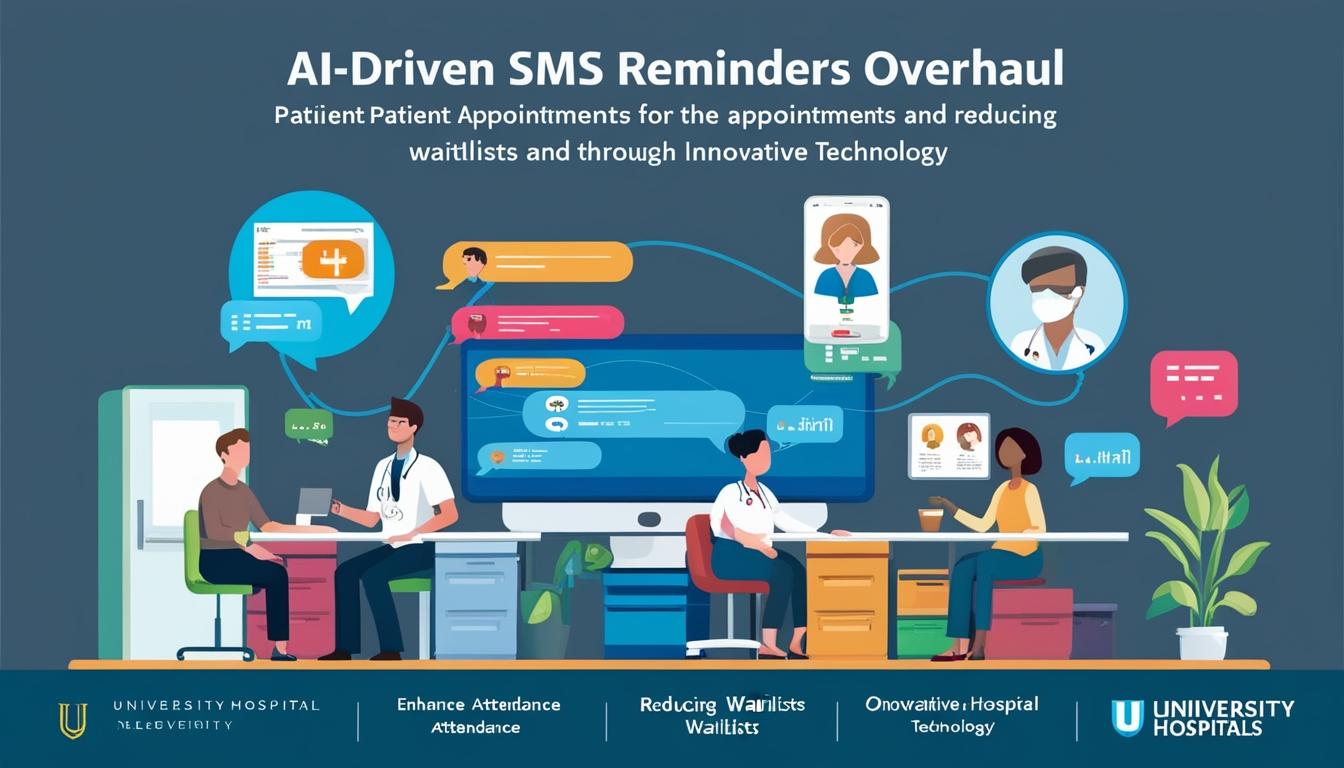

University Hospitals Coventry and Warwickshire partners with IBM to implement AI solutions aimed at minimising missed appointments, significantly improving patient care and hospital efficiencies.
University Hospitals Coventry and Warwickshire (UHCW) has embarked on a pioneering initiative to enhance patient experience by implementing artificial intelligence (AI) to address the issue of missed appointments, a common challenge in healthcare establishments. This initiative is the result of a partnership with IBM, leveraging its Watsonx AI platform to optimize processes within the trust.
A major aspect of the project has been the application of process mining techniques to adjust the timing of SMS reminders for outpatient appointments. Initially, text reminders were sent four days prior to an appointment. However, after rigorous testing and data analysis, the trust decided to extend this period to 14 days. According to UHCW’s CEO, Professor Andy Hardy, this simple change has led to a “significant” decrease in the number of patients who either failed to attend their appointments or cancelled at the last minute. Consequently, this has made it possible to reallocate these appointment slots to an additional 700 patients.
Professor Hardy expressed optimism regarding the potential impact of this AI-driven strategy, noting that the modelling suggested that the move could make a profound impact on reducing the waiting lists by 10 percent to 15 percent. This approach not only adds efficiency to patient care but also results in potential financial savings for the hospital trust.
The focus on artificial intelligence at UHCW comes amidst a broader UK push for technological innovations in healthcare. Recently, the UK government allotted £12 million towards initiatives that incorporate cutting-edge technologies, including AI, virtual reality (VR), and wearable sensors, particularly aimed at helping individuals with drug addictions and reducing drug-related fatalities.

In the realm of healthcare, numerous NHS trusts are experimenting with AI to bolster various aspects of medical care. These innovations range from enhancing cancer detection rates to improving fracture identification accuracy. In pursuit of supporting technological advancements, the Medicines and Healthcare products Regulatory Agency (MHRA) introduced applications for its AI Airlock pilot programme. This initiative is designed to provide expert guidance and sandbox testing opportunities for developers of AI-driven medical devices.
Moreover, Health Level Seven International (HL7) recently issued an informative document on AI and machine learning data lifecycles. This guidance aims to foster better standards and improve the reliability and quality of interoperable data utilised in AI models. Meanwhile, Leeds Teaching Hospitals NHS Trust has collaborated with health tech startup Newton’s Tree, integrating the startup’s enterprise AI platform to expedite the evaluation and deployment of AI within the trust.
These developments highlight an era of acceleration in the use of AI in healthcare, encompassing a variety of applications from operational optimisations to clinical solutions. The evolving landscape promises continuing transformations that may redefine patient care and healthcare management across the United Kingdom.
Source: Noah Wire Services







