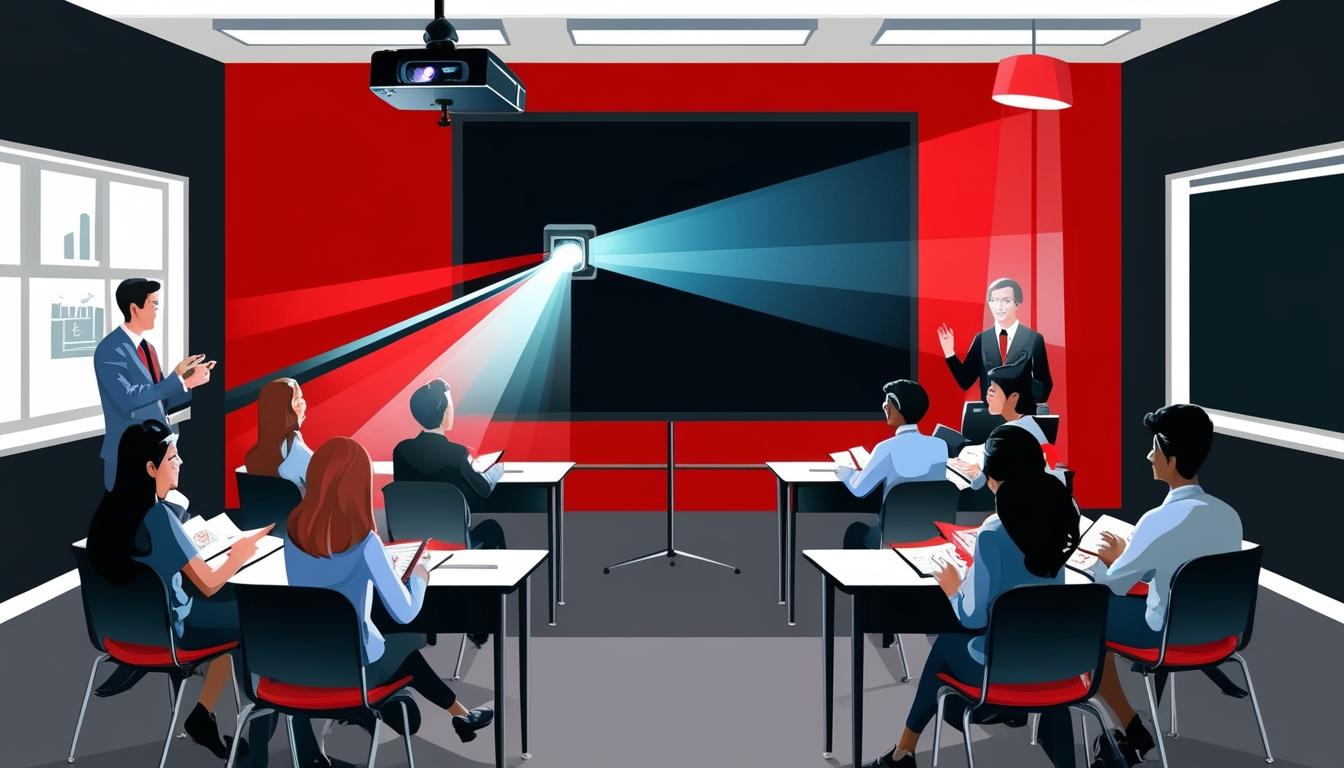

Higher education institutions are leveraging advanced audiovisual technologies to enhance teaching and learning experiences, catering to diverse education formats.
In a rapidly evolving educational landscape, higher education institutions are increasingly transforming their learning environments through advanced digital technologies that adapt to various teaching formats, including in-person, hybrid, and fully remote courses. Recent insights suggest that educators recognise the significant role of educational technology, as demonstrated by a survey from the College Innovation Network revealing that 83 percent of faculty members believe that such tools enhance teaching and learning experiences.
The integration of new audio-visual (AV) technologies marks a pivotal shift for universities aiming to develop immersive learning spaces. Traditional teaching methods continue to be relevant alongside these innovations, which employ high-definition imaging and superior audio capabilities to create engaging classroom experiences regardless of the students’ physical presence.
Laser projectors and high-quality digital displays take centre stage among these advancements. The modern laser projector goes beyond simple presentations, offering capabilities to deliver dynamic, high-resolution content in 4K quality. These projectors can work in conjunction with sophisticated software that blends multiple images, creating a seamless visual experience that captivates students and fosters greater engagement and understanding.
Digital displays and video walls further attract and maintain student attention with their vast screens and vivid imagery, essential in both classroom settings and communal areas like student unions and cafeterias. These technologies provide significant flexibility as they come equipped with adaptable interfaces, allowing institutions to upgrade or integrate new systems without disrupting existing frameworks.

Another notable advancement includes pan-tilt-zoom (PTZ) cameras, designed to enhance remote learning by ensuring virtual attendees receive the same quality education as those present in the classroom. These cameras are capable of auto-tracking speakers, allowing them to move freely while maintaining focus on their presentation. This technology not only improves the quality of streamed lectures but also enriches the overall learning experience as students are immersed in the content being shared.
In addition to visual elements, audio plays a crucial role in an effective educational environment. Advanced microphone systems, including clip-on, wireless, and ceiling microphones, are specifically designed for educational use. Ceiling microphones, in particular, gain favour due to their versatility and capacity for exceptional sound quality across various room sizes. These systems are often compatible with PTZ cameras, allowing them to adjust sensitivity in relation to speaker movements, thereby ensuring clear audio transmission regardless of ambient noise or interruptions.
Furthermore, digital wireless microphones also provide auditory learners the flexibility to listen to recorded lectures anytime and anywhere, catering to the growing need for convenience in today’s fast-paced lifestyles.
Collectively, these innovative AV technologies are considerably enhancing the educational experience within higher education institutions. By bridging the gap between remote and in-person participants, these tools are essential in fostering deeper engagement and understanding among students. As institutions continue to invest in and integrate such technologies, the expectation is that they will not only enhance current educational practices but will also shape the evolution of higher education in the future.
Source: Noah Wire Services
- https://www.educause.edu/ecar/research-publications/higher-education-trend-watch/2024 – This source supports the trend of digital transformation in higher education, including the integration of new technologies to enhance teaching and learning experiences, such as hybrid and online learning.
- https://whatfix.com/blog/digital-transformation-in-higher-education/ – This article discusses the digital transformation in higher education, including the use of advanced technologies like laser projectors, digital displays, and audio-visual systems to improve the learning environment.
- https://www.digital-adoption.com/digital-transformation-in-higher-education/ – This source highlights the role of digital transformation in enhancing teaching and learning, including the use of immersive technologies like VR, AR, and advanced audio-visual systems.
- https://whatfix.com/blog/digital-transformation-in-higher-education/ – This article mentions the use of PTZ cameras and advanced microphone systems to enhance remote learning and overall educational experiences.
- https://www.digital-adoption.com/digital-transformation-in-higher-education/ – This source discusses the importance of audio-visual technologies, including digital displays and video walls, in creating engaging classroom experiences.
- https://www.educause.edu/ecar/research-publications/higher-education-trend-watch/2024 – This report emphasizes the growing efforts towards digital transformation and institutional resilience, which includes investing in advanced AV technologies.
- https://whatfix.com/blog/digital-transformation-in-higher-education/ – This article explains how digital transformation helps in creating flexible and adaptable learning environments, including the use of advanced microphone systems and PTZ cameras.
- https://www.digital-adoption.com/digital-transformation-in-higher-education/ – This source highlights the benefits of digital transformation, such as enhancing student engagement and understanding through advanced AV technologies.
- https://er.educause.edu/articles/2024/2/digital-transformation-20-the-age-of-ai – This article discusses the next phase of digital transformation (Dx 2.0) and how AI and other technologies are transforming the educational landscape, including the integration of advanced AV systems.
- https://whatfix.com/blog/digital-transformation-in-higher-education/ – This source provides examples of how digital technologies, including audio-visual systems, are essential in fostering deeper engagement and understanding among students.
- https://www.digital-adoption.com/digital-transformation-in-higher-education/ – This article underscores the future of higher education, where continued investment in advanced AV technologies is expected to shape educational practices.