









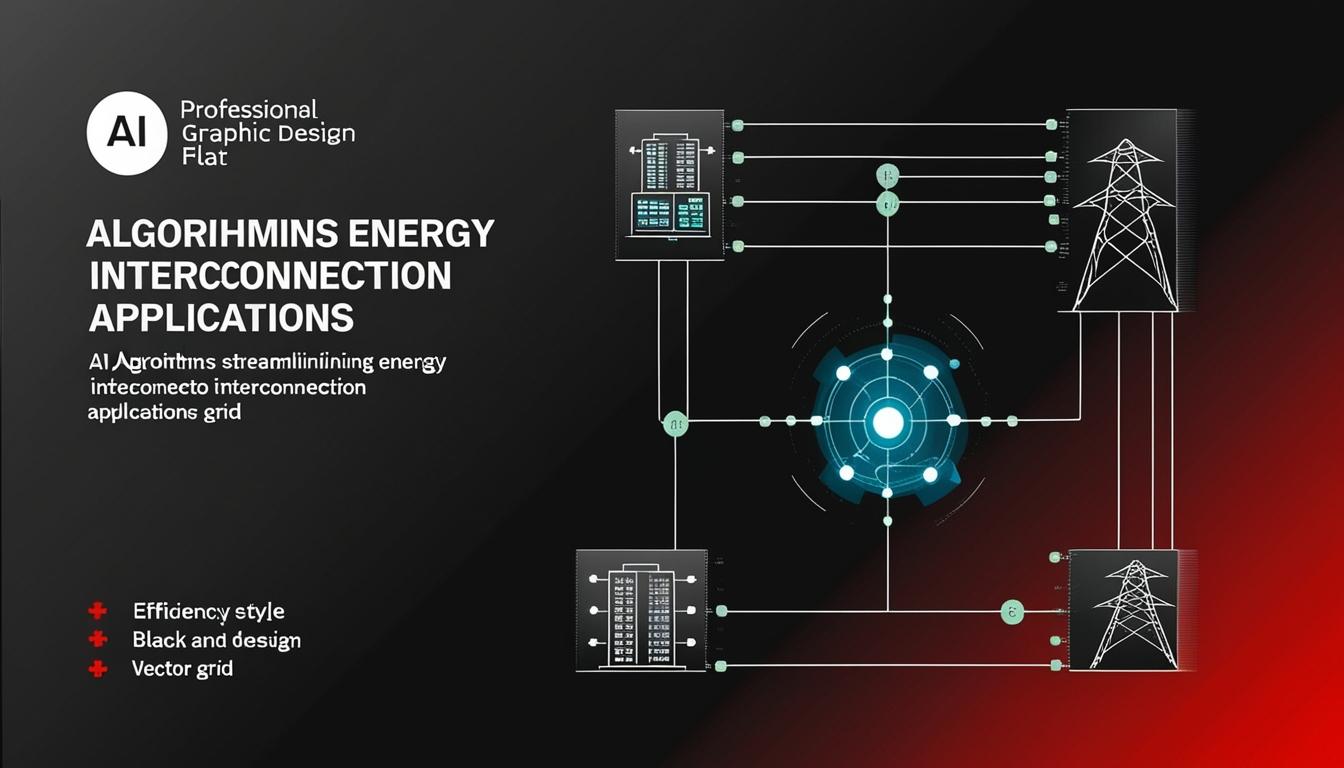
The US Department of Energy unveils an initiative using AI to enhance the interconnection application process, aiming to alleviate a significant backlog in energy projects.
The integration of artificial intelligence (AI) into the interconnection application process stands at the forefront of a groundbreaking initiative aimed at alleviating the growing backlog of energy projects awaiting grid connections in the United States. The Department of Energy (DOE) has highlighted that a staggering 90% of interconnection applications received by organisations are deficient, a situation that significantly slows down the process of connecting new energy sources to the grid.
Under this new initiative, projects will leverage existing AI algorithms to enhance the efficiency of the interconnection application process. By swiftly identifying deficiencies in applications, this technology promises to notify applicants faster, thereby streamlining the resolution process. The intent is to enhance the speed and reliability with which energy sources can be brought online, particularly as the demand for renewable energy solutions continues to escalate.
US Secretary of Energy, Jennifer M. Granholm, emphasised the potential of AI, stating, “Artificial intelligence is an energy solution capable of helping clear an interconnection backlog that will free up new energy sources to ensure consumers have power when and where they need it.” This assertion underscores the significant role that AI could play in transforming energy infrastructure amid increasing demand for more sustainable energy sources.
The interconnection backlog poses a notable challenge, with approximately 2.6 terawatts (TW) of energy capacity awaiting grid connection in the US at the end of 2023. Solar photovoltaic (PV) technology is a major contributor, accounting for over 1 TW of this capacity. Notably, 300 gigawatts (GW) of solar capacity were added in 2023 alone, signifying a robust interest in renewable energy solutions.
The growing interest in AI’s application within the renewable energy sector has been further underscored by recent discussions from the DOE, particularly in a guest blog penned by Lenny Tinker, the Photovoltaics Program Manager at the DOE Solar Energy Technologies Office (SETO). Tinker elaborated on how AI and machine learning can be harnessed to enhance the performance of solar technologies, signalling a broader trend in the energy sector towards automation and advanced technology.
For stakeholders interested in participating in this initiative, the deadline for applications for the first round of the AI4X programme is set for Friday, 10 January 2025. Further information regarding the programme and its objectives can be accessed through relevant departmental channels.
This proactive stance on integrating AI not only reflects an adaptive approach to current challenges in energy management but also signals a potentially transformative impact on business practices within the industry. As businesses navigate these emerging technological trends, the implications for efficiency and growth in the renewable energy sector are considerable.
Source: Noah Wire Services
- https://energycommunities.gov/funding-opportunity/accelerating-interconnection-through-ai-ai4ax/ – Corroborates the DOE’s initiative to use AI to enhance the interconnection application process and the specifics of the AI4IX program, including the use of AI algorithms to identify deficiencies and streamline the resolution process.
- https://energycommunities.gov/funding-opportunity/accelerating-interconnection-through-ai-ai4ax/ – Provides details on the funding opportunity, the involvement of various stakeholders, and the objectives of the AI4IX program.
- https://www.energy.gov/eere/i2x/interconnection-innovation-e-xchange – Explains the Interconnection Innovation e-Xchange (i2X) program and its role in facilitating simpler, faster, and fairer interconnection of clean energy resources.
- https://www.energy.gov/eere/i2x/interconnection-innovation-e-xchange – Details the challenges in the current interconnection process and the need for collaborative solutions involving various stakeholders.
- https://enerknol.com/u-s-energy-department-announce-30-million-to-shorten-interconnection-timelines-through-ai/ – Confirms the $30 million funding by the U.S. Energy Department to shorten interconnection timelines through AI and the collaboration between software programmers, energy project developers, and grid operators.
- https://www.pv-tech.org/us-doe-launches-us30-million-funding-seeking-ai-to-accelerate-interconnection-process – Supports the announcement of the $30 million funding for AI to accelerate the interconnection process and the goals of enhancing efficiency and reliability.
- https://www.energy.gov/articles/biden-harris-administration-announces-30-million-ease-interconnection-backlog-deliver-more – Corroborates the Biden-Harris Administration’s announcement of $30 million to ease the interconnection backlog and deliver more energy supply using AI.
- https://energycommunities.gov/funding-opportunity/accelerating-interconnection-through-ai-ai4ax/ – Provides the deadline for applications for the first round of the AI4X program and further information on the program’s objectives.
- https://www.energy.gov/eere/i2x/interconnection-innovation-e-xchange – Highlights the interconnection backlog and the challenges posed by the current interconnection procedures, including the impact on solar photovoltaic (PV) technology.
- https://enerknol.com/u-s-energy-department-announce-30-million-to-shorten-interconnection-timelines-through-ai/ – Supports the discussion on the growing interest in AI’s application within the renewable energy sector and its potential to transform energy infrastructure.
- https://www.energy.gov/articles/biden-harris-administration-announces-30-million-ease-interconnection-backlog-deliver-more – Corroborates the proactive stance on integrating AI to address current challenges in energy management and its potential impact on business practices in the renewable energy sector.






