









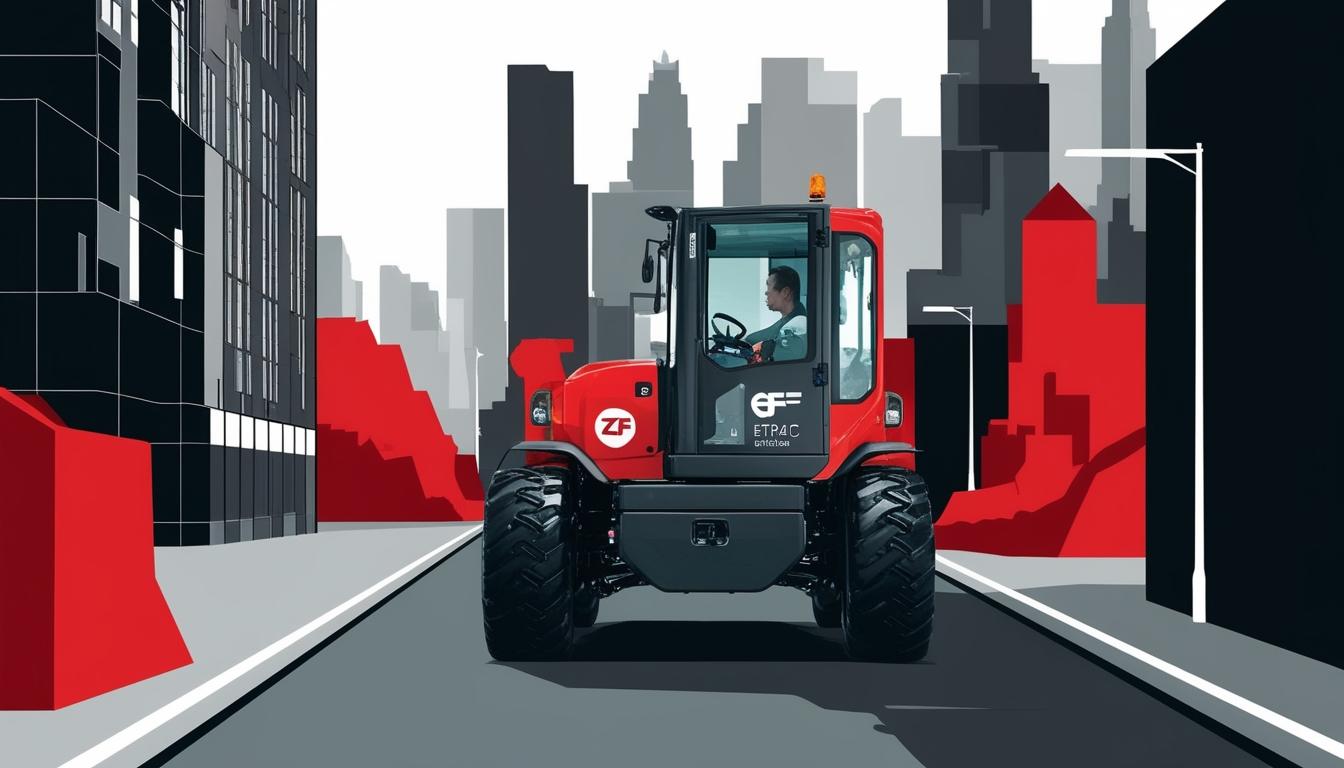
ZF is paving the way for sustainable construction with advanced electric drive systems and alternative fuel technologies to meet evolving market demands.
The construction industry is poised for transformative changes as it negotiates the hurdles of volatile markets, economic uncertainties, and stringent governmental regulations. The demand for flexibility and rapid development cycles is heightened, propelling companies like ZF toward innovation in driveline solutions that incorporate electrification and alternative fuels. Their initiatives are primarily aimed at reducing emissions, boosting productivity, and enhancing safety across construction sites.
ZF’s commitment to sustainability is exemplified by its eTRAC electric drive system, which is designed to meet the high-performance expectations of traditional drivetrains while leveraging the advantages of electric systems. The modular design of the eTRAC allows for adaptability across a spectrum of vehicle applications, including compact machinery such as loaders, site dumpers, and telehandlers—especially essential for operations in urban or emission-regulated environments. This comprehensive system includes not only electric drives but also accompanying components such as front and rear axles, inverters, and the Electric Drive Control Unit (eDCU). With this approach, ZF aims to match the capabilities of conventional drivetrains in terms of traction and speed, while achieving zero emissions.
Recent advancements in ZF’s technology include the introduction of a new system for mobile excavators featuring a two-speed powershift transmission, electric motor, and inverter, which delivers a peak torque of 850 Nm alongside a continuous power output of 80 kW. The electric central drive system is available in three power classes; eCD50, eCD70, and eCD90, catering to various vehicle sizes. This electric system is designed not only for traction but also incorporates configurations such as the electric Power Take-Off (ePTO) to power hydraulic operations.
In expanding its electric drive offerings for larger construction vehicles, ZF has rolled out the eTRAC eCD110-210 series for mid-sized wheel loaders. This system includes an electro-mechanical powershift transmission and multiple e-motors, facilitating both traction and hydraulic functions. The capacity for 650 V operating voltage and scaling up to 120 kW of continuous power positions ZF favourably to meet future demands in the construction segment, as does its ability to operate independently from the primary power source.
Alongside electric solutions, a trend towards low carbon fuels is emerging, as the industry responds to the pressing need for decarbonisation. Different energy sources have been identified based on vehicle size and energy requirements. While batteries are suitable for compact and medium vehicles, alternative fuels like hydrogen and bio-diesel are emerging as viable options for larger vehicles attempting to mitigate their carbon footprints. ZF’s technology anticipates varying energy demands while continuously improving overall efficiency; they project potential fuel savings of up to 25% compared to standard systems.
Amidst the backdrop of rising energy costs and alternative fuels with lower energy density—necessitating larger storage solutions—conventional drivetrain architectures remain a core component of vehicle systems. ZF emphasises its capacity to provide optimal driveline technology, which accommodates varying power sources and meets the evolving needs of the construction industry.
ZF’s approach is underscored by its BASICPOWER technology, designed specifically for the Chinese market, which emphasises enhanced comfort and efficiency for off-road applications. This solution is indicative of ZF’s broader strategy to meet market demands with innovative products, maintaining its status as a leader in driveline technology.
The company has also developed the ERGOPOWER series of transmissions for diesel forklift trucks, which must operate effectively under full load without losing traction. Moreover, ZF’s TraXon automatic transmissions offer a modular kit concept that provides flexibility for various applications, making them suitable for challenging operations in the construction sector, including heavy-duty transports and specialized vehicles.
In conclusion, ZF’s multi-faceted approach to driveline technologies—from electric systems and alternative fuel adaptation to advanced transmission solutions—signals a robust commitment to driving future innovations in the construction industry, as it aims to navigate the demands and expectations of an evolving market landscape.
Source: Noah Wire Services
- https://cmicglobal.com/resources/article/top-10-construction-trends-in-2024 – Corroborates the trend of leveraging technology in the construction process, including electric and autonomous systems, and the focus on sustainability and green construction.
- https://thebuildersonline.com/blog/2024/07/16/construction-industry-trends/ – Supports the integration of AI and advanced technologies, labor shortages, and the emphasis on sustainability and energy-efficient technologies in the construction industry.
- https://openasset.com/blog/construction-industry-trends/ – Highlights the adoption of green building practices, construction technology, and the use of robotics and automation to enhance efficiency and reduce environmental impact.
- https://fluix.io/blog/top-construction-industry-trends – Discusses modular and prefabricated construction, 3D printing, and the use of VR and AR technologies, all of which align with innovative solutions in construction.
- https://cmicglobal.com/resources/article/top-10-construction-trends-in-2024 – Mentions the evolution of building materials and the use of sustainable and eco-friendly components, which is relevant to ZF’s focus on sustainable driveline solutions.
- https://thebuildersonline.com/blog/2024/07/16/construction-industry-trends/ – Addresses the impact of federal infrastructure investments and the emphasis on safety measures, which are crucial for the adoption of new technologies like ZF’s electric drive systems.
- https://openasset.com/blog/construction-industry-trends/ – Details the use of advanced data analytics and AI to optimize construction processes, similar to ZF’s approach to improving efficiency and reducing emissions.
- https://fluix.io/blog/top-construction-industry-trends – Explains the benefits of modular construction, which includes reduced waste and labor costs, aligning with ZF’s modular design approach for electric drivetrains.
- https://www.conexpoconagg.com/news/us-construction-outlook-megaprojects-will-define-t – Discusses the rise of megaprojects and the focus on clean energy and advanced technologies, which is relevant to ZF’s initiatives in electric and alternative fuel solutions.
- https://thebuildersonline.com/blog/2024/07/16/construction-industry-trends/ – Highlights the importance of diversity and inclusion, as well as the need for adaptability in the face of market fluctuations, which aligns with ZF’s innovative and adaptive strategies.
- https://openasset.com/blog/construction-industry-trends/ – Emphasizes the role of wearable technology and AI-driven analytics in enhancing safety and efficiency, similar to ZF’s focus on safety and performance in its driveline technologies.






