






Artificial intelligence is revolutionising education by enhancing teaching methods and personalising learning experiences, with substantial investments from global leaders.
Artificial Intelligence (AI) is increasingly becoming an integral part of modern education systems, with its influence extending beyond traditional classroom settings. Historically, AI was introduced into education in the late 1980s, but recent developments in technology have led to the creation of tools that greatly enhance both teaching and learning experiences. According to a survey conducted by Forbes, it is projected that by 2024, AI will be incorporated into 47% of learning management tools, which could translate to a market value exceeding US$6 billion.
Currently, China is regarded as the foremost nation in the development of artificial intelligence technologies, with substantial investments being poured into the sector. EdTech companies in China are harnessing AI systems based on knowledge space theories, designed to evaluate individual knowledge states. Following closely, the United States has shown significant activity in AI, with startups in the field receiving US$9.3 billion in venture capital funding in 2018. Together, these two countries are expected to constitute nearly 50% of global expenditures on AI in education.
The evolving role of AI within educational frameworks brings forth various applications aimed at enhancing learning. AI-enhanced content tools allow for plagiarism detection and the improvement of the quality of educational materials. Furthermore, AI capabilities facilitate the adaptive management of published posts on social media platforms, tailoring content to specific audiences based on current trends.
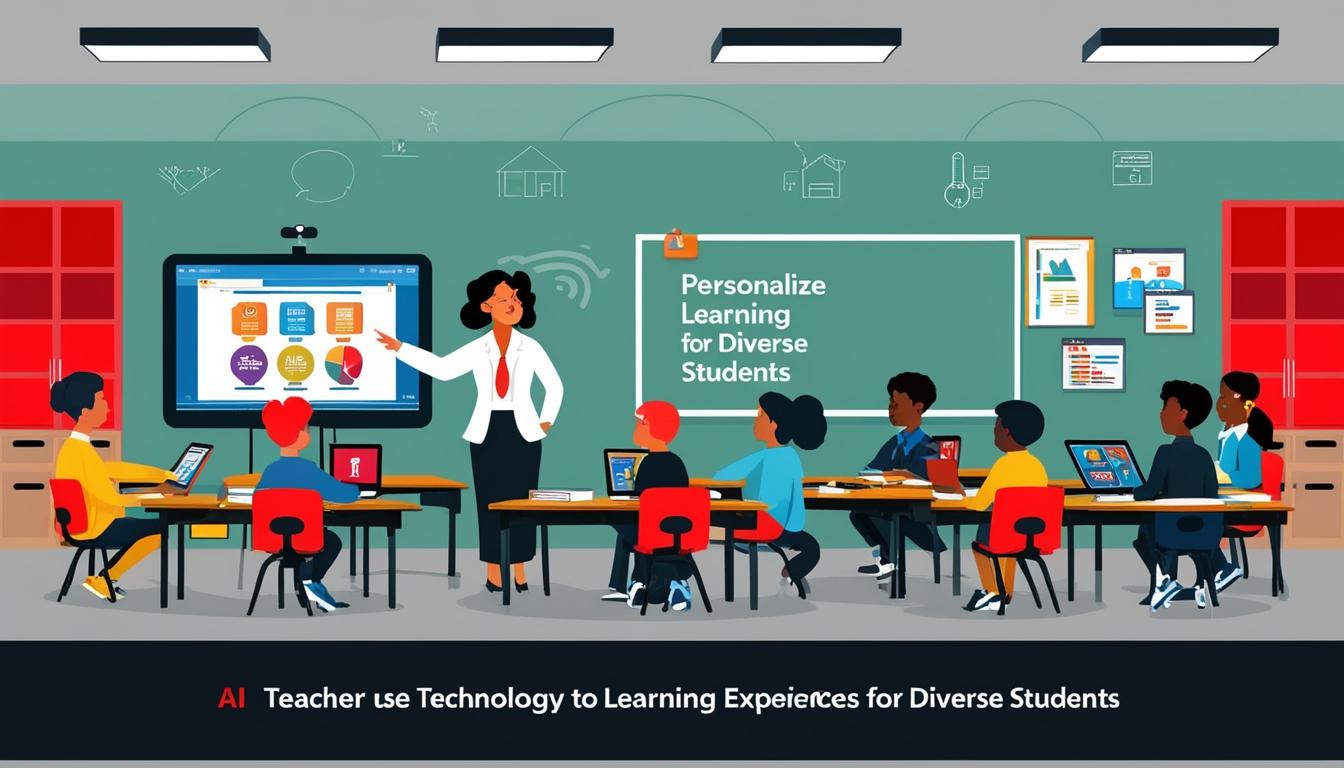
In the realm of teaching, AI fosters collaboration between educators and technology, equipping teachers with innovative resources to enhance their effectiveness and prepare students for a tech-driven future. This synergy enriches the curriculum by integrating creative content and automates learning assessments, thus fostering a more interactive learning environment.
AI’s potential extends far beyond conventional classroom functions, offering support to students requiring additional help with their studies. The technology aids in exam preparation and homework, which can alleviate some of the burdens on parents. AI-driven essay writing tools provide personalised assistance according to each student’s unique learning patterns. Moreover, speech recognition technology makes it possible to convert teachers’ lessons and notes into text format for easier access and storage.
Personalised learning experiences are a notable advantage of AI in education. AI-tools can sift through vast amounts of information, allowing researchers to efficiently locate relevant academic articles and resources. These tools deliver hyper-personalised assessments, adjusting lesson plans to address knowledge gaps and minimising unnecessary repetitions based on real-time feedback and performance metrics.
As AI technology continues to evolve, its role in education is anticipated to expand, creating a more accessible and equitable learning environment globally. Significant investments from both China and the United States in AI applications are expected to usher in improved educational systems. Companies like Amnet are at the forefront of developing high-quality content delivery systems powered by AI, suggesting a promising future where education is personalised for every student.
In summary, the advancement of artificial intelligence within education is paving the way for a transformation in teaching and learning methodologies. The continuous development of these technologies is set to unveil new possibilities for creating inclusive and tailored educational experiences, fundamentally reshaping the educational landscape.
Source: Noah Wire Services
- https://www.allaboutai.com/resources/ai-statistics/education/ – Corroborates the projection that by 2025, the AI market in education will reach $6 billion and highlights various uses of AI in education, such as personalized learning and efficiency.
- https://www.allaboutai.com/resources/ai-statistics/education/ – Supports the idea that AI is being widely adopted in education, with 47.3% of students at Cambridge using AI chatbots and half of the teachers using AI for lesson planning.
- https://www.precedenceresearch.com/ai-in-education-market – Provides data on the global AI in education market size, projected to reach $112.30 billion by 2034, and highlights North America’s leadership in AI adoption in education.
- https://www.precedenceresearch.com/ai-in-education-market – Details the significant growth rate of the AI in education market, with a CAGR of 36.02% from 2024 to 2034, and mentions the U.S. market size in 2023.
- https://artsmart.ai/blog/ai-in-education-statistics-2025/ – Supports the widespread adoption of AI tools by students and educators, with 97% of students in higher education institutions using AI-powered tools.
- https://artsmart.ai/blog/ai-in-education-statistics-2025/ – Highlights the improvement in graduation rates by 12% in universities deploying AI tools, showcasing the positive impact of AI on education outcomes.
- https://www.globenewswire.com/news-release/2024/11/18/2982495/28124/en/Artificial-Intelligence-in-Education-Market-Report-2024-2029-Investments-in-AI-Driven-Learning-Platforms-Fuel-Growth-with-North-America-Leading.html – Provides information on the AI in education market value in 2024 and its projected growth to $43.467 billion by 2029, with a CAGR of 33.51%.
- https://www.allaboutai.com/resources/ai-statistics/education/ – Corroborates the use of AI for adaptive learning, lesson planning, and generating classroom materials, as well as its role in enhancing student engagement.
- https://www.allaboutai.com/resources/ai-statistics/education/ – Supports the notion that AI is used for plagiarism detection, improving educational materials, and tailoring content to specific audiences.
- https://artsmart.ai/blog/ai-in-education-statistics-2025/ – Highlights AI’s role in providing personalized assistance to students, such as AI-driven essay writing tools and speech recognition technology.
- https://www.precedenceresearch.com/ai-in-education-market – Details the use of AI in delivering knowledge and customizing learning experiences based on student performance, aligning with the concept of personalized learning.







