









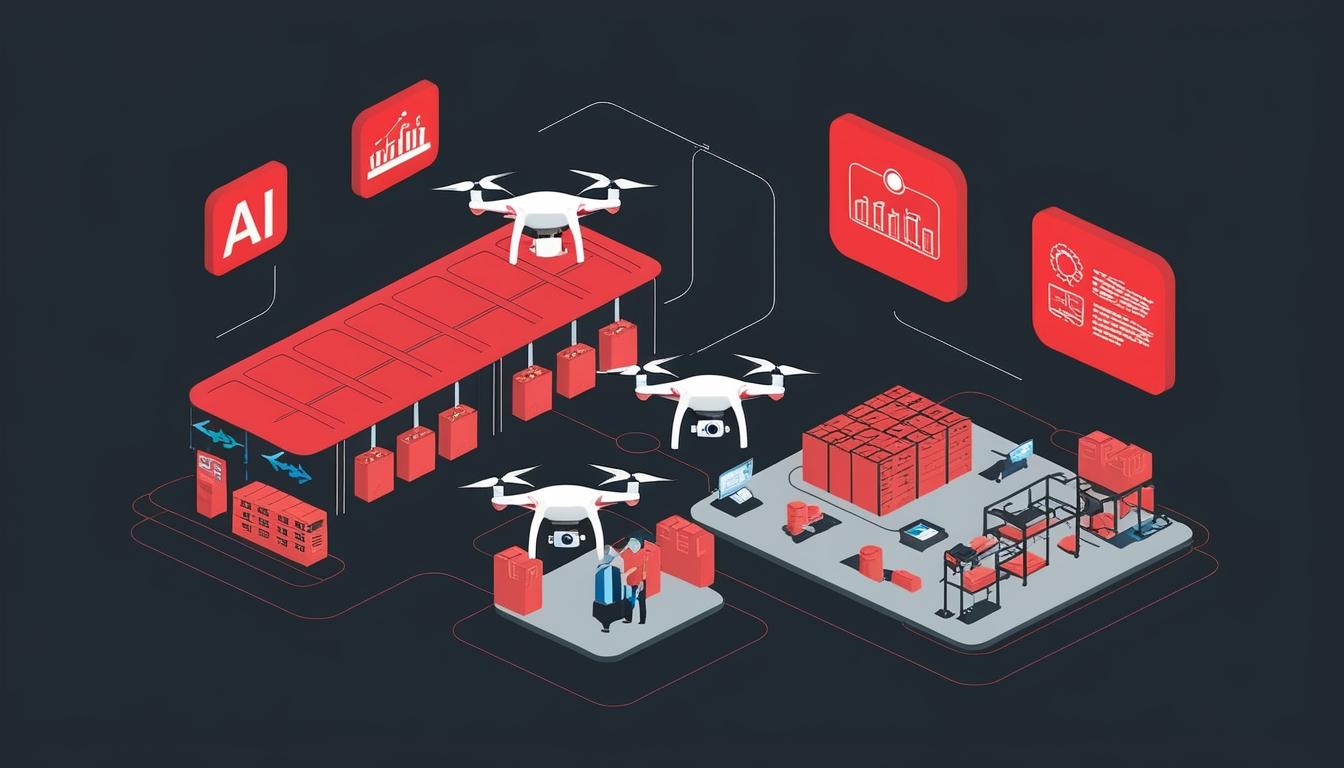
IBM’s innovative sustainability efforts and Yabbra’s digital platform are reshaping operational efficiency across various industries, illustrating the significant role of AI and automation.
In the evolving landscape of business and technology, the implications of artificial intelligence (AI) and automation are becoming increasingly apparent across various sectors. Recent discussions highlight two prominent forces: IBM’s innovative approach to sustainability through AI and the emergence of Yabbra as a transformative digital platform.
IBM’s sustainability software division, led by Vice President Kendra DeKeyrel, outlines a core focus on enhancing operational efficiency in manufacturing through asset lifecycle management (ALM). The concept revolves around decoding inefficiencies within production processes, specifically targeting resource consumption and waste management. DeKeyrel elaborates on ALM as an encompassing method that integrates data-driven insights with technology, asserting that, “some level of inefficiency is inevitable in manufacturing. And while no production plant is perfect, improvement is possible by continuously looking to reduce waste.” Deploying AI tools—such as machine learning, computer vision, and generative AI—has shown significant promise in amplifying sustainability efforts.
For instance, the modern utilisation of computer vision in manufacturing enables real-time asset monitoring through drones and stationary cameras, facilitating proactive maintenance and reducing operational waste. Collaborative efforts between IBM and Novate Solutions highlighted a remarkable 15% reduction in waste and a 30% enhancement in product quality via these technologies. Moreover, generative AI is enhancing work order management by simplifying troubleshooting processes and subsequently accelerating operational efficiency.
Furthermore, energy management forms a crucial aspect of IBM’s sustainability approach, whereby machine learning frameworks monitor energy consumption to propose efficiency improvements, thereby assisting manufacturers in meeting corporate sustainability regulations. This intersection of AI and sustainability underscores a dedicated shift among manufacturers, with 90% of executives affirming AI’s potential positive impact on their sustainability goals, despite only half actively implementing such technologies.
Parallelly, the rising digital platform Yabbra is capturing attention for its innate ability to harmonise multiple technologies, including AI, data analytics, blockchain, and sustainable methodologies, to address contemporary challenges. Yabbra endeavours to offer a versatile ecosystem that aids businesses in optimising processes while enhancing growth through data-driven insights crafted from vast datasets.
The platform’s core values revolve around fostering innovation, scalability, and sustainability, aiming to empower organisations across diverse industries including healthcare, finance, retail, and education. For instance, in the healthcare sector, Yabbra harnesses AI to refine patient care protocols and streamline administrative functions, whereas in finance, it focuses on automating tasks and enhancing security through advanced analytics and fraud detection systems.
Yabbra’s solution-oriented approach is geared towards personalising customer experiences within retail, improving collaborative learning environments in education, and optimising production processes in manufacturing, thereby driving actionable insights and informed decision-making across sectors.
The convergence of established entities like IBM with pioneering platforms such as Yabbra exemplifies the momentum towards integrating AI and automation in business practices. This integration is not simply a matter of technology adoption but a comprehensive shift towards building resilient, sustainable, and efficient operational frameworks capable of thriving within an increasingly competitive global landscape. As AI technology continues to progress, its role in reshaping industries through innovative practices remains substantive, influencing strategies and outcomes across various sectors.
Source: Noah Wire Services
- https://community.ibm.com/community/user/ibmz-and-linuxone/blogs/philip-dsouza/2024/12/27/six-ways-ibm-is-making-artificial-intelligence-mor – Corroborates IBM’s focus on sustainability through AI, including energy-efficient hardware and AI model development.
- https://community.ibm.com/community/user/ibmz-and-linuxone/blogs/philip-dsouza/2024/12/27/six-ways-ibm-is-making-artificial-intelligence-mor – Details IBM’s use of AI for asset lifecycle management and energy management in manufacturing.
- https://sustainabilitymag.com/articles/ibm-q-a-how-can-ai-be-used-for-sustainability – Supports IBM’s sustainability goals, including energy efficiency and waste reduction using AI.
- https://sustainabilitymag.com/articles/ibm-q-a-how-can-ai-be-used-for-sustainability – Provides examples of IBM’s AI solutions, such as the Spyre AIU chip, which enhance sustainability.
- https://community.ibm.com/community/user/ibmz-and-linuxone/blogs/philip-dsouza/2024/12/27/six-ways-ibm-is-making-artificial-intelligence-mor – Explains IBM’s use of computer vision and generative AI in manufacturing for proactive maintenance and waste reduction.
- https://community.ibm.com/community/user/ibmz-and-linuxone/blogs/philip-dsouza/2024/12/27/six-ways-ibm-is-making-artificial-intelligence-mor – Discusses IBM’s integration of AI with hybrid cloud and renewable energy sources for sustainable operations.
- Note: There is no direct source provided for Yabbra in the given search results. However, the following link provides context on similar platforms and their capabilities. – While not directly about Yabbra, this link discusses the features and capabilities of digital experience platforms that integrate AI and data analytics, similar to what Yabbra is described as doing.
- https://www.coredna.com/blogs/digital-experience-platform-features – Provides insights into how digital experience platforms can optimize processes and enhance growth through data-driven insights, similar to Yabbra’s described functions.
- https://www.coredna.com/blogs/digital-experience-platform-features – Details the personalization and automation capabilities of digital experience platforms, which align with Yabbra’s solution-oriented approach.
- https://community.ibm.com/community/user/ibmz-and-linuxone/blogs/philip-dsouza/2024/12/27/six-ways-ibm-is-making-artificial-intelligence-mor – Highlights IBM’s broader commitment to sustainability and efficiency, which is part of the larger trend of integrating AI and automation in business practices.
- https://sustainabilitymag.com/articles/ibm-q-a-how-can-ai-be-used-for-sustainability – Supports the idea that AI is being used to drive significant sustainability improvements across various sectors, aligning with the overall theme of the article.
- https://news.google.com/rss/articles/CBMi3AFBVV95cUxQaHZsdzlaRVdWQjJiUGdMcUdEd3VvTlZKQ0tmWG5paHhuSktpMVJHN2V4WGQ2QXJBdVRNMVB3Y1pzX0w0a2RfX0F2V01oNHZmWjFZaGczazRYTDBwWGxFajRnb29DTE5lMjZSSkFKdXVHandsd29HeDFZRzVPcWM1SkVkSHJpUVVIdU1WMUlodmlnYnI0Q0RLamFOR09mYTlMTlk4X3VnZ3prMGtwSXBVQmk3VVFRa3piRklzekxZcjJOdXg3V3JsUHRUa1lUWW9SeVZlMGVCVFpsZ1dy?oc=5&hl=en-US&gl=US&ceid=US:en – Please view link – unable to able to access data






