









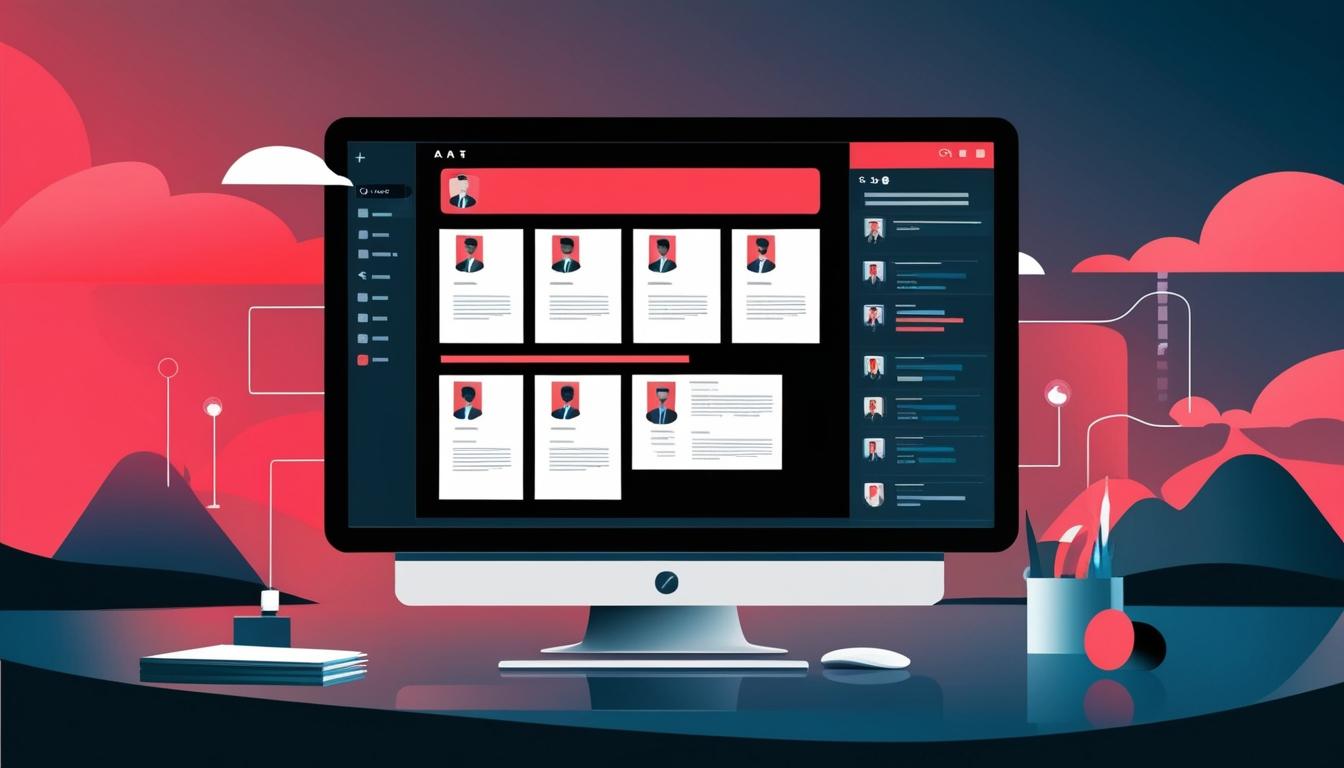
As AI technology revolutionises the hiring process, companies are enhancing efficiency and strategic decision-making in talent acquisition.
Artificial intelligence (AI) is making significant inroads into the recruitment landscape, fundamentally changing how companies approach talent acquisition. As organisations across various sectors strive to optimise their hiring processes and identify the best candidates swiftly, AI-driven tools are increasingly becoming essential resources.
The role of AI in recruitment encompasses a range of applications, from applicant tracking systems to advanced analytics. Companies now can leverage these tools to identify, evaluate, and onboard talent in ways that were previously unimaginable. This technological shift not only enhances hiring efficiency but also promotes a more strategic approach to talent acquisition, enabling businesses to redirect their focus away from mundane administrative tasks and towards vital decision-making processes.
The integration of AI into recruiting practices is poised to significantly accelerate the hiring timeline. Traditionally, scanning through thousands of resumes manually could consume weeks of a recruiter’s time. AI systems can now analyse these documents in mere seconds, pinpointing candidates that align with specific criteria. This transformation not only speeds up the hiring process but also reduces operational costs, allowing recruiters to devote more efforts to engaging with the most promising talent rather than becoming mired in data scrubbing.
AI’s influence is also evident in the crafting of job descriptions. By analysing language patterns, AI tools can provide suggestions to refine job postings, enhancing their appeal to a broader and more diverse range of candidates. Moreover, predictive analytics contribute valuable insights by helping recruiters detect emerging trends, forecast future hiring needs, and establish strategies that align with organisational objectives.
As companies embrace these advanced technologies, they are also confronted with critical considerations surrounding ethics, biases, and the importance of maintaining a human element in recruitment. While the efficiencies offered by AI are undeniable, the challenge lies in striking a balance between harnessing technological capabilities and preserving the essential human touch that forms the bedrock of effective hiring practices.
The evolving trends in AI automation for business recruitment reflect a significant departure from traditional methods, indicating a future where businesses must remain competitive in a globalised market. As the reliance on AI continues to increase, ongoing discussions about its implications for recruitment ethics and practices will undoubtedly remain at the forefront of industry conversations.
Source: Noah Wire Services
- https://idealtraits.com/blog/key-hiring-trends-for-2025-skills-ai-and-workforce-evolution/ – This article explains how AI is transforming the recruitment process, including analyzing resumes, conducting initial interviews, and the impact of AI on hiring trends in 2025.
- https://www.upwork.com/resources/ai-recruiting-tools – This resource lists various AI-powered recruiting tools, such as Manatal, Skillate, and HireVue, which streamline the recruitment process, including applicant tracking, candidate engagement, and automated follow-ups.
- https://www.upwork.com/resources/ai-recruiting-tools – It highlights how AI tools integrate with existing systems to optimize the entire recruitment process, from creating job descriptions to matching talent with relevant positions.
- https://www.oleeo.com/blog/ai-in-financial-services-recruiting-top-trends-for-2025/ – This article discusses the rise of the ‘AI-augmented recruiter’ and how AI is used to streamline tasks like sourcing, resume screening, and scheduling, allowing recruiters to focus on relationship-building and soft skills assessment.
- https://www.oleeo.com/blog/ai-in-financial-services-recruiting-top-trends-for-2025/ – It also addresses the importance of AI regulation, bias, and transparency in the recruitment process, especially in highly regulated industries like financial services.
- https://www.aihr.com/blog/artificial-intelligence-talent-acquisition/ – This article lists various AI-driven tools, such as Beamery, Arya, and Hireabby, which use machine learning and predictive analytics to optimize talent acquisition and build candidate relationships.
- https://www.aihr.com/blog/artificial-intelligence-talent-acquisition/ – It explains how these tools help in identifying, evaluating, and onboarding talent, and how they contribute to a more strategic approach to talent acquisition.
- https://idealtraits.com/blog/key-hiring-trends-for-2025-skills-ai-and-workforce-evolution/ – This article mentions the skills that will be most in demand in 2025, including technical skills like data analysis, AI fluency, and machine learning, as well as soft skills like adaptability and communication.
- https://www.upwork.com/resources/ai-recruiting-tools – It provides examples of AI tools that refine job postings by analyzing language patterns to enhance their appeal to a broader range of candidates.
- https://www.oleeo.com/blog/ai-in-financial-services-recruiting-top-trends-for-2025/ – This article discusses the shift towards skills-based hiring powered by AI, which is expected to become mainstream in 2025.
- https://idealtraits.com/blog/key-hiring-trends-for-2025-skills-ai-and-workforce-evolution/ – It highlights the need for a balance between technological capabilities and the human element in recruitment to ensure effective hiring practices.






